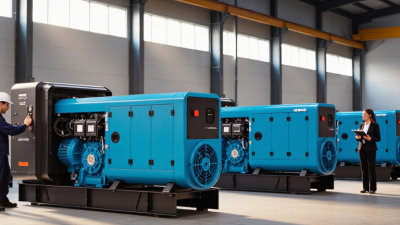
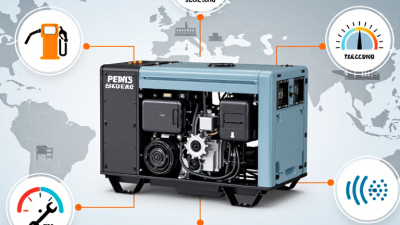
Choosing the right perkins genset in 2026 requires more than comparing engine power and purchase prices. Global buyers must examine operating conditions, local regulations, fuel quality, service access, and long-term maintenance costs. A 100 kVA unit may suit a small factory, yet fail to support motor-starting loads or extreme heat. Numbers can mislead.
Real projects reveal the difference. A generator running beside a dusty warehouse needs effective filtration and disciplined maintenance. A coastal installation may require stronger corrosion protection. High-altitude sites also lose available power unless the supplier provides accurate derating data. These details should appear in the technical offer, not remain hidden in sales language.
This guide evaluates Perkins gensets through practical buying criteria, including standby and prime ratings, alternator quality, control systems, fuel consumption, noise levels, and automatic transfer compatibility. It also considers genuine parts, technician training, warranty terms, and response times. Reliable documentation matters.
No comparison is perfect. Supplier claims still need verification through factory records, load-bank testing, and references from similar installations. Buyers should request clear performance curves and confirm whether quoted specifications match the complete package. A low initial price can become expensive when filters, batteries, transport, or commissioning are excluded. The best choice is not always the largest model. It is the unit that delivers stable power, manageable ownership costs, and dependable support throughout its working life. Small details often decide the outcome.
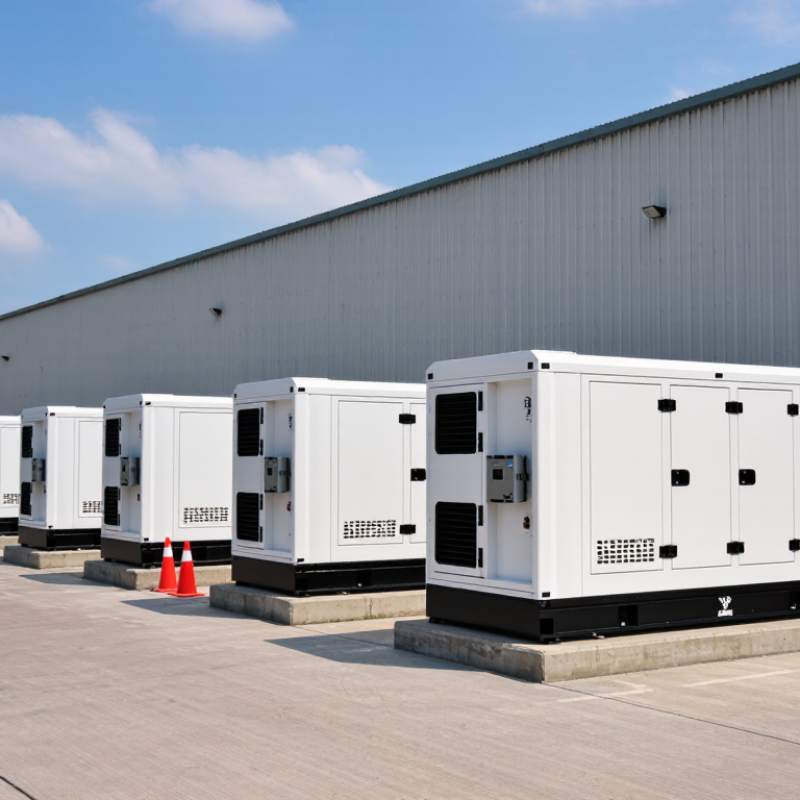
In 2026, diesel gensets remain important for hospitals, construction sites, data centers, and remote industries. Their market position depends on reliability, service access, and total operating cost. A genset is not merely an engine with an alternator. It is a coordinated power system requiring correct sizing, cooling, fuel management, and control protection.
Global buyers should examine performance under local conditions. High temperatures, dusty air, unstable fuel quality, and limited maintenance facilities can change real output. In field assessments, installation errors often cause more trouble than basic equipment defects. Oversized units may operate inefficiently. Undersized units may suffer frequent overloads. No selection is perfect. Buyer assumptions should be tested against measured load data and realistic future demand.
Tips: Request load-bank testing before acceptance. Check parts availability in the destination country. Confirm technician training and response times. Review emissions requirements, noise limits, and electrical standards before purchase. A clear service contract can protect uptime, but it cannot replace daily inspection. Keep records of oil pressure, coolant temperature, battery condition, and running hours. Small details matter. Many buyers still focus too heavily on the purchase price, which is understandable but incomplete. Fuel use and downtime can quietly dominate the budget over several years.
Electricity access is a useful market indicator for backup-power demand. Regions with lower access rates may require more distributed and standby generation, while mature markets typically prioritize efficiency, emissions compliance, reliability, and service support.
Data source: World Bank electricity-access indicator and IEA regional estimates; values are rounded percentages for the latest broadly comparable reporting period. These figures represent electricity access, not generator sales or market share.
For global buyers in 2026, genset selection should begin with load behavior, not advertised output. The IEA’s Electricity 2024 report estimates that data centers consumed about 460 TWh globally in 2022. Demand could exceed 1,000 TWh by 2026. This trend increases pressure on reliable standby and prime-power systems.
Check the engine’s rated power under ISO 8528 conditions. Compare standby, prime, and continuous ratings carefully.
A 1,000 kVA standby unit may not support a constant 1,000 kVA load. Review fuel consumption at 25%, 50%, 75%, and 100% load.
Field operators often discover that light-load running creates poor efficiency and maintenance problems.
Cooling capacity matters in hot regions. Ask for performance data at the site’s maximum ambient temperature and altitude. Measure enclosure airflow, radiator size, noise, and service access.
Uptime Institute’s data-center surveys repeatedly identify power-related incidents as a major operational risk, although cost estimates vary by facility. That uncertainty matters.
A low purchase price can hide fuel, transport, and maintenance expenses.
Emissions compliance, remote monitoring, automatic transfer compatibility, and spare-parts availability should also enter the specification.
A neat spreadsheet can still mislead. Test the proposed configuration with real load-bank results before approval.
Best Genset Series for Different Power Requirements
Selecting a genset series should begin with the load profile, not the catalogue headline. The IEA Electricity 2024 report forecasts global electricity demand to grow by about 3.4% annually through 2026. That growth increases the need for dependable standby and prime-power equipment. Small commercial sites usually suit compact units below 250 kVA. They can support shops, clinics, offices, and irrigation pumps without excessive fuel consumption. Leave operating room. A practical reserve of 15–20% helps manage motor starting and future expansion.
Medium-duty series, commonly rated from 250 to 1,000 kVA, fit factories, hotels, construction sites, and telecommunications facilities. Their value appears during unstable grid conditions. Check step-load performance, radiator capacity, and service access. ISO 8528 guidance remains useful when comparing performance classes and load acceptance. In field commissioning, technicians often discover that cable length and ambient heat reduce real output. Catalogue ratings are not the whole story.
Large series above 1,000 kVA suit hospitals, data centres, ports, and heavy industry. These applications require synchronisation, redundancy, and careful fuel planning. The Uptime Institute’s 2024 data-centre survey still shows that power failures remain a major operational concern. That makes automatic transfer systems and routine testing essential. Bigger is not always better. Oversized engines may run lightly, causing inefficient fuel use and maintenance concerns. My own assessment would be incomplete without checking local emissions rules, altitude, humidity, and technician availability before choosing the final series.
| Power Series | Typical Rated Output | Recommended Load Profile | Typical Applications | Electrical Configuration | Engine Speed Options | Cooling and Fuel System | Key Selection Considerations |
|---|---|---|---|---|---|---|---|
| Micro Series | 10–22 kVA 8–18 kW at 0.8 power factor |
Light to moderate loads with limited motor starting requirements | Small offices, retail shops, security systems, homes, and remote communication sites | Single-phase or three-phase; 50 Hz or 60 Hz; voltage selected for the local grid | Usually 1,500 rpm at 50 Hz or 1,800 rpm at 60 Hz | Radiator-cooled diesel engine with a fixed or optional base-mounted fuel tank | Allow additional capacity for battery chargers, pumps, air conditioners, and future loads |
| Compact Series | 25–60 kVA 20–48 kW at 0.8 power factor |
Mixed commercial loads with occasional motor starting | Restaurants, workshops, clinics, small hotels, farms, and construction equipment | Commonly three-phase; 400/230 V or 480/277 V configurations may be available depending on market | 1,500 rpm at 50 Hz or 1,800 rpm at 60 Hz | Water-cooled engine, mechanical or electronic fuel injection, with open or weatherproof enclosure options | Check voltage compatibility, starting current, noise limits, and access for routine servicing |
| Mid-Range Series | 75–150 kVA 60–120 kW at 0.8 power factor |
Continuous commercial operation with moderate inrush loads | Medium-sized offices, supermarkets, schools, agricultural facilities, and light manufacturing | Three-phase, four-wire systems with automatic transfer-switch integration | 1,500 rpm at 50 Hz or 1,800 rpm at 60 Hz | Water-cooled diesel engine with radiator, alternator temperature monitoring, and external fuel connection capability | Evaluate step-load response, harmonic-producing equipment, standby duration, and maintenance intervals |
| Heavy-Duty Series | 180–330 kVA 144–264 kW at 0.8 power factor |
High-demand standby or prime-power operation with large motors | Hospitals, data rooms, production lines, apartment buildings, and large commercial properties | Three-phase output with automatic mains-failure control and optional parallel operation | Typically 1,500 rpm at 50 Hz or 1,800 rpm at 60 Hz | Heavy-duty water cooling, turbocharged engine configuration, and larger external fuel-storage options | Size for motor starting, non-linear loads, ambient temperature, altitude, and required autonomy hours |
| High-Capacity Series | 400–2,000 kVA 320–1,600 kW at 0.8 power factor |
Large critical loads, prime power, or multi-set operation | Data centers, factories, airports, infrastructure projects, mining sites, and utility-support installations | Three-phase systems; synchronizing panels and load-sharing controls recommended for multiple sets | Normally 1,500 rpm at 50 Hz or 1,800 rpm at 60 Hz, subject to engine and alternator design | Industrial water cooling, high-capacity fuel system, remote monitoring, and containerized or acoustic-housing options | Confirm emissions requirements, transport limits, synchronization strategy, fuel logistics, and service support |
2026 Best Genset for Global Buyers?
Fuel efficiency, emissions, and operating costs often matter more than maximum power. A practical evaluation should measure fuel use at 50%, 75%, and 100% load. Many sites rarely operate near full capacity. An oversized generator can burn more fuel while producing less useful power.
Regional conditions change the result. In hot, high-altitude areas, thinner air may reduce output and increase fuel consumption. Dusty construction sites also demand shorter filter inspection intervals. In Europe and North America, stricter emissions rules may require advanced exhaust treatment and certified fuel systems. Some areas in Africa, Asia, and Latin America may prioritize fuel availability, repair access, and simpler maintenance. Local diesel quality matters too.
Operating cost is more than the purchase price. Buyers should calculate fuel, oil, filters, transport, technician visits, and downtime over five years. A unit using 18 liters per hour may appear efficient, but regional fuel prices can reverse the ranking. Check warranty coverage and parts delivery before signing. Service access is critical.
Published fuel figures can mislead.
Independent load testing provides stronger evidence than brochure claims. Still, no model wins everywhere. This comparison remains imperfect because weather, load patterns, and maintenance habits vary. A careful buyer should request site-specific calculations, emissions documentation, and real service records before choosing a 2026 genset.
For global buyers, the best 2026 genset is not simply the one with the lowest quoted price. It must start reliably, carry stable loads, and remain serviceable when local conditions are difficult. Ask suppliers for documented factory tests, fuel-consumption data, noise measurements, and certificates relevant to your destination. A serious supplier explains what each figure means. Vague promises are warning signs.
Evaluate the supplier’s field experience, not just its website or trading history. Request two customer references in similar climates, such as coastal humidity, desert dust, or high altitude. Check whether technicians are trained, reachable, and equipped with service tools and diagnostic procedures. After-sales support should include commissioning, maintenance schedules, spare-parts availability, and response times in writing. Ask who pays for urgent freight. That detail matters.
A dependable supplier should help size the genset around starting currents, duty cycle, ambient temperature, and future expansion. Oversizing can waste fuel; undersizing can shorten component life and cause unstable operation. Review warranty exclusions carefully, especially for batteries, controls, and consumable parts. Remote monitoring is useful, but it cannot replace a technician with a multimeter and practical judgment. I would still test the support process before purchase: send a technical question and measure the reply. One weakness remains easy to miss. Some suppliers provide excellent equipment but weak local training. That gap may become expensive during a night-time failure.