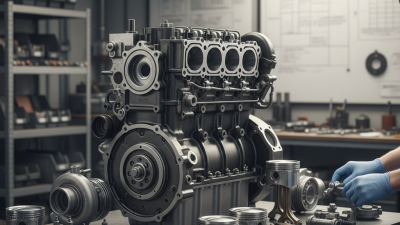
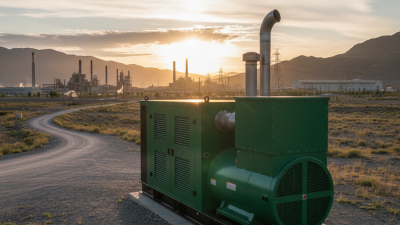
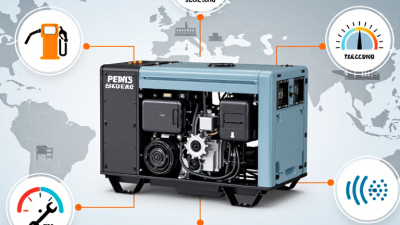
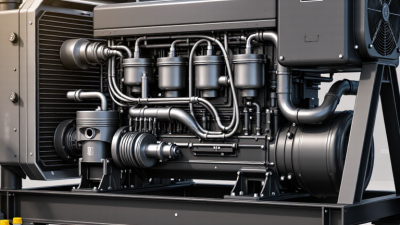
A perkins diesel engine is more than a metal block beneath a machine hood. It is a power system built for tractors, generators, loaders, excavators, and other demanding equipment. Its design combines combustion efficiency, torque delivery, cooling, filtration, and service access. These details matter when dust covers the air filter or a generator runs through a long night.
The International Energy Agency’s World Energy Investment 2024 report estimated global energy investment above 3 trillion dollars. Clean-energy investment represented about 2 trillion dollars. This shift does not make diesel engines irrelevant. It increases pressure for lower emissions, better fuel economy, and smarter controls. Off-Highway Research’s Global Construction Equipment 2024 analysis also highlights uneven equipment demand across regions. Machines still work where charging infrastructure remains limited.
Fatih Birol, Executive Director of the IEA, said, “The clean energy economy is emerging rapidly, faster than many people realize.” His observation frames the challenge facing perkins diesel technology. Modern engines must deliver dependable power while meeting stricter emissions expectations. Perkins addresses this through electronic management, after-treatment systems, and application-specific engine families. However, specifications can be misunderstood. A larger engine is not automatically the better choice. Incorrect sizing may increase fuel use, heat, and maintenance costs.
This guide examines what a Perkins diesel engine is, how it works, and where it fits today. Real performance depends on installation, fuel quality, load profile, and maintenance discipline. The answer is practical, but not perfect. Every application deserves careful verification.
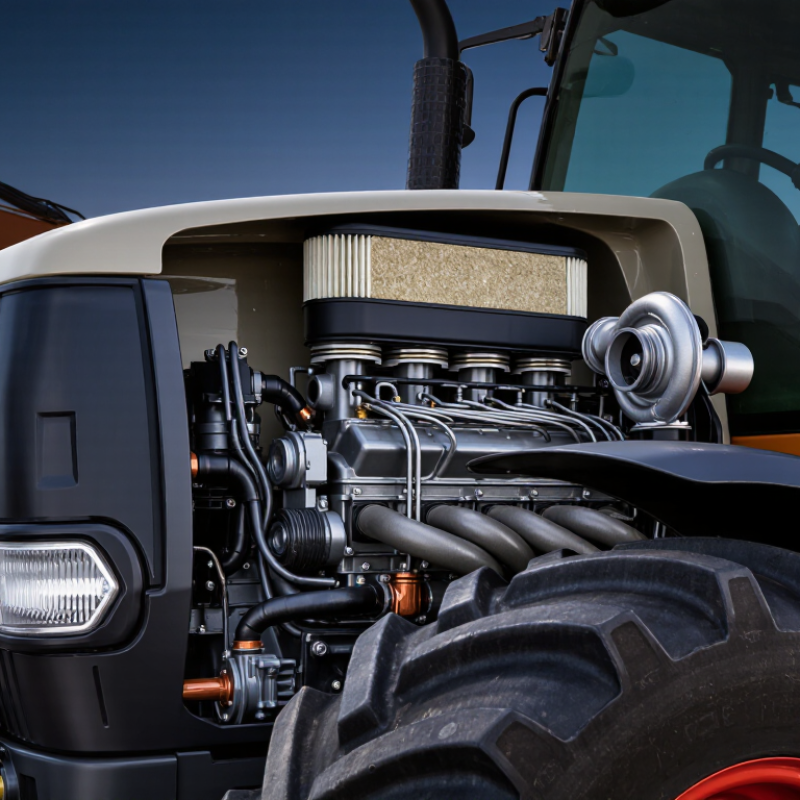
A diesel engine is a compression-ignition machine designed to convert fuel energy into mechanical power. Air enters the cylinder and becomes highly compressed. Its temperature rises sharply. Fuel then enters the hot air and ignites without a spark plug.
Its core purpose is dependable power delivery under demanding conditions. These engines commonly drive generators, pumps, construction equipment, agricultural machines, and industrial vehicles. Their strong low-speed torque helps move heavy loads. A sturdy crankcase, cooling system, lubrication circuit, and fuel system must work together. If one part performs poorly, the entire engine may lose efficiency or reliability.
Field technicians usually judge an engine by more than its advertised output. They inspect oil pressure, exhaust color, vibration, coolant temperature, and starting behavior. Small changes can reveal worn injectors, restricted filters, or cooling problems. Maintenance records also matter. A clean specification sheet is not enough.
No engine is perfectly efficient. Fuel quality, ambient temperature, load patterns, and service intervals affect real performance. This point is easy to overlook. An engine running lightly for long periods may develop deposits, while constant overload can accelerate wear. Correct sizing remains essential. The practical goal is steady power, controlled operating temperatures, and predictable service life, not simply the highest horsepower number.
The history of Perkins diesel engines began in Britain during the 1930s. Their early designs served tractors, pumps, and small industrial machines. Engineers focused on dependable power, simple maintenance, and steady operation under heavy loads. The path was not perfectly linear. Early engines were louder, less efficient, and harder to start on cold mornings.
Development accelerated through direct fuel injection, turbocharging, and improved cooling systems. Mechanical governors later gave way to electronic controls and common-rail injection. These changes improved fuel delivery, response, and emissions performance. The International Energy Agency reported 37.4 billion tonnes of energy-related carbon dioxide emissions in 2023. That pressure has reshaped diesel development. The United States Environmental Protection Agency states that advanced nonroad standards can reduce particulate matter by up to 96% and nitrogen oxides by about 50% against earlier tiers.
Modern engines therefore combine compact cylinders with sensors, after-treatment systems, and digital diagnostics. A technician may now inspect fault codes beside a vibrating excavator, rather than adjust every setting manually. Field data matters. Real machines reveal weaknesses that laboratory tests can miss, especially during dusty work, irregular loads, or poor maintenance. The International Energy Agency’s Global EV Outlook 2024 recorded more than 14 million electric cars sold in 2023, increasing pressure on diesel engines to justify their role. Their next development may depend less on maximum power and more on measurable efficiency, repairability, and cleaner operation.
Diesel engines use compression ignition: air is compressed until it becomes hot enough to ignite injected fuel. The timeline highlights major stages in their development, from the first compression-ignition patent to electronic controls, common-rail injection, and modern emissions-treatment systems.
A diesel engine converts fuel energy into mechanical power through controlled compression. Clean air enters the cylinder and moves the piston downward. The piston then rises and compresses that air tightly. Compression creates intense heat without using a spark plug. Fuel is injected near the top of the stroke. It ignites, expands, and forces the piston downward. This movement turns the crankshaft, which delivers power to equipment such as pumps, generators, or construction machines.
The process depends on accurate timing and steady fuel pressure. An injection system must create a fine spray, while valves must open and close at precise moments. Engine oil reduces friction around the piston, bearings, and crankshaft. Coolant carries heat away from the cylinder area. During workshop inspections, technicians often check oil color, exhaust smoke, vibration, and starting behavior. These signs can reveal poor combustion or restricted airflow. Real engines are less tidy than diagrams. Small faults can become expensive if ignored.
Tips: Check the oil level before operation. Inspect filters and coolant regularly. Listen for new knocking sounds. Allow the engine to warm gradually, especially in cold weather. Follow the service schedule, but do not treat it as perfect; working conditions may require earlier maintenance. Keep clear records of repairs, operating hours, and unusual symptoms.
| Dimension | Typical Specification or Stage | How It Works | Practical Importance |
|---|---|---|---|
| Engine Type | Internal-combustion, compression-ignition engine | Fuel is ignited by the high temperature created when air is compressed, rather than by a spark plug. | Enables efficient operation under heavy loads and eliminates the need for a conventional spark-ignition system. |
| Basic Operating Cycle | Four-stroke cycle | The piston completes intake, compression, power, and exhaust strokes during two crankshaft revolutions. | Provides a controlled sequence for drawing in air, burning fuel, producing power, and removing exhaust gases. |
| Intake Stroke | Piston moves downward | The intake valve opens while the piston draws fresh air into the cylinder. Fuel is not normally mixed with the air at this stage. | Allows the cylinder to receive the oxygen required for combustion. |
| Compression Stroke | Piston moves upward; compression ratio commonly about 14:1 to 25:1 | Both valves close and the piston compresses the air, raising its pressure and temperature substantially. | Creates the heat needed to ignite the injected fuel without a spark. |
| Fuel Injection | High-pressure injection near the end of compression | A metering system delivers a finely atomized spray of fuel into the hot, compressed air inside the cylinder. | Controls fuel quantity, combustion timing, power output, and emissions. |
| Power Stroke | Combustion forces the piston downward | Fuel burns rapidly after injection, increasing cylinder pressure and pushing the piston down. The connecting rod transfers force to the crankshaft. | Converts chemical energy into mechanical torque and usable shaft power. |
| Exhaust Stroke | Piston moves upward | The exhaust valve opens and the piston pushes burned gases out of the cylinder. | Clears the cylinder so the next cycle can begin with fresh air. |
| Air Management | Naturally aspirated or turbocharged | A naturally aspirated engine uses atmospheric pressure, while a turbocharger uses exhaust energy to compress intake air. | More air can support a greater fuel charge and improve power density when combustion and temperatures are properly controlled. |
| Cooling System | Liquid cooling is common; air cooling is also possible | A coolant or airflow carries excess heat away from the cylinder, cylinder head, and other hot components. | Maintains suitable operating temperatures and helps prevent overheating, distortion, and lubricant breakdown. |
| Lubrication System | Pressurized oil circulation | An oil pump sends lubricant through galleries to bearings, the crankshaft, valve train, and other moving parts. | Reduces friction and wear while helping remove heat and contaminants from engine components. |
| Speed and Torque Characteristics | Strong low-speed torque; operating speed depends on engine design | High cylinder pressure and long-stroke designs can produce substantial torque at relatively low rotational speed. | Makes diesel engines suitable for construction equipment, commercial vehicles, generators, marine equipment, and agricultural machinery. |
| Fuel Efficiency | Generally high thermal efficiency compared with many spark-ignition engines | High compression, lean operation under many conditions, and direct fuel metering help convert a significant portion of fuel energy into work. | Can reduce fuel consumption during sustained heavy-duty operation. |
| Main Power-Conversion Parts | Cylinder, piston, connecting rod, crankshaft, valves, and flywheel | Combustion moves the piston; the connecting rod and crankshaft convert reciprocating motion into rotary motion. | Delivers rotational power to a transmission, generator, pump, or other driven equipment. |
| Emission-Control Functions | Fuel timing, air management, exhaust gas recirculation, oxidation treatment, and particulate filtration may be used | Engine controls and after-treatment systems manage nitrogen oxides, particulate matter, hydrocarbons, and carbon monoxide. | Helps the engine meet applicable emissions requirements while maintaining performance. |
A diesel engine of this type uses compressed air to ignite fuel, producing steady mechanical power. Its appeal comes from simple construction, strong low-speed torque, and practical service access. In real maintenance work, technicians often judge performance by cold starting, smoke color, oil pressure, and load response. These details reveal more than a brochure figure.
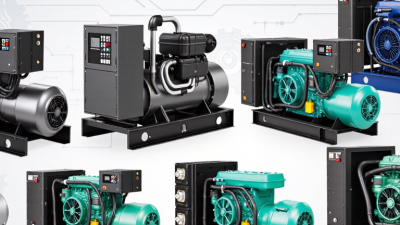
Major types include three-cylinder, four-cylinder, and six-cylinder configurations. Three-cylinder models suit compact pumps, small tractors, generators, and construction equipment. Four-cylinder engines offer a useful balance between fuel economy and output. They commonly power loaders, compressors, agricultural machines, and standby generators. Six-cylinder versions deliver higher torque for larger excavators, industrial generators, material-handling equipment, and marine auxiliary systems.
Naturally aspirated designs remain simple. Turbocharged versions provide more power from a smaller package. Electronic fuel systems can improve control, but they may require better diagnostic skills.
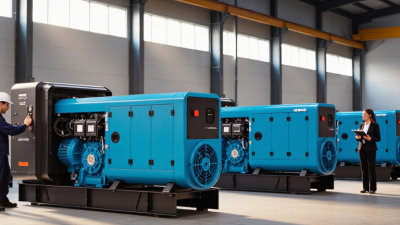
Application conditions matter greatly. A generator running at steady speed needs different calibration from an excavator facing sudden loads. Dusty sites demand frequent filter checks. Coastal equipment needs careful corrosion control. One common mistake is choosing output alone. That assumption deserves checking. Weight, cooling capacity, fuel quality, service access, and operating altitude can change the result. Even a reliable engine may perform poorly when maintenance intervals are ignored. Exact specifications should always be verified against the engine’s serial information and duty requirements.
A diesel engine of this type converts fuel energy into dependable mechanical power. Combustion occurs inside cylinders, where compressed air ignites the fuel without spark plugs. That design produces strong low-speed torque. Operators value it for steady work. Common applications include tractors, excavators, compressors, water pumps, and standby generators. Fuel use can be economical when the engine carries a suitable load. An oversized unit may waste fuel during light-duty operation. That detail is easy to overlook.
A practical maintenance routine begins with clean engine oil and the correct filter. Check oil level before starting, especially after long storage. Inspect coolant, belts, hoses, and battery connections for leaks or corrosion. Air and fuel filters also deserve attention in dusty fields or construction sites. Follow the service schedule, but adjust inspections when operating conditions are severe. A fixed calendar cannot predict every problem. Maintenance is not always convenient. Delays, however, can turn a small leak into overheating or major internal damage.
Good operation matters as much as workshop care. Let the engine warm briefly before demanding heavy power, and avoid extended idling when possible. Watch for hard starting, unusual smoke, vibration, or rising temperature. These signs should be recorded, not ignored. Technicians can diagnose issues more accurately when service records include hours, loads, and replaced parts. Even experienced operators sometimes miss gradual performance loss. A load test, performed safely by qualified personnel, can reveal problems that a quick visual check cannot.