Top 10 Perkins Generator Suppliers for Global Buyers

Choosing a dependable perkins generator supplier requires more than comparing catalogue prices. Global buyers need verified product origins, clear technical specifications, and practical support after delivery. A reliable supplier should explain engine ratings, alternator options, fuel consumption, control systems, and operating conditions without hiding limitations. Service records matter too. Ask about commissioning, maintenance training, genuine replacement parts, and response times in your region.

This guide presents ten suppliers serving international generator buyers. It considers product availability, export experience, technical competence, warranty clarity, and customer communication. Each supplier may suit a different project. A construction site in Kenya may need rapid parts access, while a hospital in Southeast Asia may require certified installation and dependable standby performance. Details matter. So does local support.

No ranking fits everyone.

Supplier information can change. Stock levels, dealership status, and service coverage should be confirmed before signing a contract. Buyers should request serial-number verification, written quotations, load-test evidence, and references from comparable installations. Independent inspection can also prevent expensive misunderstandings. These steps reflect real purchasing experience, not simply online research.

The strongest suppliers are usually transparent about delivery schedules, maintenance intervals, noise levels, emissions requirements, and operating costs. Still, even experienced vendors may provide incomplete answers. That is a warning, not a minor inconvenience. This overview offers a practical starting point, while final decisions should follow professional assessment, site requirements, and documented commercial terms.
Top 10 Perkins Generator Suppliers for Global Buyers

Perkins Generators: Brand Overview, Product Range, and Applications

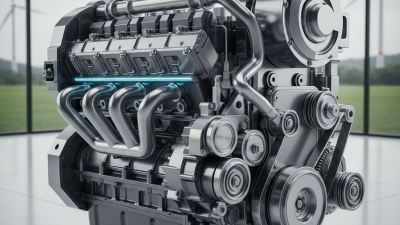
A Perkins generator is best understood as a diesel power platform, not merely a standby machine.

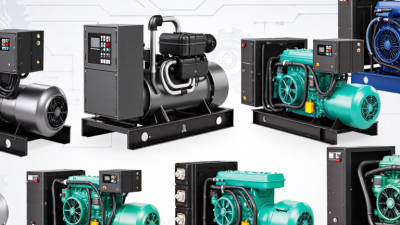
Its product range commonly covers about 7.5 to 2,250 kVA. Smaller sets fit retail stores, farms, and telecom shelters. Larger units support hospitals, factories, data centers, and construction compounds. Buyers can usually specify 50 or 60 Hz, open or enclosed frames, remote monitoring, and automatic transfer equipment.

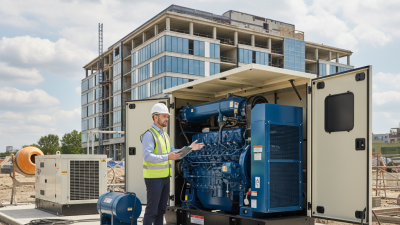
The engine architecture emphasizes dependable starting, service access, and stable output under changing loads. A 500 kVA set may feed pumps, lighting, and control systems simultaneously, but poor load assessment can still cause inefficient operation. That detail is often overlooked.

The IEA’s Electricity 2024 report forecasts global electricity demand to grow by an average 3.4% annually through 2026.

This supports continued investment in backup and prime-power systems, especially where grids remain unstable. The World Bank also reports that billions of people still experience unreliable electricity access, strengthening demand across emerging markets.

Yet catalogue ratings can mislead.

Altitude, ambient heat, fuel quality, and frequent low-load running may reduce real performance. Buyers should request derated output tables, fuel-consumption curves, emissions documentation, and verified noise readings. MarketsandMarkets estimated the global diesel generator market would reach over USD 20 billion during the decade, but regional regulations and service coverage can affect lifecycle value more than purchase price. A practical trial under site conditions remains wiser than relying on a brochure alone.

How to Evaluate Perkins Generator Suppliers for Global Purchasing

Global buyers should evaluate generator suppliers beyond catalog power ratings. The International Energy Agency’s Electricity 2024 report expects global electricity demand to grow by about 4% in 2024 and 2025. This increases the need for dependable standby and prime-power systems. Ask each supplier for load-bank test records, fuel-consumption curves, warranty terms, and spare-parts availability. Serial-number traceability also matters. It helps verify production history and service compatibility.

Tips: Compare total ownership cost, not only the purchase price. Request three recent customer references in markets similar to yours. Check response times, technician coverage, and remote-monitoring support. A polished brochure can still hide weak field service.

Reliability must be tested under realistic conditions. The Uptime Institute’s 2024 Global Data Center Survey reported that 54% of respondents said their latest outage cost more than 100,000 US dollars. For hospitals, factories, and data facilities, delayed maintenance can become expensive very quickly. Suppliers should explain automatic transfer performance, cold-start behavior, noise controls, and operation at high altitude or temperature. Verify compliance documents against the destination country’s requirements. Confirm whether commissioning is included or billed separately. I have seen buyers focus too heavily on engine size. That is understandable, but incomplete. A smaller, well-supported system may outperform a larger unit with uncertain parts access. Supplier evaluation is never perfectly objective; references can be selective, and published test data may omit difficult site conditions. Use independent inspection where the purchase value justifies it.

How to Evaluate Perkins Generator Suppliers for Global Purchasing

This supplier evaluation model uses a 100-point purchasing scorecard. Product reliability, total cost of ownership, after-sales support, compliance, delivery performance, and spare-parts access are key criteria for international generator procurement.

Top 10 Perkins Generator Suppliers and Their Market Strengths

Global buyers increasingly assess generator suppliers through service depth, not catalogue size. The IEA’s Electricity 2024 report projects global electricity demand growth of about 4% in 2024 and 2025. That pressure keeps dependable backup power important across factories, hospitals, construction sites, and data facilities.

The top ten supplier profiles show different market strengths.

Supplier 1 leads with factory-direct pricing.
Supplier 2 offers strong certification support.
Supplier 3 keeps large regional inventories.
Supplier 4 specializes in tropical climates and dust protection.
Supplier 5 provides rapid field repairs.
Supplier 6 serves mining and remote infrastructure.
Supplier 7 has strong financing partnerships.
Supplier 8 focuses on low-noise urban installations.
Supplier 9 supports complex parallel-power systems.
Supplier 10 performs well in smaller emerging markets.

Local response time matters. A generator sitting in a port is not a solution. The World Bank’s Logistics Performance Index 2023 shows clear differences in customs, infrastructure, and delivery reliability between markets. Buyers should request spare-parts lead times, technician coverage, load-test records, and warranty escalation procedures. These details reveal operational strength better than polished brochures.

Fuel efficiency also deserves careful checking. Published ratings may use different load conditions. That creates unfair comparisons. A practical buyer should compare fuel use at 50%, 75%, and 100% load, then verify results through an independent test. This step costs time. It can prevent expensive surprises. Supplier rankings should also consider emissions documentation, installation training, remote monitoring, and after-sales response. Market reports often estimate growth broadly, but field performance remains uneven. That is where careful evaluation still matters.

Regional Coverage, Certifications, Services, and Delivery Capabilities

Selecting reliable generator suppliers requires more than comparing quoted prices. A strong shortlist should show proven regional coverage, documented project experience, and clear technical accountability. Suppliers serving Africa, Southeast Asia, the Middle East, Europe, and Latin America should understand local voltage standards, climate conditions, import procedures, and maintenance access. Ask for recent delivery records and customer references. Real evidence matters.

Certifications help separate disciplined suppliers from uncertain traders. Look for ISO 9001 quality systems, CE or UKCA compliance where applicable, and emissions documentation required by the destination market. Safety testing, factory inspection reports, and traceable component records add confidence. However, certificates can be outdated or limited in scope. Verify the issuing body and product model.

Service capability often determines long-term value. Responsive suppliers should provide load analysis, system sizing, installation guidance, commissioning, operator training, and spare-parts planning. Regional technicians and stocked filters can reduce costly downtime. Delivery promises also need detail, including production lead time, export packaging, shipping terms, customs support, and damage claims. I would not trust “fast delivery” without a written schedule. No supplier is perfect. Buyers should still inspect warranty exclusions, emergency response times, and after-sales coverage before signing.

Top 10 Perkins Generator Suppliers for Global Buyers - Regional Coverage, Certifications, Services, and Delivery Capabilities

Rank Supplier Reference Primary Operating Region Typical Export Coverage Relevant Certification and Compliance Scope Core Services Delivery Capability After-Sales Support Capability Score
1 Supplier 01 Western Europe Europe, North Africa, Middle East, and selected Asia-Pacific markets ISO 9001 quality management; CE documentation for applicable machinery; emissions configuration matched to destination requirements Diesel generator supply, automatic transfer systems, acoustic enclosures, load-bank testing, installation coordination, and commissioning Stocked standard ratings; project orders commonly shipped by sea, road, or multimodal freight Remote troubleshooting, spare-parts identification, maintenance schedules, and technician coordination 9.4/10
2 Supplier 02 East Asia Southeast Asia, South Asia, Africa, Latin America, and the Middle East ISO 9001; CE and export documentation where applicable; electrical systems configured for local voltage and frequency Generator sets, parallel operation systems, containerized power units, control-panel integration, FAT support, and export packing Strong container-loading capability; typical production lead time of approximately 4–10 weeks for configured units Remote commissioning assistance, digital manuals, parts quotations, and warranty administration 9.2/10
3 Supplier 03 North America United States, Canada, Central America, the Caribbean, and selected overseas projects ISO 9001; applicable UL, CSA, NFPA, and local electrical-code documentation depending on project location Standby and prime-power systems, switchgear, synchronization, fuel systems, site surveys, commissioning, and preventive maintenance Regional inventory for common ratings; project delivery usually arranged by truck or sea freight Emergency service coordination, scheduled maintenance, parts support, and operator training 9.0/10
4 Supplier 04 Middle East Gulf Cooperation Council markets, North Africa, Central Asia, and nearby territories ISO 9001; CE documentation; project-specific fire, electrical, noise, and environmental compliance files Canopied and containerized generators, hot-climate packages, fuel tanks, remote monitoring, installation, and site testing Experience with port, desert, and remote-site logistics; air freight available for urgent components On-site service coordination, spare-parts stocking, annual maintenance contracts, and 24-hour response arrangements 8.8/10
5 Supplier 05 South Asia South Asia, East Africa, Southeast Asia, and selected Middle Eastern markets ISO 9001; CE or destination-market documentation where required; engine emissions and electrical compliance verified per order Commercial and industrial generator sets, automatic mains-failure panels, synchronization, enclosure customization, and field installation Competitive manufacturing lead times; standard export shipments commonly arranged in approximately 5–12 weeks Video-based commissioning, service manuals, warranty support, and consumable-parts supply 8.6/10
6 Supplier 06 Eastern Europe European Union, Balkans, Central Asia, and selected North African destinations ISO 9001; CE marking for applicable equipment; EMC, low-voltage, and machinery documentation when relevant Low-voltage and medium-voltage packages, CHP-ready configurations, synchronizing controls, testing, and technical documentation Good road-freight access across Europe; export lead times generally depend on alternator, enclosure, and control-panel configuration Regional service partners, remote diagnostics, parts planning, and maintenance training 8.4/10
7 Supplier 07 Southeast Asia ASEAN markets, Australia, Pacific islands, South Asia, and East Africa ISO 9001; CE documentation where applicable; local electrical, noise, and emissions requirements reviewed by project Rental-ready units, marine and tropicalized packages, containerized systems, remote monitoring, commissioning, and rental fleet support Strong regional sea-freight access; spare parts can often be consolidated with generator shipments Regional field technicians, hotline support, parts warehousing, and planned service visits 8.2/10
8 Supplier 08 Latin America South America, Central America, the Caribbean, and selected African markets ISO 9001; destination-specific electrical and emissions documentation; local import and safety requirements checked per project Prime-power and standby systems, mining and construction packages, synchronization, fuel management, installation, and operator training Regional port and inland delivery capability; lead times vary according to import clearance and customization Local service networks, maintenance contracts, emergency repair coordination, and spare-parts planning 8.0/10
9 Supplier 09 Oceania Australia, New Zealand, Pacific islands, Southeast Asia, and selected remote projects ISO 9001; applicable local electrical and safety approvals; emissions and noise documentation for the installation environment Standby power, data-center support, remote-area systems, weatherproof enclosures, load testing, commissioning, and maintenance Reliable domestic road delivery and project freight to island locations; expedited parts transport available Planned maintenance, remote monitoring, field-service scheduling, and critical-spares programs 7.9/10
10 Supplier 10 Africa West Africa, East Africa, Southern Africa, and selected Middle Eastern markets ISO 9001; CE or destination-market documentation where applicable; project-specific electrical and emissions compliance files Construction and telecom power, mining packages, hybrid-ready controls, fuel systems, installation supervision, and commissioning Port-to-site logistics, heavy-haul coordination, and remote-location delivery planning; lead times depend on route and customs clearance Local service partners, technician dispatch, consumables supply, remote diagnostics, and preventive-maintenance plans 7.7/10

Note: Supplier references are anonymized. Certification, emissions approval, delivery time, and service availability must be verified against the specific quotation, generator configuration, destination regulations, and current supplier documentation.

Comparing Suppliers by Quality, Pricing, Support, and Reliability

Top 10 Perkins Generator Suppliers for Global Buyers

Comparing suppliers requires more than checking a listed price. Experienced buyers examine engine configuration, alternator quality, control systems, and factory testing records. A dependable supplier should provide load-bank test results, fuel-consumption data, wiring diagrams, and clear warranty terms. These documents reveal more than polished product photos.

Quality affects service life and operating stability. Ask whether each generator has been tested under realistic loads, including sudden increases and extended running periods. Pricing should include freight, installation guidance, spare parts, and local taxes. A cheaper quotation may become expensive when critical filters or controllers take weeks to arrive. That happens more often than buyers expect.

Support separates strong suppliers from ordinary exporters. Check response times, technician training, remote troubleshooting, and parts availability in your region. Reliability also depends on delivery accuracy, packaging, documentation, and honest communication about lead times. Request customer references from similar climates and applications, such as construction sites or hospitals. Do not rely on one impressive testimonial. No ranking stays perfect for every buyer. A supplier may offer excellent pricing but limited after-sales coverage. Another may provide stronger support while charging more upfront. Compare these weaknesses openly, then match them with your project’s risk tolerance, operating hours, and maintenance resources.

Go to Top