
2026 Best Perkins Generator for Global Buyers?
Global electricity demand is rising, but reliable power remains unevenly available. The International Energy Agency’s Electricity 2025 report estimates that global demand grew by 4.3% in 2024. It projects annual growth of about 4% through 2027. These figures describe electricity demand, not generator sales. Still, they help explain why buyers assess backup power for factories, construction sites, farms, hospitals, and remote operations.
A perkins generator may suit some of these needs, but the engine name alone cannot identify the right unit. Buyers should compare rated and standby output, fuel use, local service access, parts availability, noise levels, and emissions documentation. A set that performs well in a cool, coastal warehouse may behave differently at altitude or in high heat. Small details matter. Check the nameplate, not just the brochure. The IEA’s demand outlook offers useful context, but it cannot confirm a particular model’s suitability or lifecycle cost. That judgment requires current manufacturer specifications, a realistic load profile, and support from a qualified local dealer. This guide examines leading options for 2026 and the practical trade-offs global buyers should weigh. Some comparisons will remain imperfect: configurations vary by market, and published specifications do not always reflect site conditions. That is worth acknowledging. A careful shortlist is more useful than a universal “best” pick.
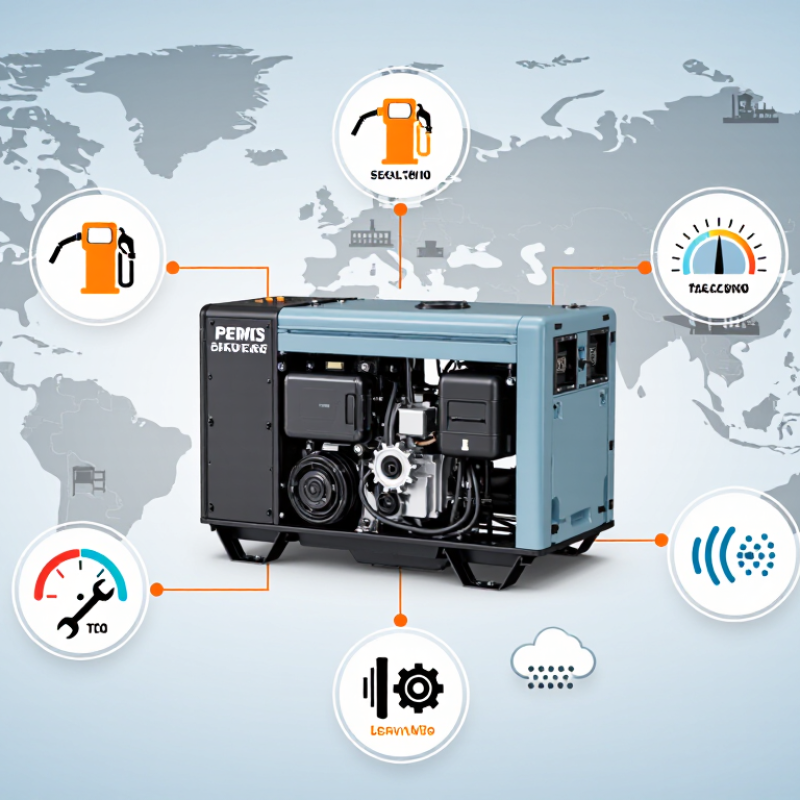
What Defines a Perkins Generator in the 2026 Global Market?
In 2026, a generator is defined by more than its engine. Buyers need a matched system: engine, alternator, controller, cooling package, and enclosure. The rating must also fit the duty. Standby, prime, and continuous power are not interchangeable. A unit sized only from a building’s average load may struggle when pumps or compressors start.
The IEA’s Global Energy Review 2025 reports that worldwide electricity demand grew 4.3% in 2024, the fastest annual rise in years outside the post-pandemic rebound. That growth makes dependable backup more valuable, but it does not make every diesel set suitable. Check fuel use at realistic loads, ambient-temperature limits, service intervals, and parts access. On a hot site, a crowded radiator can matter more than a polished brochure.
Look for documented performance under ISO 8528 ratings, clear test records, and controls that show alarms, load, and operating hours. Ask for measured fuel consumption at 50%, 75%, and full load; one headline figure rarely tells the whole story. Verify emissions requirements and after-sales support for the installation country. A tidy specification sheet can still conceal a weak service network. And buyers sometimes overlook noise, vibration, or the space needed to remove a filter. The definition is practical, not glamorous.
2026 Best Perkins Generator for Global Buyers? - What Defines a Perkins Generator in the 2026 Global Market?
| Evaluation dimension | What global buyers should verify | Why it matters |
|---|---|---|
| Power rating | Confirm whether the stated output is continuous, prime, or standby power, and check the applicable rating standard and operating conditions. | These ratings describe different duty profiles and are not interchangeable. Select against the actual load and expected operating hours. |
| Frequency and speed | Match the local electrical frequency. Four-pole generator sets commonly run at 1,500 rpm for 50 Hz or 1,800 rpm for 60 Hz. | Frequency and engine speed affect equipment compatibility and must match the intended site supply. |
| Voltage and phase | Specify required voltage, single- or three-phase output, neutral arrangement, and any permissible voltage reconfiguration. | Available configurations vary by generator model and alternator. Confirm compatibility with the site's distribution system. |
| Load acceptance | Review motor-starting requirements, step-load capability, transient voltage and frequency response, and the effects of non-linear loads. | Large motors, pumps, compressors, and electronic loads can require careful sizing beyond a simple total-kilowatt calculation. |
| Fuel and consumption | Check approved fuel types, fuel-system requirements, and consumption data at stated load points and ambient conditions. | Fuel use changes with load, operating conditions, and configuration; compare like-for-like test data rather than a single unqualified figure. |
| Emissions compliance | Identify the destination country's emissions rules, permitted application, engine certification, and any after-treatment requirements. | Requirements differ by country, engine power category, installation type, and whether the unit is stationary or mobile. |
| Cooling and climate | Verify rated ambient temperature, altitude derating, radiator arrangement, ventilation, and suitability for the site's climate. | High ambient temperatures and altitude can reduce available output and influence enclosure and cooling-system selection. |
| Noise and enclosure | Compare sound-pressure data at a stated distance and measurement condition; check weather protection, access, and ventilation. | Noise limits and environmental exposure vary by installation. An enclosure must also allow adequate airflow and service access. |
| Controls and protection | Review monitoring, alarms, shutdown protections, remote communications, and compatibility with automatic transfer or paralleling systems. | Control functions should suit the site's operating plan and electrical system; confirm included features in the written specification. |
| Standards and documentation | Request the applicable performance, safety, electrical, and emissions documentation, plus wiring diagrams and commissioning requirements. | Documentation supports regulatory review, installation, maintenance, and verification that the delivered configuration matches the order. |
| Service and parts support | Confirm local technician availability, parts lead times, warranty terms, maintenance intervals, and required service facilities. | Lifecycle support can affect uptime and total ownership cost, particularly at remote or mission-critical sites. |
| Site and logistics fit | Check dimensions, operating weight, lifting points, foundation loads, access routes, shipping configuration, and local import requirements. | Transport, installation, and site constraints should be assessed before finalizing the generator-set configuration. |
Buyer note: The values and configurations above are general selection guidance, not a product specification. Confirm all ratings, certifications, and operating limits against the exact generator-set documentation and local requirements.
Related Posts
-
10 Best Perkins Generator Suppliers for Global Buyers
-
Top 10 Perkins Generator Suppliers for Global Buyers
-
Top Reasons to Choose Perkins Generator for Your Power Needs in 2025
-
How to Choose the Right Perkins Generator for Your Needs?
-
What Are the Benefits of Perkins Diesel Engines in 2026?
-
Maximize Your Power Supply: The Unmatched Reliability of Perkins Generators for Every Need