Top 10 Power Diesel Generators for Global Buyers

Selecting a generator across borders is not just a matter of comparing headline kilowatt ratings. A workshop running a compressor has different needs from a clinic protecting refrigeration during an outage. This guide reviews ten power diesel generator options through practical buyer considerations: continuous and standby output, fuel use, engine design, controls, noise, and service access. Small details matter. A fuel filter that is difficult to source can cause more trouble than a polished control panel.

Global buyers should check each model’s published specifications against their site conditions. Heat, altitude, dust, load changes, and operating hours can affect performance. Confirm the rated voltage and frequency, connection requirements, and whether the quoted output is prime or standby power. Ask suppliers for maintenance intervals, parts availability, warranty terms, and clear documentation. These questions help separate a suitable machine from one that merely looks strong on paper.

This overview is a comparison guide, not a substitute for a site assessment or independent testing. Manufacturer figures may use different rating methods, so direct comparisons need care. That can be inconvenient, and the available information is not always complete. We will flag the details buyers should verify before requesting a quotation, while avoiding claims that cannot be supported by published data. The right choice is the unit that fits the real load, can be maintained locally, and remains dependable over years of use—not simply the largest model in the list.
Top 10 Power Diesel Generators for Global Buyers

Understanding Power Diesel Generators and Their Main Applications

A power diesel generator converts fuel energy into electricity through an engine and alternator. It can supply backup power during grid failures or provide prime power where grid access is weak. These roles are different: standby sets run during outages, while prime-power units may operate for long periods. That distinction matters.

The International Energy Agency’s Electricity 2024 report estimates that data centres used about 460 TWh of electricity in 2022. It says demand could exceed 1,000 TWh by 2026, increasing the importance of dependable backup systems. Diesel generators are one option, alongside batteries and other technologies.

The IEA and World Bank’s Tracking SDG7: The Energy Progress Report 2024 estimates that 685 million people lacked electricity in 2022. That figure is not a generator-market estimate, but it highlights the continuing need for reliable power in remote locations.

Typical applications include hospitals, construction sites, mines, farms, telecom facilities, and data centres. A clinic needs clean, stable power for refrigeration and essential equipment; a worksite may need to start heavy motors. Buyers should match rated output to actual loads, including startup surges, and consider altitude, temperature, runtime, fuel storage, noise, and maintenance access. A unit that looks adequate on paper may struggle in heat or at high altitude. That detail is easy to miss.

Key Specifications for Comparing Generator Performance

Top 10 Power Diesel Generators for Global Buyers
Key Specifications for Comparing Generator Performance

Comparing diesel generators starts with rated output, but the rating type matters just as much. ISO 8528-1 distinguishes standby, prime, and continuous power, each designed for different operating patterns. A 500 kW standby rating does not mean the unit can deliver 500 kW around the clock. Check the rating definition, permitted annual hours, and overload conditions before comparing prices. Small print matters.

Fuel consumption should be compared at several loads, not only at full output. Ask for litres per hour at 25%, 50%, 75%, and 100% load, then match those figures to your expected duty cycle. The U.S. Energy Information Administration’s Monthly Energy Review lists diesel fuel at about 137,381 Btu per gallon. That conversion helps buyers check fuel-use calculations, but it cannot replace a manufacturer’s tested consumption data. Tank capacity alone is a poor guide to runtime.

Also compare voltage, frequency, power factor, transient response, and ambient operating limits. A generator serving a site with motor loads may need to handle sharp starting currents; steady-state kW figures will not show the whole picture. Check sound levels and service intervals against the intended installation and maintenance plan. Datasheets are not always perfectly comparable, so request the test conditions behind each figure. That extra step can expose a mismatch before delivery.

Top 10 Power Diesel Generators for Global Buyers

For global buyers, the top 10 power diesel generators are not necessarily the ten largest units. A useful shortlist compares machines by duty, site conditions, and support needs. Standby units suit emergency backup, while prime-rated generators handle regular operation. Check the rated output against measured demand, including pumps and motors that draw extra current at startup. A neat specification sheet can still mislead.

Voltage and frequency must match the equipment on site. So must the enclosure, fuel capacity, and service access. Noise travels far. At a coastal site, corrosion protection matters; at altitude, available output may fall. Ask for performance data at the expected temperature and elevation, not only standard test conditions. Also confirm local emissions requirements, safety provisions, and the availability of qualified technicians and replacement filters. These details vary by country and installation, so written confirmation is valuable.

Compare the ten candidates using the same load profile and operating hours. Review fuel consumption at partial load, not just at full output. Check how quickly routine maintenance can be completed, and whether common wear parts can be sourced locally. A generator may look strong on price yet cost more when service is distant. I would also leave room for uncertainty: demand estimates change, and real sites rarely match a perfect spreadsheet.

How Leading Generator Models Differ in Features and Uses

Power diesel generators are not interchangeable, even when their rated output looks similar. Buyers comparing ten leading configurations should check duty rating, load profile, and starting demand before price. Prime-rated units suit regular, changing loads; standby sets are designed for backup service. That distinction affects maintenance planning and expected operating hours. A workshop with compressors needs more surge capacity than its steady kilowatt figure suggests.

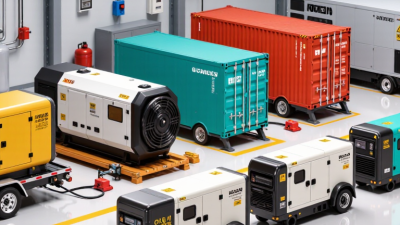
Portable, skid-mounted, and trailer-mounted designs solve different site problems. Compact sets fit tight plant rooms, while weatherproof enclosures protect outdoor installations from rain and help reduce noise. Larger industrial models may add easier service access, coolant heaters, or remote monitoring. These features matter when technicians cannot visit daily. Still, extra electronics can complicate troubleshooting.

Fuel tank size shapes runtime, but it should match realistic loading rather than a brochure estimate. Long periods at very light loads can create operating and maintenance concerns. Check voltage, frequency, phase, control-panel alarms, and transfer-equipment compatibility. Ask for test records and a clear service schedule. Small details count. Forecasts are rarely perfect, so leave reasonable capacity for future equipment without oversizing. Verify local installation, emissions, and safety requirements before ordering.

Global Purchasing Factors: Standards, Service, and Fuel Availability

Global buyers should compare more than rated kilowatts. The 2024 Tracking SDG 7 report estimated that 685 million people lacked electricity access in 2022. The figure highlights uneven power access, but it does not predict outages at a specific site. Buyers should check local grid conditions, duty cycles, altitude, temperature, and load-starting requirements before choosing a diesel generator.

Standards and support matter after delivery. Confirm that the generator’s test records and stated performance align with ISO 8528 requirements and the destination market’s applicable rules. Ask who can provide trained technicians, routine maintenance, and replacement parts, and how quickly they can reach the site. Fuel deserves equal attention: verify local diesel availability, storage conditions, and the fuel specifications required by the engine. A plan based on one supplier can be fragile. Small details matter.

Tips: Before ordering, request a written service plan and test the unit under a representative load. Check fuel access along the whole supply route, not just near the installation. A checklist helps, but it cannot capture every field surprise. That is worth remembering.

Top 10 Power Diesel Generators for Global Buyers — Global Purchasing Factors: Standards, Service, and Fuel Availability

Power class Typical output range* Common applications Standards and compliance checks Service considerations Fuel availability considerations
1. Compact 10–30 kVA Small commercial sites, workshops, and essential backup loads Confirm ISO 8528 performance classification and local electrical, noise, and emissions rules. Check access to routine filters, batteries, and qualified local technicians. Road diesel is commonly available in many markets; confirm permitted fuel grade and storage rules locally.
2. Light commercial 30–60 kVA Retail premises, small offices, and rural facilities Verify rated voltage and frequency, protective-device requirements, and applicable emissions limits. Ask about maintenance intervals, service response times, and parts stock in the destination country. Assess delivered fuel quality and seasonal operating conditions, including cold starting where relevant.
3. Mid-range commercial 60–100 kVA Hotels, farms, telecom sites, and medium-sized facilities Use ISO 8528 data to compare ratings and performance; confirm whether the stated rating is prime or standby. Confirm trained service coverage, commissioning support, and availability of control-system parts. Estimate delivery frequency and tank capacity from expected runtime and local fuel-supply reliability.
4. Large commercial 100–200 kVA Larger buildings, water systems, and light industrial operations Check installation requirements, earthing and protection design, and local emissions and permitting rules. Plan for load-bank testing, scheduled maintenance, and access to qualified high-voltage personnel where required. Check local sulfur limits and fuel specifications against the engine documentation and emissions system requirements.
5. Industrial 200–350 kVA Factories, logistics sites, and larger commercial campuses Review ISO 8528 test data, site noise limits, and emissions approvals applicable to the installation location. Require a documented commissioning plan, maintenance schedule, and parts-support arrangement. Evaluate bulk delivery access, on-site storage permissions, and contingency supply during disruptions.
6. Heavy industrial 350–500 kVA Mining support, processing plants, and major infrastructure Confirm the generator’s declared rating, operating conditions, and compatibility with local grid and safety codes. Assess lifting and transport needs, specialist service capacity, and availability of critical spares. Remote sites may need larger storage reserves and a verified fuel-delivery plan.
7. Infrastructure-scale 500–750 kVA Hospitals, utilities, data facilities, and large construction projects Check local permitting and emissions rules; EU Stage V and U.S. EPA Tier 4 Final apply only to covered equipment and markets. Confirm commissioning, remote monitoring support, and response arrangements for critical-load applications. Check whether compliant fuel is consistently available, especially where after-treatment systems are required.
8. Large infrastructure 750–1,000 kVA Large campuses, industrial plants, and utility support Require documented performance and emissions evidence for the specific configuration and destination market. Plan for specialist maintenance, spare-component logistics, and site-specific installation engineering. Model fuel consumption at the expected load; actual consumption varies by engine, rating, and operating conditions.
9. Very large 1,000–1,500 kVA Major industrial sites and large standby-power installations Check local electrical interconnection, safety, emissions, and site-construction requirements before purchase. Verify that local teams can support the unit’s controls, alternator, engine, and emissions equipment. Confirm bulk-fuel infrastructure, storage permits, fuel monitoring, and delivery continuity.
10. Modular power-plant scale Above 1,500 kVA Large industrial, mining, and multi-unit power projects Assess the complete project against applicable grid, emissions, safety, and permitting rules; verify synchronizing and protection studies. Request an integrated service plan covering commissioning, controls, major overhauls, and long-term parts supply. Undertake a site fuel-supply study, including storage, delivery routes, fuel quality, and emergency reserves.

*Indicative generator-set ranges for comparison, not a product specification or ranking. Available ratings and configuration vary. kVA is apparent power; confirm kW, power factor, prime or standby duty, voltage, frequency, and site conditions with the supplier. ISO 8528 covers reciprocating-engine-driven AC generating sets; emissions requirements depend on jurisdiction, equipment category, and installation.

Go to Top