2026 Top Caterpillar Diesel Generators for Global Buyers
Choosing the right caterpillar diesel generator in 2026 requires more than comparing rated kilowatts. Global buyers must examine application demands, operating conditions, fuel quality, and long-term support. A generator serving a hospital differs greatly from one powering a construction site, mine, data center, or remote factory.
This guide introduces leading Caterpillar diesel generator options for international projects. It considers standby and prime power ratings, engine response, alternator performance, fuel efficiency, noise control, and emissions requirements. Altitude and heat matter. A unit tested near sea level may perform differently at a dusty, high-altitude site. That detail is easy to overlook.
Reliable purchasing also depends on local service capability. Buyers should verify genuine parts availability, technician training, warranty coverage, and maintenance response times before signing an order. Control panels, automatic transfer systems, remote monitoring, and sound-attenuated enclosures can improve daily operation. Small details matter.
There is no universal best model. A compact generator may suit a small commercial facility, while a larger system may be necessary for industrial motor starting or continuous loads. Published specifications are useful, but actual performance depends on installation quality and load management. This guide may not answer every site-specific question. That is intentional. Careful buyers should confirm final selections with qualified engineers, authorized dealers, and local compliance specialists. Practical evidence remains more valuable than attractive claims.

Caterpillar Diesel Generators: Definition, Purpose, and Global Applications
A diesel generator is a power system that combines a diesel engine with an electrical alternator. The engine burns diesel fuel and creates mechanical rotation. The alternator converts that rotation into usable electricity. A control panel manages voltage, frequency, alarms, and automatic starting. Some models also include sound insulation, cooling systems, and weather-resistant enclosures.
Its main purpose is to supply dependable electricity when the grid fails or cannot reach a site. It can support hospitals, factories, offices, farms, data centers, and construction projects. During an outage, an automatic transfer switch may start the generator within seconds. Technicians should test this sequence under realistic loads, not only during an empty-load inspection. That small detail matters.
Global applications differ by climate and infrastructure. Remote mining sites may require large fuel tanks and reinforced frames. Tropical regions need strong ventilation and corrosion protection. Cold areas may need battery heaters and fuel management systems. Coastal projects face salt exposure. Fuel quality still varies between markets. Buyers should check local service access, emissions requirements, operating hours, and spare-part availability before selection. No setup is perfect. A generator can be powerful yet unsuitable if maintenance support is distant. Practical experience shows that correct sizing is equally important. Oversizing wastes fuel, while undersizing causes overheating, unstable voltage, and premature wear. Load profiles should be measured before purchase whenever possible.
Key Specifications for Comparing 2026 Caterpillar Generator Models
For 2026 diesel generator comparisons, begin with the duty rating, not the advertised kVA. Standby output supports emergency loads, while prime output supports variable or continuous operation. Compare both ratings under ISO 8528 conditions. Record voltage, frequency, phase, and allowable voltage distortion. A 50 Hz, 400 V set may not suit a 60 Hz, 480 V facility without changes. Small details matter.
Load behavior matters more than peak capacity. Check fuel consumption at 25%, 50%, 75%, and 100% load, then calculate runtime from the actual tank volume. Review transient response, block-load acceptance, and altitude derating. A model rated at sea level may lose capacity in a hot, high-altitude site. The IEA’s Electricity 2024 report expects data-centre electricity use to exceed 1,000 TWh by 2026. That growth increases the need for stable backup power. It also makes efficiency comparisons less optional.
Ask for emissions certification, noise data, enclosure ratings, cooling limits, and service intervals. Confirm automatic transfer-switch compatibility and remote monitoring protocols. The Uptime Institute’s Global Data Center Survey repeatedly identifies power issues among major outage causes, so maintenance access deserves equal attention. Field experience shows that neglected batteries often fail before the engine. That is easy to overlook. Buyers should also verify regional parts availability, technician response times, warranty exclusions, and documented factory-test results. Some published figures assume ideal conditions. Treat them as starting points, not promises.
2026 Diesel Generator Models: Key Specifications for Global Buyers
Comparison of common 50 Hz diesel-generator capacity classes using rated apparent power and estimated diesel consumption at 75% load. Fuel-use estimates are calculated from a typical 0.21 L/kWh operating benchmark.
Higher-capacity generator sets generally provide better output per unit of fuel, but final fuel consumption depends on load profile, ambient conditions, alternator efficiency, frequency, and local emissions requirements.
Top Caterpillar Diesel Generator Series for Different Power Requirements
Choosing a diesel generator series starts with the load, not the nameplate. Global buyers should measure running demand, starting current, altitude, temperature, and fuel availability before selecting equipment. A generator that looks powerful on paper may struggle when several motors start together.
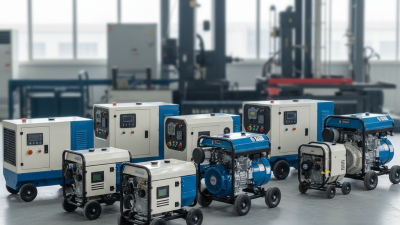
Compact series suit small workshops, retail stores, farms, and temporary construction cabins. They usually support lighting, pumps, refrigeration, and basic tools. Mid-range series work better for hotels, clinics, warehouses, and production lines. These applications need stable output during long operating hours. Heavy-duty series are designed for mining camps, large factories, data facilities, and critical infrastructure. They handle larger loads and frequent duty cycles, but installation quality becomes equally important.
Keep it practical. Allow breathing room. Experienced technicians often recommend reserving 15% to 25% capacity for future expansion and unexpected starting loads. Automatic transfer systems can shorten outage time, while sound-attenuated enclosures reduce disturbance near occupied buildings. Buyers should also verify emissions rules, voltage compatibility, service access, and spare-parts availability in the destination country. In my experience, maintenance access is often underestimated. A generator may perform well, yet poor filter access can increase service time and operating costs. Load testing, oil analysis, and documented inspections provide stronger evidence than brochures alone. Some projects still need a more careful review after installation.
Fuel Efficiency, Emissions, Maintenance, and Operating Costs
For global buyers, diesel generator selection should begin with measured fuel use, not brochure peak power. At 75% load, many modern industrial sets consume roughly 0.24–0.30 liters per kilowatt-hour, depending on engine size and site conditions. The U.S. Energy Information Administration reports about 137,381 Btu in one gallon of diesel, making fuel quality and loading strategy financially important. Lightly loaded units waste fuel.
Emissions compliance is equally practical. The U.S. Environmental Protection Agency’s Tier 4 Final standards significantly reduce particulate matter and nitrogen oxides from nonroad diesel engines. European buyers should compare Stage V requirements. After-treatment systems can lower emissions, but they add sensors, fluids, heat, and maintenance points. They are not maintenance-free. Dusty air, poor fuel, and long idle periods can shorten filter life, especially at remote construction sites.
Operating cost includes fuel, oil, filters, coolant, transport, and unscheduled repairs. The EPA’s 2024 Emission Factors Hub estimates diesel combustion at about 10.21 kilograms of carbon dioxide per gallon. This figure helps buyers model emissions alongside cost. A 500-kilowatt unit running 2,000 hours yearly at 70% load may consume approximately 250,000–300,000 liters of fuel, depending on efficiency. Small errors become expensive. Buyers should request independent load-bank tests, service-hour records, and lifetime fuel curves. Manufacturer claims can be useful, but field conditions often disagree.