Top 10 Power Diesel Generator Types for Global Buyers?

Choosing among the top 10 power diesel generator types requires more than comparing kilowatt ratings. Global buyers must examine operating conditions, fuel availability, maintenance access, and local grid reliability. A 500 kW standby unit may suit a hospital, yet fail as the primary source for a remote mine. Load behavior matters.

The market includes standby, prime, continuous, mobile, containerized, silent, marine, high-altitude, hybrid-ready, and rental generators. Each design solves a different problem. Some prioritize rapid startup. Others support long-hour operation, harsh climates, or frequent relocation. Buyers should check voltage, frequency, phase configuration, fuel consumption, cooling systems, noise levels, and emissions documentation. Service support is equally important. A technically excellent generator becomes a poor investment when filters or trained technicians are unavailable.

Rudolf Diesel, the engine inventor, observed, “The use of vegetable oil for engine fuels may seem insignificant today. But such oil may become, in the course of time, as important as the petroleum and coal-tar products of the present time.” His comment highlights a lasting purchasing lesson: fuel strategy can shape equipment value. Modern power diesel systems still depend on practical fuel decisions, even when alternative options are considered. A neat ranking can mislead. There is no universal best type. Site altitude, ambient heat, duty cycle, and future expansion may change the answer. This guide compares ten major generator types through those real-world conditions. It also identifies overlooked compromises, including wet stacking, oversizing, acoustic limits, and weak after-sales coverage. The final choice should be evidence-based, not driven by the largest nameplate rating.
Top 10 Power Diesel Generator Types for Global Buyers?

How Power Diesel Generator Types Are Classified

Top 10 Power Diesel Generator Types for Global Buyers

Power diesel generators are classified by several practical factors, not one universal system. The most useful categories include standby, prime, and continuous-duty generators. Standby units support facilities during outages. Prime units operate for changing loads in remote locations. Continuous-duty models run for long periods at stable loads.

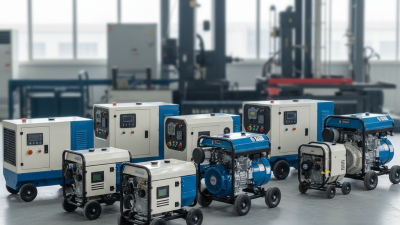
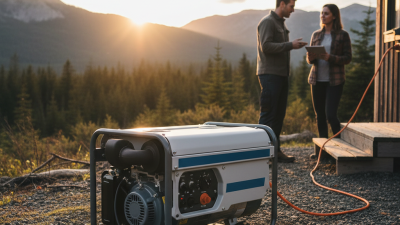
Other classifications describe physical design and operating conditions. Portable generators suit construction sites and temporary power needs. Stationary generators serve factories, hospitals, and data facilities. Open-frame units improve access for maintenance, while enclosed units reduce noise and protect internal parts. Air-cooled models work well at lower outputs and moderate temperatures. Liquid-cooled models manage heavier loads more effectively.

Electrical configuration creates another division. Single-phase generators often supply small buildings and basic equipment. Three-phase generators support motors, workshops, and industrial distribution systems. Buyers should also compare engine speed, rated frequency, voltage range, fuel efficiency, and automatic transfer compatibility. These details affect performance more than a product label.

In real purchasing work, classifications often overlap. A generator can be portable, enclosed, prime-rated, and three-phase at the same time. That sounds confusing. It is. Some sellers emphasize maximum output instead of usable continuous power. Check the duty rating, load profile, altitude limits, cooling method, and certified test data. Local installation rules and emissions requirements also deserve careful review. A neat category cannot replace a site assessment.

Top 10 Power Diesel Generator Types for Global Buyers

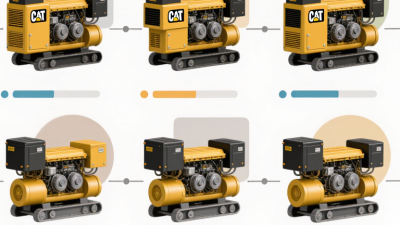
Diesel generator types are commonly classified by their prime-rated electrical output. The chart below presents ten widely used power classes, from compact backup units to large-scale industrial generator sets.

Ratings are shown in kVA, the standard apparent-power unit used for generator sizing. Approximate kW values are based on a 0.8 power factor, a common reference for diesel generator sets. Actual output, application, and operating mode may vary by model and installation conditions.

The Top 10 Power Diesel Generator Types for Global Buyers

The Top 10 Power Diesel Generator Types for Global Buyers begin with duty requirements. The ten practical types are standby, prime, continuous, mobile trailer, containerized, open-frame skid, sound-attenuated, weatherproof, high-voltage, and parallel modular sets. Hybrid diesel-battery systems are also gaining attention, although they overlap with several categories.

According to the International Energy Agency’s Electricity 2024 report, data-centre electricity demand may exceed 1,000 TWh by 2026. That pressure increases demand for reliable backup and prime-power systems. Standby units suit hospitals, offices, and emergency facilities. Prime units support construction sites and remote mines. Continuous sets operate near steady loads for isolated grids. Mobile and containerized models simplify transport and rapid deployment. Open-frame sets reduce cost, but expose equipment to dust and rain. Sound-attenuated and weatherproof enclosures protect operators and equipment in populated areas. High-voltage sets reduce losses across long industrial cable runs. Parallel modular systems improve capacity and maintenance flexibility. Hybrid systems can reduce idle fuel consumption.

ISO 8528-1 remains essential when comparing ratings, load profiles, and operating limits. The U.S. Environmental Protection Agency also emphasizes emission controls for nonroad compression-ignition engines. Fuel quality matters more than many buyers expect. Poor storage can block filters within weeks. That lesson is easy to underestimate. The categories overlap, so a “best” type rarely exists. Some specifications look impressive but fail under sudden motor starting loads. Local climate, service access, fuel standards, and spare-parts availability should shape the final selection.

Key Differences in Capacity, Design, and Operating Purpose

Top 10 Power Diesel Generator Types for Global Buyers?

Diesel generators differ in more than rated output. Their capacity, enclosure, and duty rating shape where they work best. Portable units suit smaller loads and changing job sites. Wheels and lifting points make relocation easier. Standby units provide backup during outages, while prime-rated models support variable loads for extended operating periods. Continuous-duty sets are designed for steady demand. These ratings are not interchangeable.

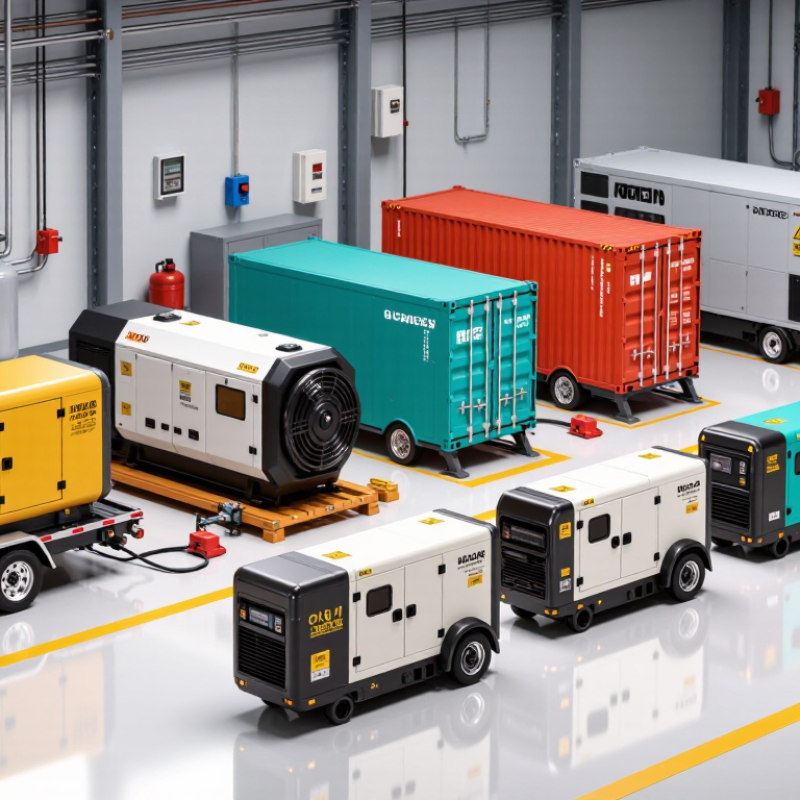
Design changes the working environment. Open-frame sets allow easier access for service, but expose equipment to weather and create more noise. Sound-attenuated enclosures reduce noise, a useful feature near occupied buildings. Trailer-mounted sets can move between sites. Containerized units package larger equipment, controls, and fuel connections for installation outdoors. High-voltage configurations serve facilities with compatible electrical systems. Marine-rated designs typically use corrosion-resistant details for damp, salty conditions. Small sites need mobility.

The categories can overlap, which makes comparisons untidy. A containerized set, for example, may also be prime-rated and sound-attenuated. Buyers should match output to the actual load, including motor-starting surges, rather than choose by headline kilowatts alone. Check the required voltage, running hours, fuel access, ventilation, and service space. Ratings and performance depend on operating conditions, maintenance, and the manufacturer’s specifications. One point is easy to miss: a larger generator is not automatically a better fit.

Fuel Efficiency, Emissions, and Regional Compliance Factors

Top 10 Power Diesel Generator Types for Global Buyers

Fuel Efficiency, Emissions, and Regional Compliance Factors

Power diesel generators differ by duty, load profile, and installation environment. Common options include standby, prime, continuous, mobile, trailer-mounted, silent, marine, high-voltage, low-emission, and hybrid-ready diesel sets. Each type affects fuel use, service intervals, noise, and emissions performance. A standby unit may operate efficiently during outages, but poor loading can increase fuel consumption and carbon buildup.

Fuel efficiency should be checked at 25%, 50%, 75%, and 100% load. Rated fuel figures alone can mislead buyers. In field assessments, generators often run below their ideal load for long periods. That wastes diesel. Automatic load management, correctly sized alternators, and scheduled maintenance can improve real operating results. Small details matter, such as clogged filters, worn injectors, and extended idling.

Emissions compliance depends on the destination, engine rating, and operating purpose. Buyers may need to verify particulate limits, nitrogen oxide requirements, noise rules, and fuel quality standards. Requirements can differ between urban projects, temporary construction sites, data centers, and remote facilities. Exhaust treatment may also require extra space, heat control, and trained maintenance staff. A compliant design on paper may become difficult onsite. Local inspection agencies and qualified engineers should review documentation before shipment, installation, and commissioning.

How to Select the Right Diesel Generator for Each Application

Choosing the right diesel generator starts with the application, not the largest kilowatt figure. A clinic needing backup power has different priorities from a construction site running tools all day. Identify essential loads, expected run time, and whether the unit will provide standby, prime, or continuous power. Then check motor starting demand, power factor, and future load growth. A pump may draw several times its running current when it starts.

Consider the installation too. Portable sets suit changing work sites, while enclosed or containerized units can help manage weather and noise. For remote locations, fuel storage and service access matter as much as rated output. High altitude and hot air reduce engine performance, so confirm the manufacturer’s derating data. Small details matter.

Tips: Record each load’s running and starting watts. Ask a qualified supplier to verify sizing, voltage, frequency, and duty rating. Leave reasonable capacity for growth, but avoid extreme oversizing; lightly loaded engines can accumulate deposits over time.

Before purchase, check ventilation, exhaust routing, grounding, and routine maintenance access. Compare fuel use at the loads you actually expect, not only at full output. Request a commissioning test with real equipment where possible. Selection is rarely perfect on paper; site conditions can expose assumptions, so review them before installation.

Top 10 Power Diesel Generator Types for Global Buyers — How to Select the Right Diesel Generator for Each Application
Generator Type Typical Power Range Operating Duty Common Output Typical Engine Speed Best-Fit Applications Main Advantages Key Selection Considerations
Standby Diesel Generator 10–3,000 kVA Emergency backup; usually limited annual running hours Single-phase or three-phase AC; 50 or 60 Hz 1,500 rpm at 50 Hz
1,800 rpm at 60 Hz
Homes, offices, retail facilities, schools, small healthcare sites and commercial buildings Automatic backup during utility failure; lower purchase cost than prime-duty equipment Calculate the starting demand of motors, pumps and HVAC equipment. Confirm automatic transfer switch compatibility and required backup duration.
Prime Power Diesel Generator 10–4,000 kVA Variable load operation for extended or unlimited annual hours, subject to manufacturer limits Three-phase AC; 50 or 60 Hz 1,500 or 1,800 rpm Remote sites, construction projects, agriculture, rental fleets and areas with unreliable grids Designed for regular operation and changing loads; suitable where utility power is unavailable Choose a unit with adequate average load. Avoid prolonged operation below the minimum recommended load to reduce wet-stacking risk.
Continuous-Rated Diesel Generator 50–4,000 kVA Constant load operation for 24-hour service and high annual operating hours Three-phase AC; 50 or 60 Hz 1,500 or 1,800 rpm Off-grid microgrids, mining, remote industrial plants and dedicated power stations Built for stable, long-duration loading and predictable power demand Use only when the load is reasonably constant. For variable loads, a prime-rated set or parallel system may be more appropriate.
Silent or Sound-Attenuated Generator 10–1,000 kVA Standby, prime or continuous duty depending on the engine and alternator rating Single-phase or three-phase AC; 50 or 60 Hz 1,500 or 1,800 rpm Urban construction, residential developments, events, hospitals, hotels and noise-sensitive locations Reduced radiated noise through acoustic enclosure, airflow design and vibration isolation Check the sound level measurement standard, distance and load condition. Allow enough clearance for cooling, exhaust and maintenance.
Containerized Diesel Generator 500–4,000+ kVA Prime, continuous or standby operation Three-phase AC; 50 or 60 Hz 1,500 or 1,800 rpm Large construction sites, mining operations, data centers, utilities and modular power plants Weather protection, improved security, simplified transport and faster site installation Verify container dimensions, lifting points, ventilation, exhaust routing, fire protection, fuel autonomy and local transport restrictions.
Trailer-Mounted Mobile Generator 20–1,500 kVA Temporary prime or standby operation Single-phase or three-phase AC; 50 or 60 Hz 1,500 or 1,800 rpm Emergency response, roadwork, construction, outdoor events, rental service and temporary facilities Fast relocation and flexible deployment without permanent foundations Confirm road regulations, axle load, braking system, towing requirements, cable length and site grounding arrangements.
Parallel or Synchronised Generator System 200–10,000+ kVA total Standby, prime or continuous operation with multiple generator sets Three-phase AC; synchronized voltage, frequency and phase angle Usually 1,500 or 1,800 rpm Data centers, hospitals, airports, factories, large buildings and critical infrastructure Scalable capacity, improved redundancy, easier maintenance and better efficiency at partial load Evaluate load-sharing controls, synchronization equipment, short-circuit capacity, redundancy target and future expansion plans.
High-Voltage Diesel Generator 500–4,000+ kVA Prime, continuous or standby operation Medium-voltage output, commonly 3.3–13.8 kV depending on design 1,500 or 1,800 rpm Large industrial plants, mines, utility systems and sites with long-distance power distribution Lower current for the same power, helping reduce voltage drop and conductor size over long distances Specify system voltage, insulation level, protection relays, earthing method, switchgear and qualified high-voltage maintenance support.
Data-Center-Grade Diesel Generator 500–3,000+ kVA Emergency standby with frequent testing and high availability requirements Three-phase AC; 50 or 60 Hz 1,500 or 1,800 rpm Data centers, telecommunications hubs, financial facilities and other mission-critical loads Rapid load acceptance, stable frequency and voltage, robust controls and compatibility with redundant power architectures Assess step-load performance, harmonic compatibility with UPS systems, redundancy level, fuel storage, testing procedures and black-start requirements.
Hybrid Diesel-Battery Generator System 20–2,000 kVA generator output Variable prime or standby operation supported by battery energy storage AC output with battery inverter integration; 50 or 60 Hz Variable engine operation or conventional 1,500/1,800 rpm operation Remote telecom sites, microgrids, renewable-energy systems, temporary power and low-load applications Lower fuel consumption and noise during light loads; battery can handle peaks and short interruptions Size the battery for peak demand and required autonomy. Confirm energy-management controls, battery temperature range, fire safety and replacement planning.
Go to Top