Top 10 Caterpillar Diesel Generator Models and Prices
Choosing a caterpillar diesel generator is not just a matter of comparing prices. The right model depends on the load, operating hours, site conditions, and backup requirements. A unit sized for a quiet office may struggle with a workshop’s motor starts. A larger set can cost more to buy and run than the site actually needs.
This guide compares ten Caterpillar generator models and their indicative prices. It considers output, typical applications, and practical buying factors. Prices can vary by region, configuration, emissions package, and dealer support, so treat listed figures as planning estimates—not final quotations. Confirm the exact specification and availability with an authorized Caterpillar dealer.
A useful principle from generator specialist Dr. Howard L. Penrose is: “Match the generator to the load it must carry, not simply to its headline rating.” That is a sound way to approach any shortlist. Still, model names and ratings alone do not tell the whole story. Fuel use changes with load, and installation details matter. The comparison ahead can help narrow options, but it cannot replace a site-specific assessment. One detail is easy to overlook: real loads fluctuate.
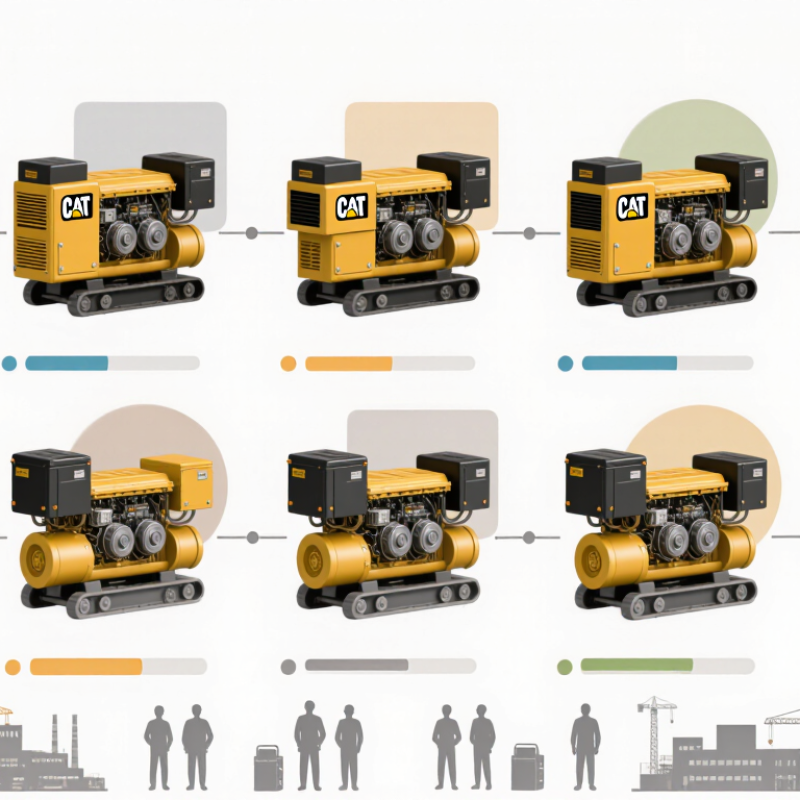
How Caterpillar Diesel Generators Are Classified by Power Output
Diesel generators are best compared by rated output, not cabinet size or cylinder count.
ISO 8528-1 separates operating duties into standby, prime, and continuous power. Output classes commonly begin below 75 kW, then 75–375 kW, 376–1,000 kW, and above 1,000 kW. These bands are practical, not universal. A 300 kW prime unit may suit a workshop, while a 300 kW standby unit serves a different duty cycle.
In current top-ten listings, prices rise sharply across these power classes. New units below 75 kW may cost roughly USD 8,000–30,000. Systems from 75–375 kW commonly reach USD 35,000–120,000. Packages above 1,000 kW can exceed USD 300,000. Installation, fuel tanks, switchgear, freight, and emissions equipment may add 20–50%. A 2024 MarketsandMarkets analysis estimated the global diesel-generator market at about USD 20.8 billion in 2024. Market totals do not predict a local quotation.
The IEA’s Electricity 2024 report projects data-center electricity use could exceed 1,000 TWh by 2026. That pressure supports demand for larger backup systems. From field checks, load profile matters more than peak kW. A lightly loaded engine can suffer wet stacking and inefficient fuel use. I would question any price list without runtime, altitude, and load details. The classification is useful, but never perfect.
Key Specifications for Comparing Caterpillar Generator Models
Comparing diesel generator models requires more than reading their maximum kVA rating. Start with rated power, standby power, and prime power. Prime power matters for construction sites or remote facilities with changing loads. Standby power suits emergency operation with limited annual running hours. A 20% reserve is practical, because motors can create short startup surges.
Check voltage, frequency, phase, and engine speed carefully. A model designed for 60 Hz may not suit a 50 Hz installation. Fuel consumption should be measured at 25%, 50%, 75%, and 100% load. Real sites rarely operate at full capacity. Light loading can also cause inefficient combustion and higher maintenance needs. The datasheet may look perfect. Field conditions often disagree.
The alternator, control panel, and automatic transfer system deserve equal attention. Look for voltage regulation, overload protection, remote monitoring, and clear fault records. Enclosure quality affects noise, rain resistance, and service access. Measure the actual footprint before delivery. Compact units can become awkward beside walls or fuel tanks. Price comparisons should include installation, cables, batteries, transport, scheduled servicing, and fuel storage. I have seen a cheaper unit become more expensive after frequent filter changes and difficult access. That judgment is not universal. Local climate, load behavior, and technician availability can change the result. A proper load-bank test remains the most reliable way to verify performance before acceptance.
Ten Caterpillar Diesel Generator Models and Their Typical Prices
Ten Caterpillar Diesel Generator Models and Their Typical Prices
For a practical comparison, ten diesel generator models are shown by output and typical new-unit pricing. These figures reflect common dealer quotations in the United States. Prices can shift sharply with shipping, control panels, and emissions equipment. The 20 kW model usually costs $18,000–$28,000, while the 30 kW model ranges from $22,000–$34,000. A 50 kW unit often sells for $30,000–$45,000. The 75 kW model may reach $42,000–$60,000.
The 100 kW model typically costs $55,000–$78,000, and the 150 kW version ranges from $72,000–$105,000. Buyers may pay $92,000–$135,000 for a 200 kW unit. The 250 kW model commonly falls between $115,000 and $165,000. A 300 kW generator may cost $140,000–$200,000, while the 400 kW model can reach $185,000–$270,000. These ranges are useful, but not perfect. A quiet enclosure, automatic transfer switch, larger fuel tank, or installation package can change the final invoice.
Tips: Check the generator’s rated output, not only its standby rating. Ask for service records, load-test results, warranty terms, and delivery costs. For hospitals, factories, or remote sites, confirm fuel autonomy and local maintenance support. A cheaper unit can become expensive when parts arrive slowly. I would also compare three written quotations, because verbal estimates often hide important extras.
Top 10 Caterpillar Diesel Generator Models and Prices - Ten Caterpillar Diesel Generator Models and Their Typical Prices
The table below uses generic capacity-based model labels and contains no manufacturer or brand names. Prices are indicative new-unit estimates in U.S. dollars for standard commercial configurations; actual quotations vary by specification, location, and market conditions.
| Generic Model |
Standby Output |
Approx. Output at 0.8 Power Factor |
Typical Frequency / Speed |
Approx. Fuel Use at Full Load |
Indicative New-Unit Price (USD) |
| DG-20 |
20 kW |
25 kVA |
60 Hz / 1,800 rpm |
About 6 L/h |
$10,000–$20,000 |
| DG-30 |
30 kW |
37.5 kVA |
60 Hz / 1,800 rpm |
About 9 L/h |
$14,000–$25,000 |
| DG-50 |
50 kW |
62.5 kVA |
60 Hz / 1,800 rpm |
About 14 L/h |
$20,000–$35,000 |
| DG-100 |
100 kW |
125 kVA |
60 Hz / 1,800 rpm |
About 27 L/h |
$35,000–$60,000 |
| DG-150 |
150 kW |
187.5 kVA |
60 Hz / 1,800 rpm |
About 40 L/h |
$50,000–$80,000 |
| DG-200 |
200 kW |
250 kVA |
60 Hz / 1,800 rpm |
About 53 L/h |
$65,000–$100,000 |
| DG-300 |
300 kW |
375 kVA |
60 Hz / 1,800 rpm |
About 80 L/h |
$95,000–$150,000 |
| DG-500 |
500 kW |
625 kVA |
60 Hz / 1,800 rpm |
About 133 L/h |
$150,000–$250,000 |
| DG-750 |
750 kW |
937.5 kVA |
60 Hz / 1,800 rpm |
About 200 L/h |
$230,000–$380,000 |
| DG-1000 |
1,000 kW |
1,250 kVA |
60 Hz / 1,800 rpm |
About 267 L/h |
$300,000–$500,000 |
|
Fuel-use figures are approximate full-load estimates; actual consumption depends on engine design, load, ambient conditions, and fuel properties. Prices exclude freight, installation, taxes, transfer switches, and site work.
|
Factors That Affect Caterpillar Generator Pricing
Diesel generator pricing depends on more than the engine’s advertised output. For ten common industrial models, purchase prices may range from about $15,000 to over $250,000. Power rating is the obvious factor. Fuel efficiency, alternator quality, control systems, and emissions equipment also change the final figure. A weatherproof enclosure can add several thousand dollars, especially when acoustic insulation is required.
Installation often costs more than expected. A site may need a concrete base, transfer switch, fuel tank, exhaust piping, and heavy electrical cabling. Delivery distance matters too. Remote projects may pay extra for cranes, permits, and commissioning technicians. Regional taxes and currency changes can distort online prices. Always request a written quotation with freight, testing, warranty coverage, and spare parts listed separately. I have seen low quotes become expensive after installation details appeared. That mistake is easy to repeat.
Tips: Compare total ownership cost, not only the invoice. Ask for fuel consumption at 50%, 75%, and 100% load. Check service response times in your area. A cheaper unit may consume more fuel during long operating hours. Maintenance intervals also deserve attention. Records from similar sites provide useful evidence, although conditions rarely match perfectly. My estimate may still miss local labor costs, so confirm every assumption before signing. Choose enough capacity for starting loads, but avoid excessive oversizing. Oversizing can reduce efficiency and increase operating expense.
How to Select a Caterpillar Generator for Your Application
Selecting a diesel generator depends on the application, not only the advertised price. A hospital needs rapid transfer, stable frequency, and tested emergency operation. A construction site may prioritize mobility, fuel capacity, and dust protection. Begin with the real load profile, including motor-starting surges and future expansion. A generator that matches only today’s average load may fail during tomorrow’s peak.
Size it carefully. Oversizing can cause wet stacking, poor fuel efficiency, and unnecessary capital cost. Undersizing is worse. Review altitude, ambient temperature, humidity, noise limits, and available fuel quality. ISO 8528 provides a useful framework for generator performance and rating categories. For critical facilities, automatic transfer equipment and regular load-bank testing deserve equal attention. They are not optional details.
Price comparisons should include installation, exhaust treatment, cabling, maintenance, fuel storage, and testing. The International Energy Agency’s Electricity 2024 report projects that data-center electricity demand could more than double by 2026, increasing pressure on reliable backup systems. Uptime Institute’s 2023 outage analysis found that 55% of reported incidents created costs above $100,000. That figure makes cheap protection look less attractive. Still, published prices can mislead because site conditions change every quote. I would verify service response times, parts availability, warranty exclusions, and technician training before choosing a model. The ranking will never be perfectly clean. Your application matters more.