Top 10 Industrial Diesel Generator Types for Global Buyers

Choosing an industrial diesel generator requires more than comparing rated kilowatts. Buyers must examine load profile, climate, fuel quality, runtime, emissions rules, and service access. A remote mining site may need a continuous-duty unit. A hospital may require standby power within seconds. A construction project may value mobility and quick installation.

The IEA’s Electricity 2024 report expects global electricity demand to grow strongly through 2026. Data centers, manufacturing, cooling systems, and transport electrification are major contributors. Power demand is rising. Uptime Institute’s Global Data Center Survey also continues to identify power problems as a leading cause of serious outages. These findings explain why dependable backup and prime-power equipment remains important, even as renewable energy expands.

This guide compares ten practical industrial diesel generator types for global buyers. It covers standby, prime, continuous, mobile, containerized, open-frame, silent, automatic-start, marine, and hybrid-ready configurations. Each type has different strengths, costs, maintenance needs, and operating limits. ISO 8528 classifications provide a useful technical foundation, while local emissions and safety requirements still control final selection.

No ranking is perfect. A low-cost generator can become expensive when spare parts are unavailable. A quiet enclosure can restrict cooling in a hot yard. Buyers should verify fuel consumption at actual load, not only at full load. They should also inspect radiator capacity, alternator quality, controller functions, warranty terms, and authorized service coverage. Reports provide direction, but site measurements decide the right machine. A practical choice survives dust, heat, voltage fluctuations, and long working hours. That is the real test.

Top 10 Industrial Diesel Generator Types for Global Buyers

Industrial Diesel Generator Classification by Design and Operating Principle

Top 10 Industrial Diesel Generator Types for Global Buyers

Industrial Diesel Generator Classification by Design and Operating Principle

Industrial diesel generators can be classified by physical design and operating purpose. Ten practical types include open-frame, weatherproof, sound-attenuated, containerized, trailer-mounted, skid-mounted, radiator-cooled, remote-radiator, standby, and prime-power sets. The first eight describe construction or cooling arrangements. The final two describe operating duties. These categories can overlap.

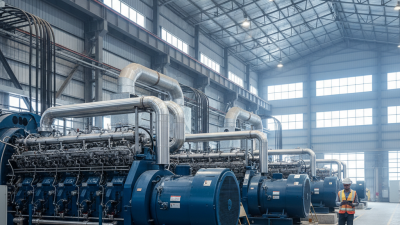
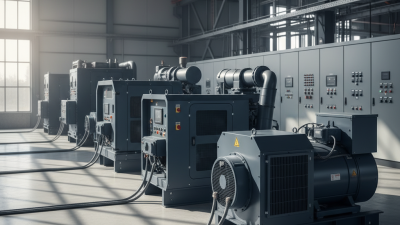
Open-frame sets simplify inspection inside a plant room. Enclosed sets reduce rain, dust, and noise near warehouses or construction sites. Containerized systems suit ports, mines, and remote projects because they combine housing, ventilation, and fuel connections. Trailer-mounted units provide temporary power, but road weight and local transport rules require careful checking. Remote-radiator designs help when hot air cannot discharge directly outdoors. That detail is often underestimated.

Operating classification needs more discipline. ISO 8528-1 separates emergency standby power, prime power, continuous power, and limited-time running power. Standby units support short outages. Prime units can carry variable loads for extended periods. Continuous units serve stable loads for long operating hours. Prime ratings are not unlimited. Fuel quality, ambient temperature, altitude, and maintenance alter real output. The IEA Electricity 2024 report expects data-centre electricity use to exceed 1,000 TWh in 2026, increasing demand for dependable backup systems. Yet demand alone does not justify oversizing. A 1,000 kW set running at 20% load may wet-stack, waste fuel, and age poorly. Load studies should come before procurement, although field measurements are sometimes incomplete.

The Top 10 Industrial Diesel Generator Types for Global Buyers

The Top 10 Industrial Diesel Generator Types for Global Buyers

Industrial buyers rarely need one universal generator. They need the right operating profile. The ten common types include standby, prime, continuous, mobile, trailer-mounted, containerized, open-frame, sound-attenuated, low-voltage, and high-voltage sets. Each design answers a different site problem.

A hospital may require automatic standby power, while a remote mine may need prime power for long daily operation.

High-voltage units reduce current over long distances, but they demand stricter installation controls. Containerized systems save construction time, although cooling and service access can become difficult.

The IEA’s Energy and AI report estimates that data-centre electricity use reached about 415 TWh in 2024 and could approach 945 TWh by 2030. That growth increases demand for reliable backup systems.

Yet capacity is not the only measure. Buyers should compare fuel consumption, load response, emissions certification, altitude derating, noise levels, and spare-parts access. ISO 8528 performance ratings help compare generator sets under defined conditions. Field experience still matters. A technically correct selection can fail when the fuel tank is undersized or maintenance access is ignored. I have seen specifications look excellent on paper, then struggle under uneven loads.

Tips: Map the actual load profile before requesting quotations. Separate essential and non-essential circuits. Check local grid codes, environmental rules, and emergency-power standards. Leave room for future expansion. Measure twice. A smaller, well-loaded unit may outperform an oversized set, but that assumption needs real operating data.

Key Specifications and Performance Differences Across Generator Types

Top 10 Industrial Diesel Generator Types for Global Buyers

Key Specifications and Performance Differences Across Generator Types

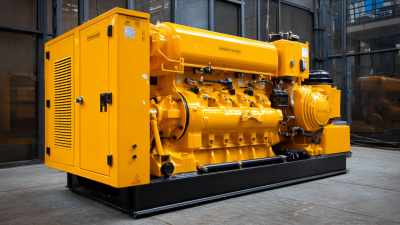
Industrial buyers should compare generator types by duty, not appearance. Standby sets supply emergency power, while prime sets support variable loads for extended periods. Continuous-duty models run near constant output but require stricter cooling and maintenance planning. Portable and trailer-mounted units improve mobility, although smaller fuel tanks can shorten runtime. Open-frame designs cool efficiently and cost less. Enclosed silent sets reduce noise and protect controls.

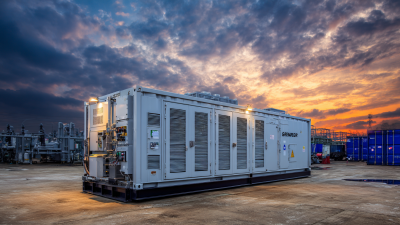
Containerized generators suit remote sites and large projects. They combine weather protection, fuel storage, ventilation, and access systems in one structure. High-voltage sets reduce current on long distribution routes, yet require qualified installation and careful switchgear selection. Marine-rated diesel generators resist vibration, salt exposure, and unstable vessel loads. Their alternators and cooling systems differ from land-based equipment.

Key specifications include rated kW/kVA, voltage, frequency, power factor, fuel consumption, and load acceptance. A 50 Hz system cannot simply replace a 60 Hz system without equipment checks. Altitude and ambient heat may reduce available output. Request test data at the intended temperature and elevation. One weakness in many comparisons is treating standby power as continuous capacity. That shortcut can cause overheating, poor voltage stability, or unexpected downtime. Service access, spare-part routes, and controller records also deserve inspection before purchase. A dusty, hot site may favor a larger generator than the nameplate alone suggests.

Choosing Generator Types for Sites, Loads, Fuel, and Environmental Conditions

Choosing among the top ten industrial diesel generator types starts with the site, not the brochure. Load comes first. Standby units suit hospitals and data rooms with occasional outages. Prime-power sets fit remote mines, farms, and construction sites. Continuous-duty models require stable loads and stronger cooling systems. Containerized units help temporary projects, while open-frame designs simplify maintenance indoors.

IEA’s Electricity 2024 report expects global electricity demand to grow by about 4% annually through 2026, increasing pressure on reliable backup and off-grid power.

Fuel quality and operating patterns also shape the choice. High-hour sites need engines designed for sustained loads, larger fuel tanks, and accessible filters. Emergency sites may prefer compact standby sets with automatic transfer controls. Dual-fuel configurations can reduce dependence on diesel where gas infrastructure is dependable, but they add control complexity.

EIA energy data shows distillate fuel remains an important industrial energy source, yet storage quality still matters. Water, dust, and biological growth can damage fuel systems.

Environmental conditions are easy to underestimate. At high altitude, thinner air reduces engine output. Heat demands larger radiators and careful derating calculations. Coastal sites need corrosion protection.

WHO’s 2021 air-quality guidelines set an annual PM2.5 guideline of 5 µg/m³, so exhaust treatment, stack height, and acoustic design deserve early review.

I would not select a generator from peak kW alone. Real loads fluctuate. Motors start sharply. Poor assumptions remain expensive. Reliability comes from matching the generator type to duty cycle, fuel logistics, climate, maintenance access, and local emissions requirements.

Global Purchasing Factors: Standards, Service, Delivery, and Total Cost

Global buyers comparing the top 10 industrial diesel generator types should begin with site requirements, not catalog ratings. Standby, prime, continuous, trailer-mounted, containerized, open-frame, silent, high-voltage, marine, and hybrid-ready units serve different operating conditions. Confirm local electrical, emissions, noise, fuel storage, and safety requirements before requesting quotations. Standards are not interchangeable. Ask for verified test records, protection settings, efficiency data, and load-bank results.

Service capability can determine uptime more than engine size. Check technician coverage near the installation site, spare-parts availability, response times, and remote monitoring support. Request a realistic maintenance schedule, including filters, coolant checks, battery testing, and injector inspections. A service promise without local parts may be weak. The buyer should also clarify training, warranty limits, commissioning duties, and emergency support hours.

Delivery planning needs technical detail. Confirm factory testing, export packing, transport dimensions, lifting points, documentation, and installation responsibilities. Calculate total cost using fuel consumption at actual loads, not only the nameplate rating. Include foundations, exhaust systems, cables, transfer equipment, maintenance labor, replacement parts, and disposal costs. A cheaper generator can become expensive after frequent low-load operation.

No checklist catches every surprise. Load profiles can change, and early estimates are sometimes wrong. Recheck assumptions with measured site data, especially for hospitals, factories, mines, and remote facilities.

Go to Top