Buying a kohler diesel generator is not simply a horsepower decision. It is a resilience decision.
The International Energy Agency’s Electricity 2024 report expects global electricity demand to grow by about 4% annually through 2026. More demand can increase pressure on aging grids, construction sites, hospitals, and commercial facilities. The U.S. Energy Information Administration has also documented how severe weather can sharply increase customer outage hours. Backup power is becoming less optional.
Brian Melka, president of Kohler Power Systems, has described the company’s purpose as “powering a more resilient world.” That idea should guide your evaluation. A generator must start quickly, carry real loads, and remain serviceable years later. A polished brochure cannot prove those qualities.
This guide presents 10 practical tips for choosing a kohler diesel generator. It considers load calculations, fuel storage, emissions requirements, transfer switches, sound levels, installation space, maintenance access, warranty coverage, and local service capability. Each detail matters. A generator that fits the budget may still fail the site.
Look closely.
The Uptime Institute’s Annual Global Data Center Survey repeatedly shows that power-related failures remain a major source of operational disruption. Its findings reinforce one uncomfortable truth: redundancy without testing is only an assumption. I have also seen specifications hide important gaps, especially around starting batteries, cold-weather kits, and technician response times.
No checklist is perfect. Your facility may need a different priority. Yet a careful comparison can expose expensive weaknesses before purchase. The following tips are designed to make that comparison more practical, evidence-based, and honest.
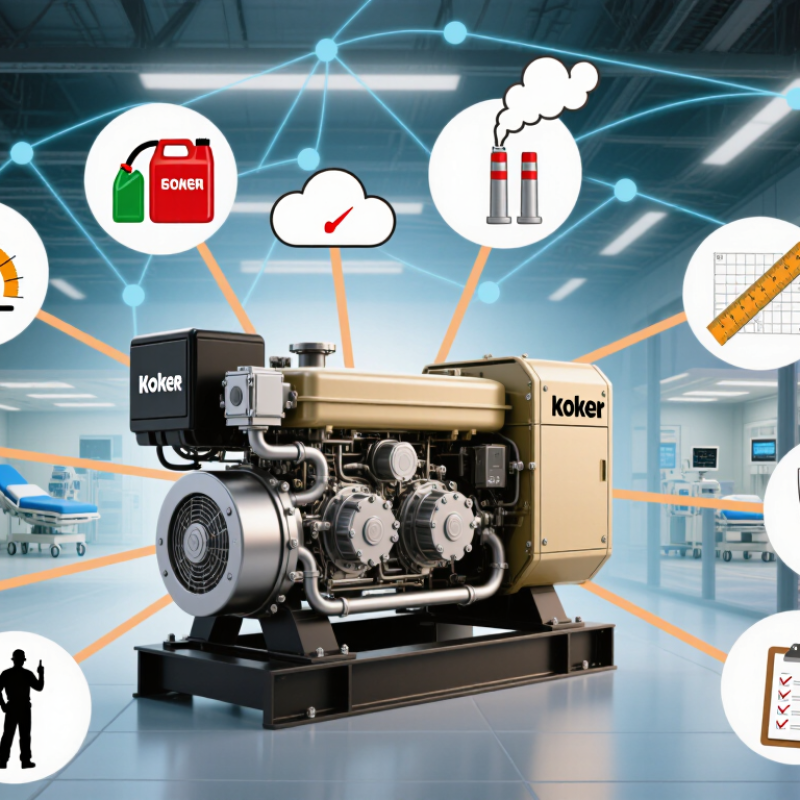
Before buying a diesel generator, define what it must power. List every load, from pumps and heaters to control panels and emergency lights. Record each motor’s starting current, not only its running wattage. A workshop may show 40 kW during operation, yet demand twice that for several seconds. That brief surge can trip an undersized system. Measure it onsite.
Operating conditions matter just as much as capacity. Note the installation altitude, ambient temperature, dust, humidity, and available ventilation. A unit rated at sea level may deliver less power on a high plateau. Hot, enclosed rooms can also reduce cooling performance and shorten component life. Field checks often reveal overlooked restrictions. That detail matters.
Choose a generator with enough continuous capacity, not only standby capacity. Separate essential loads from equipment that can wait. Consider fuel storage, service access, noise limits, and expected weekly runtime. Ask for verified performance data and a clear maintenance schedule. Do not trust a spreadsheet alone. My own estimates have been wrong when future expansion was ignored. Leave practical headroom, but avoid excessive oversizing, which can cause inefficient low-load operation. A measured load study is worth the extra effort.
Choosing a diesel generator starts with the load, not the catalogue photograph. Calculate continuous demand, starting current, power factor, and future expansion. A 100 kW standby unit may struggle with motors that briefly demand three times their running current. ISO 8528-1 separates standby, prime, and continuous ratings, so these figures are not interchangeable. Read the duty cycle carefully.
Size matters physically and electrically. A compact 60 kW set may suit a small workshop, while a 500 kW unit could support a hospital wing or production line. Larger frames often provide better overload tolerance, but they consume more fuel at light loads. The U.S. Energy Information Administration’s Electric Power Monthly tracks diesel fuel price volatility, which makes low-load efficiency worth comparing. Fuel storage and service access also need space.
Engine configuration deserves equal attention. Inline engines usually simplify access and reduce parts complexity. V engines can deliver higher output in a shorter package, but maintenance may be less convenient. Compare four-cycle designs, cooling methods, governor response, and alternator compatibility. A 50 Hz system cannot simply replace a 60 Hz system without checking connected equipment. Uptime Institute’s 2024 Global Data Center Survey reported that many operators still experienced outages, despite extensive resilience planning. That is a useful warning. I once focused only on maximum rating; that shortcut was wrong. Test performance at realistic loads, not just the nameplate.
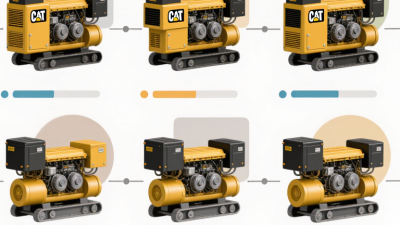
Generator sizing should be based on prime power demand, starting loads, operating hours, and required fuel efficiency. The chart below shows representative diesel-generator configurations commonly used across commercial and industrial applications.
Prime power ratings are intended for variable-load operation, while standby ratings are generally used during emergency outages. Larger engines commonly provide higher output, but the final selection should also consider voltage, frequency, altitude, ambient temperature, fuel consumption, noise limits, emissions requirements, and available maintenance support.
When buying a diesel generator, start with real fuel data, not showroom promises. Ask for consumption at 25%, 50%, 75%, and full load. Compare liters per hour with your actual power demand. A generator may appear efficient at low load but perform poorly near capacity. Keep a simple load log from your facility. It may reveal an uncomfortable truth: your planned unit is oversized. Oversizing wastes fuel and can encourage carbon buildup during extended light-duty operation. Check tank size, refill access, and expected runtime during an outage.
Verify emissions certification and maintenance requirements with a qualified supplier or technician. Request test documents, service intervals, and replacement filter costs. Emissions equipment needs clean fuel, correct oil, and regular exercise. Poor maintenance becomes expensive quickly. Check the controller for automatic startup, remote monitoring, alarm history, and event logs. Manual controls should remain clear during a stressful outage. I once focused too heavily on fuel savings and underestimated control-system training. That mistake could have delayed a safe restart.
Inspect emergency-stop buttons, overspeed protection, low-oil alarms, high-coolant warnings, and earth-fault detection. Confirm proper exhaust routing and adequate ventilation. Hot surfaces need guards, especially near service paths. Look for battery isolation, spill containment, secure doors, and weather protection. Ask for a supervised load-bank test before purchase. Listen for uneven running, unusual smoke, or vibration. Do not ignore small faults. Reliability often depends on details that seem boring during a showroom visit.
Tip 1: Measure the generator room, including doorways, service clearance, and ventilation paths. A unit may fit on paper but fail during delivery.
Tip 2: Check the expected electrical load, starting current, and future expansion plans. Undersizing creates stress, while excessive capacity wastes fuel and space.
Tip 3: Inspect the foundation. It should be level, reinforced, and strong enough to limit vibration.
Tip 4: Review local weather patterns, including flooding, dust, snow, and extreme heat. Site conditions can change equipment performance quickly.
Tip 5: Keep the generator above likely flood levels, with safe drainage around the pad.
Tip 6: Plan fuel storage away from heat sources and protected from accidental impact.
Tip 7: Measure noise at property boundaries, not only beside the machine. Walls, windows, and nighttime conditions can change perceived sound.
Tip 8: Consider acoustic enclosures, vibration isolators, and flexible connections. They often reduce disturbance without restricting airflow.
Tip 9: Ask a qualified technician to confirm exhaust routing and ventilation calculations. Carbon monoxide can accumulate in poorly designed spaces.
Tip 10: Walk the site with the installer before purchasing. Photos miss low ceilings, narrow turns, and nearby sleeping areas.
From field planning experience, installation mistakes usually cost more than expected. I once underestimated crane access. That slowed the project. I also learned that a quiet enclosure can increase heat if airflow is poorly planned. Recheck every assumption, especially noise readings taken during daytime. Manufacturer specifications matter, but real site measurements matter more.
A diesel generator purchase rarely ends at the equipment price. Ask for a written, itemized proposal. It should separate the generator, transfer switch, installation, delivery, taxes, and commissioning. Compare identical power ratings and duty classifications. A low bid may exclude exhaust work or a concrete pad. That omission can create an expensive surprise. I once focused too heavily on the purchase price. The cheaper offer included higher service fees and a shorter warranty. My comparison was incomplete.
Read the warranty before signing anything. Check its duration, covered parts, labor, travel charges, and exclusions. Confirm the registration deadline and required maintenance records. Some warranties may depend on approved filters, scheduled inspections, or documented load testing. Ask who pays when a technician travels to your site. Get every promise in writing. Small details matter.
Maintenance costs deserve their own calculation. Request prices for oil, filters, coolant, batteries, and annual inspections. Ask how often the unit needs a load bank test. A maintenance plan should include fuel quality checks, not just oil changes. Diesel left in a tank can develop contamination and damage performance.
Dealer support can determine whether the generator protects your facility or simply occupies space. Ask about local technicians, emergency response times, parts availability, and after-hours coverage. Request two recent customer references with similar power needs. A capable dealer should explain commissioning, operating tests, and service reporting clearly. Support matters most at 2 a.m. Even experienced buyers can overlook this point.