Choosing among China’s top marine generator manufacturers requires more than comparing price, rated power, and delivery time. Marine generators operate in salt air, confined engine rooms, and changing loads. A small weakness in cooling, insulation, or fuel control can become an expensive onboard problem.
The market is also under pressure to improve efficiency and reduce emissions. UNCTAD’s Review of Maritime Transport 2024 states that shipping carries over 80% of global merchandise trade by volume. The IMO’s Fourth GHG Study estimates that international shipping produced about 2.89% of global greenhouse gas emissions in 2018. These figures explain why shipowners increasingly examine fuel consumption, exhaust treatment, shore-power compatibility, and future retrofit options. China’s strong shipbuilding position also matters. Clarkson Research reported that Chinese yards received more than half of global newbuilding orders in 2024, creating a large domestic ecosystem for marine engines, alternators, control systems, and after-sales support.
Still, supplier rankings can mislead. A famous name may not fit every vessel. Buyers should verify ISO 8528 performance, class approvals from DNV, ABS, Lloyd’s Register, or another required society, and actual load-bank test records. Ask for maintenance intervals, spare-parts availability, acoustic data, and references from comparable vessels. Check the details.
A fishing vessel, coastal tug, offshore support ship, and large merchant vessel need different generator strategies. Practical experience matters, but published data matters too. Manufacturer brochures may show peak output, while daily operation depends on continuous load, ambient temperature, seawater conditions, and service response. Some specifications remain unclear until testing. That is where careful comparison becomes essential.
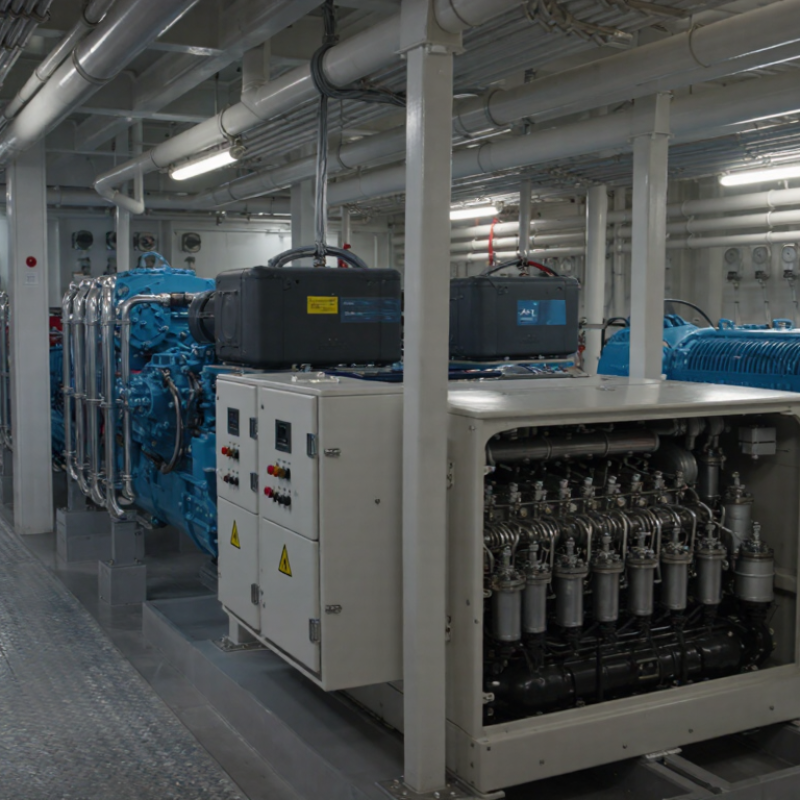
Marine generators are the working heart of a shipboard power system. They convert fuel energy into electricity for propulsion auxiliaries, pumps, navigation equipment, lighting, and hotel loads. Most vessels use several diesel generator sets, connected through a main switchboard. One unit may run during low demand. More units start when cargo pumps or thrusters increase the load.
Reliability depends on more than rated kilowatts. The generator must handle load changes, short-circuit protection, synchronization, cooling, exhaust treatment, and emergency operation. A separate emergency generator usually supplies essential services after main power failure. It should start quickly and remain accessible during flooding or fire conditions. The International Maritime Organization’s Fourth GHG Study estimated shipping produced 2.89% of global anthropogenic greenhouse-gas emissions in 2018. Fuel efficiency now matters beside electrical stability.
Real vessels rarely behave so neatly. A generator sized only for average demand may struggle during crane starts or ballast operations. That mistake is common. Load profiles, redundancy, maintenance access, vibration, and fuel quality deserve practical review. The UNCTAD Review of Maritime Transport 2024 placed the world commercial fleet at approximately 2.4 billion dead-weight tons in early 2024, showing the scale of marine power demand. When comparing manufacturers, operators should examine verified test records, classification documentation, after-sales response, spare-parts availability, and performance at partial load. Certification alone is not enough. Field experience still exposes weaknesses that a brochure cannot.
Choosing a Chinese marine generator manufacturer requires more than comparing power ratings and prices. The key standard is verifiable competence. Check whether the factory follows ISO 9001 quality procedures and maintains documented production controls. For marine applications, review compliance with IEC 60092, SOLAS requirements, and relevant classification rules. Certificates should match the exact generator model, not a different product series.
Request recent load-bank test records, insulation measurements, vibration data, and fuel-consumption results. A serious manufacturer can explain testing conditions clearly. Ask to inspect the assembly line, machining area, and final inspection process. Look for salt-spray protection, sealed control cabinets, stainless fasteners, and accessible service points. Small details matter offshore.
A polished brochure is not proof.
Technical support also shows real experience. Evaluate spare-parts availability, commissioning procedures, remote troubleshooting, and response times across different ports. Contact comparable vessel operators, not only the references selected by the supplier. Review warranty exclusions carefully. Some offers appear strong until labor, transport, or corrosion damage is discussed. A factory may have excellent engineering but weak after-sales coordination. That weakness can delay a vessel for days. Require a written factory acceptance test plan, training records, and traceable serial-number documentation before signing. Keep questioning the evidence.
Choosing a marine generator requires more than comparing advertised kilowatts. Start with the vessel’s actual load profile, not its maximum equipment list. Record hotel loads, pumps, thrusters, refrigeration, and starting currents during sea trials. Then compare prime and standby ratings under ISO 8528-1. Peak power can mislead. Ask for fuel consumption at 25%, 50%, 75%, and 100% load. These figures reveal efficiency during slow steaming and port operations. Check voltage stability, frequency regulation, transient recovery, cooling capacity, noise, and vibration. Test evidence matters more than brochure language.
Emissions and certification deserve equal weight. IMO’s 2023 GHG Strategy targets net-zero emissions from international shipping by or around 2050. It also sets 2030 and 2040 reduction checkpoints. This direction makes fuel flexibility, after-treatment readiness, and measurable fuel burn increasingly important. DNV’s Maritime Forecast to 2050 highlights uncertainty around future fuels and onboard technologies. Therefore, compare compatibility with low-sulfur fuels, biofuels, shore power, and hybrid batteries. Ask which tests support the claims. Look for class approval, type tests, load-bank records, and ISO-based performance data. UNCTAD reports that shipping carries over 80% of global merchandise trade by volume. Reliability is not optional.
In practical procurement, score each unit across lifecycle cost, service intervals, spare-part access, and controls integration. I prefer a five-year fuel model using the vessel’s measured load curve. Still, measurements are imperfect. Sea state, fouling, ambient temperature, and operator habits change results. One overlooked detail is generator synchronization during sudden thruster demand. Request a witnessed load-step test before signing. Compare warranty exclusions carefully. A cheaper set may become expensive after repeated downtime, difficult maintenance, or unstable parallel operation.
Compare typical marine generator specifications by checking continuous power, specific fuel consumption, and operating noise. The figures below represent common reference ranges for modern diesel marine generator sets and do not represent any specific company or brand.
Selection tip: choose a generator with sufficient continuous output for the vessel's normal load, compare fuel consumption at the same load point, and confirm that the noise level meets the vessel's comfort and regulatory requirements.
Choosing among China’s top marine generator manufacturers requires more than comparing prices. Certification should match your vessel, operating waters, and classification requirements. Check current quality, electrical safety, emissions, and marine approval documents. Verify the issuing authority, test scope, certificate number, and product serial traceability. A certificate alone proves little.
Reliability must be tested under realistic conditions. Ask for factory acceptance test records, load-bank results, vibration data, cooling performance, and fuel-consumption figures. Salt air, engine-room heat, and unstable loads can expose weak designs quickly. Request references from vessels with similar duty cycles. Numbers may look perfect on paper. Inspect the details.
Service quality often decides whether a generator remains dependable after installation. Confirm spare-parts availability, technician response times, commissioning support, and warranty procedures. Clear manuals matter during a midnight alarm. Customization may include enclosure dimensions, control systems, alternator output, sound reduction, and fuel-tank arrangements. Require written drawings and change-control records before production. One common mistake is accepting verbal promises. A lower quotation can hide expensive modifications later. I would also leave room for reassessment, because the cheapest compliant option may not be the most practical choice at sea.
China Top Marine Generator Manufacturers: How to Choose?
Choosing a marine generator manufacturer requires more than comparing prices. Start by defining your vessel’s power demand, operating hours, fuel preference, and installation space. Ask each manufacturer for rated power, standby power, fuel consumption, noise data, and cooling performance. A reliable supplier should provide clear technical documents, factory inspection access, and traceable test records. Check whether the generator suits salt air, vibration, humidity, and continuous marine operation. These details matter offshore.
Review the manufacturer’s engineering experience and after-sales capability. Request references from similar vessels, not unrelated industrial projects. Examine load-test procedures, engine alignment, control-panel quality, spare-parts availability, and response times. Confirm support for installation, commissioning, maintenance, and emergency troubleshooting. Written warranty terms are important, but practical service often matters more. I have seen buyers focus on low purchase prices, then discover expensive delays during commissioning. That mistake is easy to repeat.
Tips: Compare complete lifecycle costs, not only the quotation. Ask for a sample inspection report. Verify the claimed output under realistic loads. Keep technical questions in writing. If answers remain vague, pause before signing. A factory visit can reveal more than polished brochures. Still, one visit is not proof of everything; continue checking references and test evidence.
| Step | Evaluation Dimension | Recommended Weight | What to Verify | Practical Acceptance Criteria | Required Evidence |
|---|---|---|---|---|---|
| 1 | Marine Application Compatibility | 15% | Whether the generator package is designed for commercial vessels, workboats, offshore platforms, fishing vessels, or standby marine applications. | The supplier can match the generator to vessel type, operating profile, ambient conditions, duty cycle, installation location, and required redundancy. | Technical proposal, application references by vessel type, load analysis, and installation drawings. |
| 2 | Rated Power and Load Performance | 15% | Continuous rating, standby rating, power factor, frequency, voltage, transient response, motor-starting capability, and parallel-operation performance. | Rated output covers the calculated continuous load with an engineering reserve, while starting and step-load tests meet the project specification. | Published datasheet, load calculation, factory test report, and transient-load test results. |
| 3 | Compliance with Marine Standards | 15% | Compliance with applicable requirements such as ISO 8528 for generating sets, IEC 60092 for electrical installations in ships, and relevant SOLAS requirements. | Documents clearly identify the applicable edition of each standard and show that the complete generator package—not only individual components—has been assessed. | Declaration of conformity, type-approval documents where applicable, test certificates, and compliance matrix. |
| 4 | Classification and Flag-State Acceptance | 10% | Whether the package can satisfy the requirements of the vessel’s selected classification society and flag administration. | The supplier confirms approval requirements before production and can provide drawings, certificates, and inspection support requested by the project. | Class-approval status, inspection plan, approved drawings, and certificate checklist. |
| 5 | Fuel Efficiency and Emissions | 10% | Specific fuel consumption, exhaust emissions, after-treatment requirements, fuel compatibility, and applicable MARPOL Annex VI obligations. | Fuel-consumption data is provided at multiple load points, and the emissions configuration matches the vessel’s operating area and regulatory requirements. | Engine emissions data, fuel-consumption curves, emissions certificates where applicable, and after-treatment specifications. |
| 6 | Reliability and Environmental Durability | 10% | Resistance to salt mist, humidity, vibration, shock, temperature variation, and long operating hours in marine environments. | Critical components have documented environmental ratings, protective coatings, suitable enclosures, and maintenance intervals appropriate for marine service. | Environmental test reports, material specifications, coating system details, vibration data, and maintenance schedule. |
| 7 | Factory Quality Management | 10% | Production controls, incoming inspection, assembly traceability, calibration management, nonconformance handling, and final testing. | The manufacturing site operates a documented quality system, preferably certified to ISO 9001, with traceable inspection records for major assemblies. | Quality certificate, factory-audit report, inspection and test plan, calibration records, and sample nonconformance procedure. |
| 8 | Testing and Factory Acceptance | 8% | Availability of no-load, load-bank, protection, alarm, emergency-stop, governor, voltage-regulation, synchronization, and black-start tests. | The factory acceptance test covers the customer-approved test procedure and records actual measured values against specified limits. | FAT procedure, signed test report, calibrated instrument list, and test-video or inspection access when required. |
| 9 | After-Sales Service and Spare Parts | 5% | Technical support hours, commissioning assistance, troubleshooting response, spare-parts availability, warranty terms, and service coverage at the vessel’s operating location. | Service responsibilities, response times, warranty exclusions, recommended spare-parts list, and commissioning scope are documented in the contract. | Service-level agreement, warranty policy, spare-parts list, service network description, and escalation procedure. |
| 10 | Total Cost of Ownership | 2% | Purchase price, freight, installation, commissioning, fuel consumption, scheduled maintenance, spare parts, and expected downtime. | The selection is based on lifecycle cost rather than purchase price alone, using the same load profile and operating hours for every quotation. | Comparable commercial quotations, lifecycle-cost model, maintenance-cost estimate, and delivery schedule. |