Why Choose a Yanmar Generator for Global Power Needs?

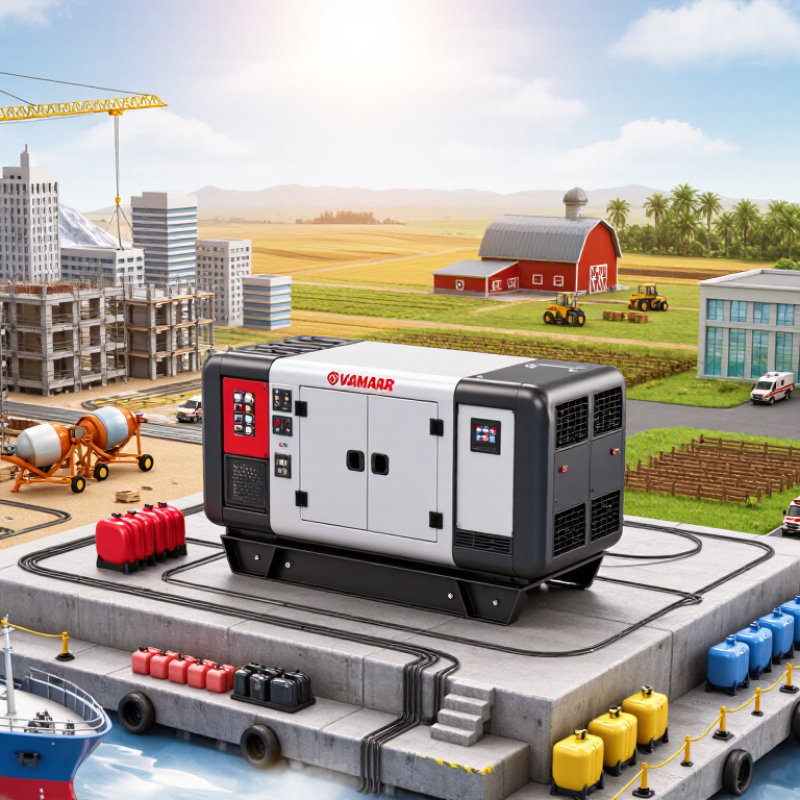
Reliable electricity is rarely available by accident. It depends on equipment that matches the site, load, climate, and maintenance capacity. A yanmar generator can support construction sites, farms, hospitals, marine facilities, and remote businesses when these factors are assessed carefully.

Magokichi Yamaoka, Yanmar’s founder and an early diesel-engine pioneer, expressed a principle that remains relevant today: “A prosperous society is one in which people can live with peace of mind.” His words connect engine design with practical human needs. In the field, that means stable starting, efficient fuel use, manageable servicing, and dependable performance during long operating hours. Details decide. A generator may look powerful on paper, yet poor sizing can create overloads, wasted fuel, or unnecessary wear. Conditions change.

Global users also face different fuel standards, ambient temperatures, altitude levels, noise limits, and service networks. Yanmar’s long experience with compact diesel technology gives the brand strong technical credibility, but no manufacturer removes every operational risk. Installation quality still matters. So does scheduled maintenance. This is where careful planning becomes more valuable than marketing claims. Buyers should compare rated output, standby or prime-duty use, control systems, emissions requirements, spare-parts access, and local technician support. A yanmar generator is not a universal answer for every project. However, when selected against real operating demands, it can provide a practical balance of durability, efficiency, and global adaptability. The better question is not simply, “How much power does it produce?” It is, “How reliably will it serve this specific place?”
Why Choose a Yanmar Generator for Global Power Needs?

Yanmar’s Role in Modern Global Power Generation

Modern global power generation is becoming more distributed, digital, and weather-sensitive. The IEA’s Electricity 2024 report projects global electricity demand will grow by an average 3.4% annually through 2026. That growth increases pressure on hospitals, farms, construction sites, and microgrids. A dependable generator provides firm capacity when solar output falls, transmission is constrained, or a storm interrupts service. It is not glamorous equipment. It is often the quiet machine keeping a cold room below safe limits.

Strong generator design now means more than engine size. Operators need efficient fuel use, rapid starting, stable voltage, remote monitoring, and service access across borders. IRENA’s Renewable Capacity Statistics 2024 reports that 473 gigawatts of renewable capacity were added in 2023, representing 86% of new global power capacity. That expansion makes flexible backup more valuable, especially in hybrid systems. Proper load planning matters. An oversized unit can waste fuel and suffer from poor loading.

Field experience also exposes uncomfortable limits. Fuel quality varies, maintenance records may be incomplete, and technicians are not always available. No generator is perfect. The World Bank’s Global Electrification Database shows that hundreds of millions still lack reliable electricity access, despite progress. For these markets, rugged construction, simple controls, parts availability, and training can matter as much as headline efficiency. Buyers should verify emissions compliance, noise limits, warranty terms, and local support before purchase. A specification sheet cannot reveal every real-world weakness.

Core Technologies Behind Yanmar Generator Performance

A reliable generator starts with the engine, but performance depends on how each system works together. Modern diesel engines use high-pressure fuel injection and electronic control to deliver cleaner, more consistent combustion. This helps the generator respond when pumps, compressors, or lighting loads start suddenly. The response is not instant. Good calibration still matters.

The alternator converts mechanical energy into stable electrical output. Automatic voltage regulation helps protect sensitive equipment from damaging voltage changes. A durable cooling system is equally important in hot, dusty locations. Large radiators, controlled airflow, and temperature sensors reduce the risk of overheating. During field inspections, technicians often check blocked vents first. Small restrictions can create serious problems.

Control panels provide real operational value. They can monitor oil pressure, coolant temperature, frequency, voltage, and load levels in real time. Remote alerts also help maintenance teams identify trouble before a shutdown occurs. Sound-reducing enclosures and vibration mounts improve comfort near workplaces, although no generator is perfectly quiet. Service access deserves attention too. If filters or belts are difficult to reach, routine maintenance may be delayed. That weak point is easy to overlook. Reliable performance comes from engineering, but also from disciplined inspections, correct installation, and honest operating data.

Fuel Efficiency and Emissions Management Across Applications

Why Choose a Yanmar Generator for Global Power Needs?

Fuel efficiency and emissions control matter long after a generator leaves the factory. In remote clinics, construction sites, and data centres, variable loads create the real challenge. A unit operating at 30% load can waste fuel through poor matching and unnecessary idling. Load banks, automatic controls, and correctly sized generators help keep combustion closer to its efficient range. The International Energy Agency’s Electricity 2024 report projects global data-centre electricity demand could exceed 1,000 TWh by 2026. Backup systems must therefore deliver dependable power without creating avoidable emissions.

Measure every litre.

The U.S. Environmental Protection Agency’s AP-42 emissions methodology links diesel emissions to fuel consumption, engine rating, and operating conditions. This makes accurate fuel records essential for credible carbon reporting. In practice, operators should log runtime, load percentage, fuel use, maintenance events, and exhaust after-treatment performance. Tier-compliant engines can reduce nitrogen oxides and particulate matter, but only when filters, sensors, and dosing systems receive proper maintenance. A blocked filter may increase back pressure and fuel use. That small fault becomes expensive across thousands of operating hours.

Field conditions remain imperfect. Dust, heat, poor fuel quality, and short weekly tests can undermine laboratory efficiency claims. Remote teams may need simpler monitoring, not more software. Reviewing monthly fuel consumption against delivered kilowatt-hours often reveals problems faster than a brochure does. Efficiency is measurable, but it is never automatic.

Why Choose a Diesel Generator for Global Power Needs?

Fuel efficiency and carbon emissions vary with operating load. Higher loading generally improves fuel use per kilowatt-hour, supporting more efficient power generation across standby, prime, and continuous-duty applications.

Benchmark calculation: diesel energy content of 38.6 MJ/L, carbon dioxide factor of 2.68 kg CO₂/L, and representative electrical efficiencies of 30–40%. Values are engineering estimates for comparison and exclude site-specific conditions, auxiliary loads, and transient operation.

Reliability, Maintenance, and Service in Diverse Operating Environments

Reliable power is measured during the hard moments: a dusty site, unstable voltage, or a night shift far from technical support.

The Uptime Institute’s 2023 Global Data Center Survey reported that 60% of respondents experienced an outage during the previous three years. This figure shows why generator selection cannot rely on showroom performance alone. It must consider cold starts, fuel quality, heat, humidity, and load changes.

Small details matter. Technicians should inspect coolant levels, battery terminals, belts, filters, and exhaust joints during scheduled visits. A loose connection can become a shutdown.

Preventive maintenance also requires accurate records, including oil hours, fault codes, test loads, and replacement dates. The U.S. Energy Information Administration reported that petroleum products supplied about 30% of global energy consumption in 2022, reinforcing the need for careful fuel storage and contamination control. Fuel can look clean and still damage injectors.

Service reach is equally important across diverse regions. A practical support plan includes local parts availability, remote diagnostics, trained technicians, and clear response times. ISO 8528-1 provides a useful framework for generator performance and application ratings, but field conditions remain less predictable.

That is the uncomfortable part. Even a well-maintained unit can fail after poor installation or neglected batteries.

Regular load-bank testing helps reveal weaknesses before an emergency, although it adds cost and requires disciplined scheduling. Reliability is built in the workshop, then tested outdoors.

Selecting the Right Yanmar Generator for Regional Power Requirements

Choosing the right generator begins with the region, not the catalogue.

Local voltage and frequency must match the equipment on site. A mismatch can damage motors, controls, and sensitive electronics. Check the expected load, starting current, and daily operating hours before selecting output capacity. A 100 kVA unit may appear sufficient, yet pumps and compressors can demand much more during startup.

Climate changes the decision. In humid coastal areas, corrosion protection and sealed electrical connections deserve close attention. At high altitude, thinner air can reduce engine performance. Hot environments may require larger cooling capacity. Dusty construction sites need effective air filtration and simple access for cleaning. Fuel quality also varies between regions, so dependable filtration and regular sampling can prevent avoidable downtime.

Service support is equally important. Ask whether trained technicians, filters, and critical components are available nearby. A technically advanced generator is less useful when a basic sensor requires weeks to replace. Confirm local noise, emissions, grounding, and installation requirements with qualified professionals. Field teams often recommend leaving practical reserve capacity, but oversizing can waste fuel and reduce efficiency. This balance is easy to miss. Load testing after installation can reveal assumptions that looked reasonable on paper. Keep written maintenance records, including ambient temperature, runtime, and unusual vibration. Small details often expose larger problems.

Why Choose a Yanmar Generator for Global Power Needs? - Selecting the Right Yanmar Generator for Regional Power Requirements
Regional planning reference for matching generator electrical characteristics, operating conditions, and application requirements.
Region Common Grid Frequency Common Low-Voltage Configurations Typical Applications Key Generator Selection Factors Environmental Considerations Recommended Planning Check
North America 60 Hz 120/208 V 120/240 V 277/480 V Commercial buildings, healthcare facilities, data rooms, construction sites, and backup power systems. Confirm 60 Hz operation, phase configuration, transfer-switch compatibility, motor-starting kVA, and local electrical-code requirements. High temperatures, snow, hurricanes, dust, and altitude may require enclosure or derating adjustments. Calculate maximum demand and identify the largest motor or transformer starting load.
Europe 50 Hz 230 V single-phase 400 V three-phase Industrial facilities, offices, residential buildings, telecommunications, and infrastructure projects. Verify 50 Hz rating, 400 V three-phase compatibility, neutral arrangement, emissions requirements, and automatic-start controls. Cold-weather starting, coastal corrosion, high altitude, and urban noise limits can affect configuration. Check phase balance, power factor, permissible voltage dip, and applicable installation standards.
Japan 50 Hz or 60 Hz, depending on area 100 V 200 V 200/400 V Residential backup, factories, retail facilities, disaster-response equipment, and public infrastructure. Confirm the local frequency zone, output voltage, phase arrangement, earthquake-resistance provisions, and compact installation requirements. Earthquake exposure, typhoons, humidity, limited installation space, and noise restrictions may influence the design. Verify the site frequency before selecting the alternator and control-system configuration.
Australia and New Zealand 50 Hz 230 V single-phase 400 V three-phase Remote facilities, farms, mining support, commercial buildings, telecommunications, and emergency services. Evaluate prime-power capability, fuel autonomy, remote monitoring, dust protection, and compatibility with three-phase distribution. High ambient temperatures, bushfire smoke, dust, long cable runs, and remote logistics can affect performance and maintenance. Apply altitude and temperature corrections where the site is remote, elevated, or exposed to extreme heat.
Middle East Generally 50 Hz 230 V 400 V three-phase Construction, commercial buildings, water facilities, oil and gas support, events, and temporary power. Prioritize high-temperature performance, dust protection, radiator capacity, fuel quality, continuous-duty rating, and enclosure selection. Extreme heat, sand, dust, salinity, and limited freshwater availability may require heavy-duty filtration and cooling provisions. Use the highest expected ambient temperature when reviewing available output and cooling performance.
Africa Generally 50 Hz; some networks use 60 Hz 230 V 400 V three-phase Local variations Off-grid communities, healthcare, telecommunications, agriculture, mining, and commercial facilities. Assess prime-power rating, fuel storage, service access, voltage stability, remote monitoring, and resistance to variable load profiles. High temperatures, altitude, dust, humidity, unstable utility supply, and fuel-storage conditions may require additional protection. Confirm the local utility frequency and calculate autonomy based on refueling access and expected load factor.
Latin America 50 Hz or 60 Hz, depending on country 120/127 V 220/230 V 380/400 V Retail, manufacturing, agriculture, hospitals, telecommunications, residential backup, and temporary worksites. Verify country-specific voltage and frequency, select the correct phase arrangement, and account for motor loads and utility interruptions. Humidity, tropical heat, altitude, flooding, dust, and corrosion can influence enclosure, filtration, and installation decisions. Confirm local utility data and check whether the generator will operate in standby, prime, or continuous-duty service.
Southeast Asia Generally 50 Hz 230 V 400 V three-phase Local variations Factories, hotels, commercial buildings, construction, telecommunications, and islanded power systems. Consider humidity protection, corrosion resistance, fuel quality, remote start, load-step response, and prime-power suitability. High humidity, monsoon rainfall, salt air, flooding, heat, and biological contamination may require enhanced enclosure protection. Allow for ventilation, drainage, corrosion control, and stable fuel storage at the installation site.
Planning note: Electrical values shown are common nominal values and can vary by country, utility, building type, and local regulations. Final generator selection should be based on a site load study, starting-current assessment, required duty rating, ambient conditions, installation standards, and authorized electrical-engineering review.
Go to Top