China’s expanding power demand is reshaping the search for reliable backup equipment. The China Electricity Council reported national electricity consumption of approximately 9.85 trillion kWh in 2024, rising 6.8% year on year. The IEA’s Electricity 2024 report also identified strong electricity-demand growth across industry, buildings, and data infrastructure. Reliability is no longer optional.
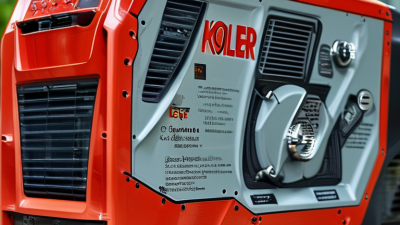
This makes supplier selection more demanding. A credible kohler diesel generator supplier should demonstrate factory experience, documented testing, and traceable engine and alternator specifications. Look beyond catalog photographs. Ask for load-bank test records, ISO 9001 certification, warranty conditions, and service response times. Small details matter. A missing wiring diagram can delay commissioning.
Kohler Power Systems publishes ratings, application guidance, and maintenance requirements for its generator sets. However, supplier capabilities still vary considerably. Some Chinese companies are experienced manufacturers, while others mainly trade equipment. That difference becomes visible during installation, especially when an automatic transfer switch, remote monitoring system, or parallel-control panel is required.
This guide evaluates leading China-based suppliers through practical criteria: product authenticity, technical competence, production capacity, customization, spare-parts support, and compliance documentation. It also considers ISO 8528 performance expectations and applicable regional electrical requirements. Market rankings are not absolute. Public information can be incomplete, and supplier claims require verification.
A serious buyer should inspect the workshop, review test procedures, and confirm local service coverage before signing. A polished website proves little. A running machine under load proves more. The best supplier is not always the largest; it is the one that can deliver stable power, accurate documentation, and accountable support after the sale.
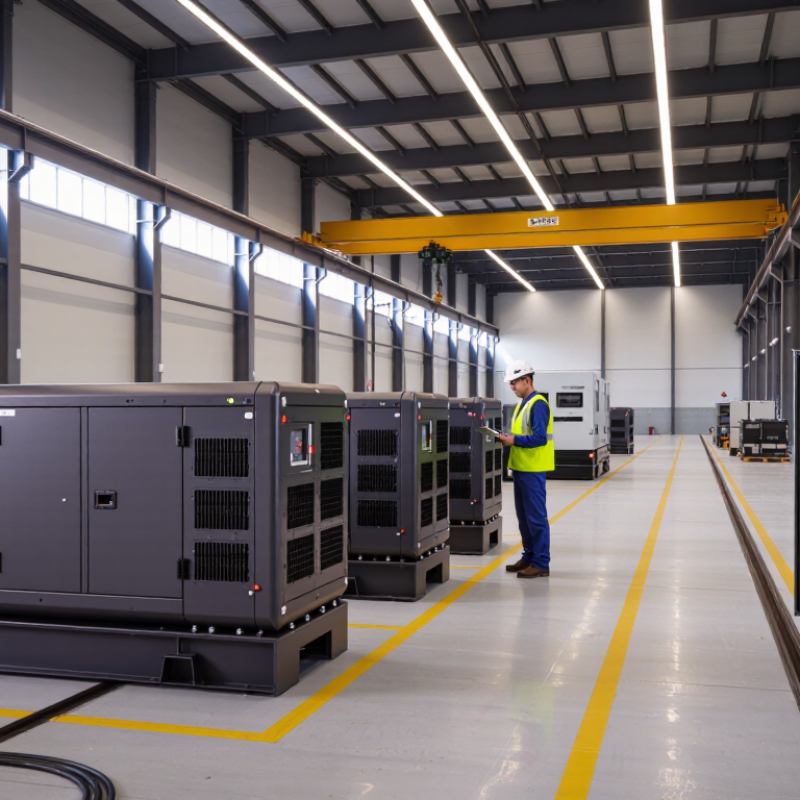
Diesel generator sets from Chinese suppliers commonly span portable, standby, and prime-power ranges. Smaller units suit workshops, clinics, and temporary construction cabins. Larger sets support factories, data rooms, hotels, and remote infrastructure. Output choices often extend from 10 kVA to above 2,000 kVA, depending on the supplier’s assembly capability. This range matters because an oversized set wastes fuel, while an undersized set struggles with motor starting loads. Real site records should guide selection, not a catalog number.
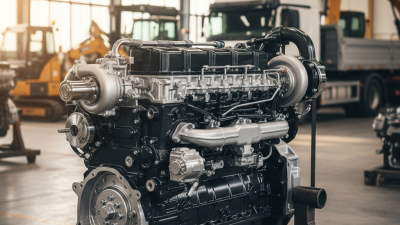
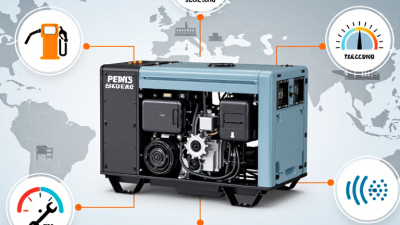
Core features include liquid cooling, automatic voltage regulation, digital monitoring, and a heavy-duty alternator. A well-matched controller records oil pressure, coolant temperature, frequency, and running hours. It should also provide alarms for overload and low fuel. Acoustic enclosures reduce disturbance near residential areas, while weatherproof cabinets protect equipment from dust and rain. Fuel tanks may support eight to twelve hours of operation, though actual endurance changes with load. That detail is easy to overlook.
Experienced buyers inspect frame welding, cable terminals, radiator airflow, and emergency-stop access before ordering. Factory testing should include no-load checks, step-load response, insulation resistance, and noise measurements. Ask for test reports, service intervals, spare-parts availability, and clear warranty terms. Some suppliers present impressive peak ratings but provide limited continuous-duty data. That deserves caution. Delivery speed may look attractive, yet weak commissioning support can create costly downtime. My assessment would remain provisional until fuel consumption and voltage stability are tested under the customer’s real load.
China has become a major diesel generator supply market because its manufacturing base is unusually deep. The UNIDO International Yearbook of Industrial Statistics 2024 estimates that China produced about 31.6% of global manufacturing value added in 2022. That scale supports engines, alternators, control panels, radiators, and steel frames within nearby supply networks.
This concentration reduces production delays and simplifies component sourcing. It also helps suppliers offer customized units for factories, hospitals, construction sites, and data facilities. The IEA Electricity 2024 report expects global electricity demand to grow by around 4% annually from 2024 to 2026. Unstable grids and rising peak loads keep backup generation commercially relevant. China’s ports add another advantage. Exporters can consolidate complete systems, spare parts, and technical documents in one shipment.
The picture is not perfect. Supplier quality varies. Some factories advertise impressive ratings but provide weak load-test records. Buyers should request ISO certificates, factory inspection evidence, fuel-consumption curves, and third-party test results. UN Comtrade data under HS 8502 also shows China’s continuing importance in international generating-set trade, although product categories are broad and can hide meaningful quality differences. That limitation matters. A lower purchase price may create higher maintenance costs later, especially where technicians and replacement parts are limited. Testing remains essential.
| Data Dimension | China Supply-Market Fact | Procurement Relevance | Recommended Verification Data | Reference / Standard |
|---|---|---|---|---|
| Manufacturing ecosystem | China has an established electrical-equipment, engine, alternator, control-panel, sheet-metal and power-electronics manufacturing base. | Buyers can often source the complete generator set and many supporting components through one domestic supply chain. | Ask for the manufacturing address, production-line photographs, equipment list, monthly capacity and subcontracting disclosure. | National Bureau of Statistics of China |
| Major production locations | Industrial supply clusters for engines, electrical machinery and generator sets are concentrated in the Yangtze River Delta, Pearl River Delta and other eastern coastal manufacturing regions. | Coastal clusters generally provide broader component access, export logistics and engineering-support resources. | Compare inland and coastal quotations on an identical basis, including inland freight, export packing and port charges. | Ministry of Industry and Information Technology of China |
| Electrical configuration | The standard low-voltage configuration commonly used in mainland China is 50 Hz, with nominal three-phase voltage of 380 V and single-phase voltage of 220 V. | Projects outside China may require different voltage, frequency, phase arrangement, neutral treatment or alternator winding configuration. | Confirm voltage, frequency, phase, power factor, insulation class, winding pitch, neutral connection and local grid-parallel requirements. | GB/T 156, Standard Voltage |
| Generator-set ratings | Diesel generator sets are commonly specified by standby, limited-time, prime or continuous operating duty rather than by one universal output rating. | A lower purchase price may result from comparing standby output with a competitor’s prime or continuous rating. | Require the declared rating, operating hours, allowable load profile, overload conditions, ambient reference and derating curve. | ISO 8528-1, Reciprocating Internal Combustion Engine Driven AC Generating Sets |
| Power conversion | At a rated power factor of 0.8, 1 kVA corresponds to approximately 0.8 kW; the actual relationship depends on the specified power factor. | Comparing only kVA or only kW can lead to an incorrect assessment of usable real power. | Record both kVA and kW, rated power factor, transient-performance class and the load type used for testing. | ISO 8528 series |
| Performance testing | Factory acceptance testing can verify voltage, frequency, steady-state regulation, load response, protections and fuel-consumption performance. | A witnessed test reduces the risk of receiving equipment that meets nameplate output but fails under dynamic or emergency loads. | Specify test load steps, test duration, instruments, calibration certificates, acceptance limits and the required test report format. | ISO 8528 performance requirements |
| Environmental conditions | Engine and alternator output can be reduced by high altitude, high ambient temperature, humidity, dust or restricted ventilation. | Standard-condition quotations may not represent the output available at the actual installation site. | Provide site altitude, minimum and maximum temperature, humidity, cooling-air temperature, enclosure type and ventilation arrangement. | ISO 8528 environmental and operating requirements |
| Noise and enclosure | Open-frame, weatherproof and sound-attenuated configurations are commonly available in the Chinese market. | Enclosure design affects sound level, cooling performance, dimensions, service access and transport weight. | Request sound-pressure test conditions, measurement distance, enclosure material, ingress protection, lifting points and maintenance clearances. | ISO 8528 series |
| Emissions compliance | Emission requirements depend on the destination country, engine power category, installation type and applicable off-road or stationary-source rules. | A set suitable for the Chinese market may require additional certification or a different engine configuration for another jurisdiction. | Confirm engine emission certificate, type-approval documents, labeling, after-treatment requirements and destination-country acceptance. | UNECE air-pollution and emissions resources |
| Export documentation | International shipments normally require commercial invoices, packing lists, transport documents, customs information and product-specific certificates where applicable. | Document completeness affects customs clearance, delivery timing and the buyer’s ability to register or install the equipment. | Request a document checklist covering HS classification, country of origin, manuals, wiring diagrams, certificates and spare-parts lists. | World Customs Organization |
| Container and logistics planning | Generator sets may be shipped as open units, enclosed units, skid-mounted packages or containerized power modules. | Overall dimensions, lifting points and gross weight influence the freight method, container selection and unloading equipment. | Obtain packed dimensions, gross and net weight, center of gravity, lifting diagram, fuel-drain status and moisture-protection method. | International Maritime Organization container-safety resources |
| Quality-control evidence | Supplier capability is best assessed through traceable production and inspection records rather than catalogue claims alone. | Documented controls help distinguish an actual manufacturer or qualified integrator from a trading-only quotation source. | Check incoming inspection, torque records, insulation-resistance results, controller configuration, calibration records, serial-number traceability and final-test reports. | ISO 9001 quality-management principles |
| After-sales support | Service quality depends on local technicians, spare-parts availability, troubleshooting procedures and escalation arrangements. | For standby and critical-power projects, response capability can be more important than the initial equipment price. | Request service territory, response-time commitment, recommended spare-parts list, warranty exclusions, remote-support process and training plan. | ISO 10002 customer-satisfaction guidance |
| Commercial evaluation | China-based quotations can differ substantially because of variations in engine configuration, alternator specification, controller functions, enclosure, testing and included accessories. | The lowest initial quotation is not necessarily the lowest total cost of ownership. | Compare a line-by-line technical schedule covering equipment, commissioning, freight, taxes, warranty, consumables, spare parts and lifecycle service. | Best-practice comparison |
Choosing Chinese diesel generator suppliers requires more than comparing prices. Start with documented output, not catalog promises. Ask for ISO 8528 performance records, factory acceptance tests, and recent load-bank results. Verify voltage regulation, frequency stability, fuel consumption, and noise readings at 25%, 50%, 75%, and 100% loads. A credible supplier should provide serial-level traceability for the engine, alternator, controller, and major protection devices. Certificates alone are not enough. A factory tour can impress, yet it proves little.
Reliability deserves greater weight as power demand rises. The International Energy Agency’s Electricity 2024 report projects data-center electricity use to exceed 1,000 TWh by 2026. The 2024 Uptime Institute Global Data Center Survey reported that 53% of respondents experienced an outage during the previous three years. Therefore, evaluate service response times, spare-parts depth, remote monitoring, and technician training. Request references from sites with similar climate, load profile, and operating hours. Review warranty exclusions carefully, especially for batteries, cooling systems, and standby-only operation. Price remains important, but low bids may hide weak testing or delayed parts. I would also require a witnessed full-load test before shipment. It costs more. It may prevent an expensive surprise. One imperfect point remains: supplier websites often present best-case data, so independent verification is still necessary.
This chart presents a practical weighting framework for evaluating Chinese suppliers of Kohler diesel generator systems. Compliance and certification, technical compatibility, manufacturing quality, factory testing, after-sales support, and delivery capability are key purchasing criteria. The percentages represent recommended evaluation priorities rather than data from any specific company or brand.
China’s leading diesel generator suppliers usually fall into several practical categories. Factory-direct manufacturers build complete sets and often offer stronger price control. Their teams can modify enclosures, fuel tanks, control panels, and voltage settings for specific projects. This option suits contractors ordering repeated units.
Authorized channel suppliers focus on genuine configuration, documentation, and technical coordination. They commonly support engine selection, alternator matching, automatic transfer systems, and commissioning. Their value appears during complex installations. Ask for factory authorization, test records, and a clear warranty process.
System integrators provide a broader service. They combine the generator set with soundproof canopies, synchronization panels, remote monitoring, and load-bank testing. This type is useful for hospitals, factories, data rooms, and construction sites. I have found that integrators often understand site problems better than simple exporters. However, their quotations may include several hidden service costs.
Export trading companies offer flexible sourcing and multilingual communication. Some maintain reliable factory networks, while others only forward inquiries. That difference matters. Request recent project references, production photographs, inspection reports, and spare-parts availability. Check whether the supplier can support 50Hz or 60Hz systems, local voltage requirements, and delivery schedules.
No supplier is perfect. A factory may lack fast overseas service, while a trader may lack engineering depth. I would compare response speed, technical questions, warranty terms, and after-sales capacity before choosing. A small trial order can reveal packaging quality, document accuracy, and communication habits better than a polished sales presentation.
Choosing a diesel generator supplier requires more than comparing the lowest quotation.
Start with the required load, standby hours, site altitude, fuel quality, and ambient temperature. Ask for a written configuration sheet showing engine model, alternator rating, controller functions, fuel tank capacity, and enclosure protection. Small omissions can create expensive changes later. Request load-test records, factory inspection photos, spare-parts lists, and delivery schedules. A reliable supplier should explain technical limits clearly, not hide them behind sales language.
Certification must match the installation country and project type.
Check emissions documents, electrical safety reports, noise data, and conformity certificates before placing an order. Confirm that certificates apply to the exact generator configuration, not only a similar series. Local authorities may also require installation permits, grounding checks, fire protection, or fuel-storage approval. This step is often underestimated. It should not be.
After-sales service reveals the supplier’s real capability.
Require a written warranty, response time, maintenance intervals, and troubleshooting procedure. Ask whether trained technicians are available near the operating site. A useful contract should define replacement-part availability, remote diagnostic support, and coverage for transport or labor. Keep critical filters, belts, sensors, and control fuses on site.
One practical warning: promised support may sound strong until a weekend breakdown occurs. Test the emergency contact before delivery, and record every service visit with operating hours, fault codes, and replaced components. Mistakes can still happen, but clear records make corrective action faster.