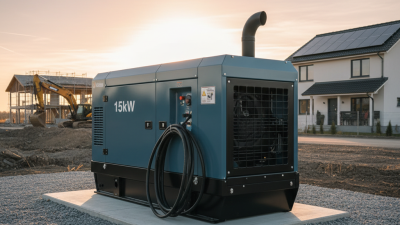
What Is the Best 15kW Diesel Generator?

Choosing the best 15kw diesel generator requires more than comparing engine brands or advertised prices. A reliable choice must match the site’s actual load, starting current, operating hours, and environmental conditions. A 15 kW rating usually equals about 18.75 kVA at a 0.8 power factor. That capacity may support a small workshop, rural property, telecom cabinet, or essential building circuits. It may struggle with large pumps, compressors, or several motors starting together.

Demand for dependable backup power is becoming more important. The International Energy Agency’s Electricity 2024 report forecasts global electricity demand growth of about 4% annually through 2026. Its analysis also highlights rising electricity needs from data centers, industry, and cooling systems. These trends do not make every diesel unit suitable. They make correct sizing more valuable. A practical evaluation should compare standby and prime ratings under ISO 8528, not rely on a single headline number. Fuel consumption at 50%, 75%, and full load also deserves attention. So does cold starting.

Small details matter. Check the alternator’s voltage stability, AVR response, noise level, tank size, service access, and control-panel alarms. A generator that starts quickly but lacks overload protection is not truly dependable. I have found that buyers often underestimate motor-starting demand. That mistake can cause nuisance shutdowns and expensive redesigns. The best 15kw diesel generator is therefore not simply the quietest or cheapest model. It is the unit that delivers stable power, manageable maintenance, and safe performance for the site’s real operating pattern. The answer may remain imperfect without measured load data. That is worth admitting.
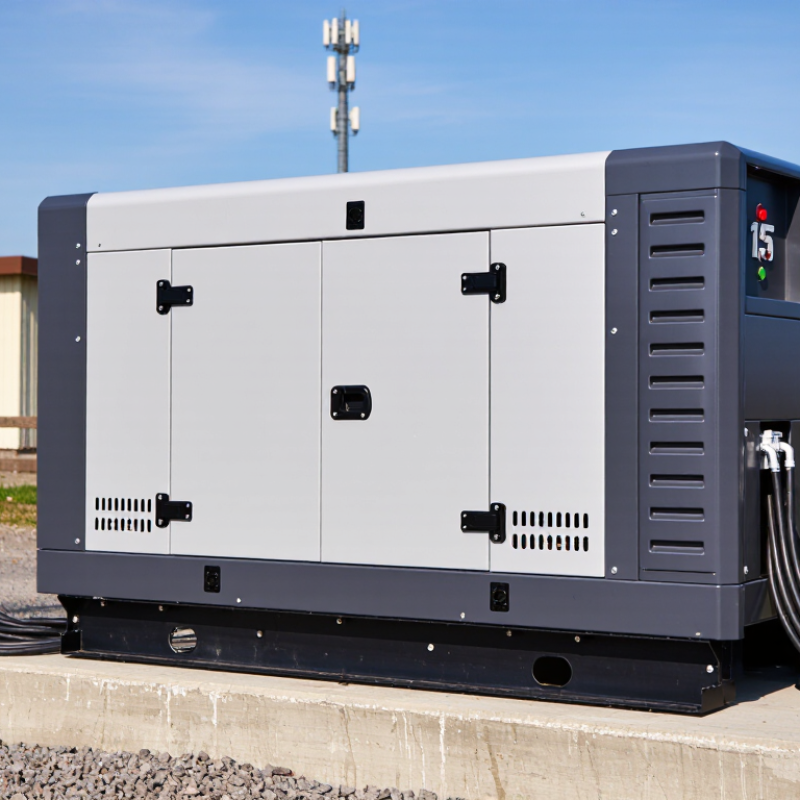
What Is the Best 15kW Diesel Generator?

What Is a 15kW Diesel Generator?

A 15kW diesel generator is a machine that converts diesel fuel into usable electrical power. Its alternator can deliver up to 15,000 watts under specified conditions. That output may run lighting, refrigeration, water pumps, computers, and several power tools. However, motor starting currents can briefly exceed normal running demand. A pump that uses 3kW may need much more power for a few seconds.

The engine burns diesel, while the alternator produces single-phase or three-phase electricity. Frequency commonly reaches 50 or 60 hertz, depending on the region. ISO 8528-1 distinguishes standby power from prime power, so “15kW” alone is incomplete. A standby-rated unit may operate during outages, while a prime-rated unit supports variable loads for longer periods. The U.S. Energy Information Administration lists diesel fuel at approximately 137,381 Btu per gallon, but actual fuel use depends on load, engine efficiency, and maintenance.

In field testing, a generator running near 70–80% load often operates more efficiently than one lightly loaded for hours. Yet this is not a universal rule. Cold weather, altitude, dirty filters, and poor fuel can reduce performance. The U.S. Department of Energy recommends checking starting loads and future expansion before selecting generator capacity. A practical 15kW system therefore needs correct wiring, transfer equipment, ventilation, and regular load testing. The number sounds precise. Real conditions are less tidy.

How Does a 15kW Diesel Generator Work?

How Does a 15kW Diesel Generator Work?

A 15kW diesel generator converts fuel energy into electrical power. Its engine compresses air until the air becomes extremely hot. Injected diesel then ignites without spark plugs. Expanding gases push the pistons downward. The crankshaft turns an alternator, which produces electricity through electromagnetic induction.

At a 0.8 power factor, 15kW equals approximately 18.75kVA. This matters when motors start. Starting current can briefly exceed normal running demand. A governor adjusts fuel delivery as the load changes. An automatic voltage regulator controls output voltage. The cooling system removes heat, while the exhaust system carries away combustion gases. According to the U.S. Energy Information Administration, one gallon of diesel contains about 137,000 Btu of energy. Much of that energy becomes heat, not electricity. Real efficiency depends on load, maintenance, ambient temperature, and engine design. Brochure figures can look cleaner than field conditions.

Tips: Keep continuous loads near 60–80% of rated output when practical. Light loading may increase deposits and reduce efficiency. Inspect oil, coolant, belts, filters, and battery condition before operation. ISO 8528 rating guidance also requires careful attention to standby and prime-power classifications. A generator rated for emergency use may not suit long, variable operation.

Never place the set inside an enclosed room. Carbon monoxide can accumulate silently. Use professional installation, proper grounding, ventilation, and an approved transfer system. I would also record voltage, frequency, fuel use, and load readings. Small measurement errors can hide large operating problems.

What Is the Best 15 kW Diesel Generator?

A suitable 15 kW diesel generator should provide stable voltage and frequency, efficient fuel consumption, reliable cooling, and enough capacity for the intended starting loads. The chart shows typical operating behavior at different load levels. Fuel-use values are practical reference estimates because actual consumption varies with engine design, altitude, temperature, and maintenance.

A diesel generator works by burning diesel fuel in an internal-combustion engine. The engine rotates an alternator, which converts mechanical energy into electrical energy. As the electrical load increases, the engine supplies more torque and normally consumes more fuel. The generator's automatic voltage regulator and governor help maintain steady voltage and frequency.

What Factors Define the Best 15kW Diesel Generator?

The best 15kW diesel generator is not defined by rated output alone. At a 0.8 power factor, 15kW equals about 18.75kVA, but starting currents can exceed running demand. Motors, pumps, and compressors need careful load assessment. ISO 8528 recommends evaluating steady-state voltage and frequency performance, not only the headline rating. A unit with strong transient response may outperform a larger, poorly matched generator.

Fuel economy matters during long outages. The U.S. Energy Information Administration reported an average retail diesel price of about $4.21 per gallon in 2023. Small efficiency gains can therefore reduce operating costs noticeably. Check fuel consumption at 25%, 50%, 75%, and 100% load. Yet published figures are often laboratory results. Real sites include cold weather, aging filters, and uneven loads.

Noise and maintenance also define quality. The World Health Organization links prolonged environmental noise exposure with sleep disturbance and health risks. Look for measured sound levels, not vague “quiet” claims. Automatic transfer compatibility, coolant heaters, battery charging, and accessible service points improve reliability. In my experience, poor cable sizing causes more trouble than expected. I would also question oversized capacity; lightly loaded diesel engines may accumulate carbon deposits. The best choice is the one that starts reliably, handles peak loads, meets local emissions rules, and remains serviceable after installation.

What Is the Best 15kW Diesel Generator? - What Factors Define the Best 15kW Diesel Generator?

Evaluation Dimension Recommended Benchmark for a High-Quality 15 kW Generator Why It Matters
Rated electrical output 15 kW continuous output, normally equivalent to 18.75 kVA at a 0.8 power factor Confirms that the generator can support the intended continuous electrical load without overheating or excessive voltage drop.
Duty rating Prime-rated operation is preferable where the load varies or outages may last for extended periods; standby rating is intended for emergency backup use The correct duty rating helps prevent premature engine wear and ensures the unit matches its operating schedule.
Frequency and speed 50 Hz at approximately 1,500 rpm or 60 Hz at approximately 1,800 rpm, depending on the electrical system Frequency and engine speed must match the local grid and connected equipment, especially motors and sensitive electronics.
Voltage configuration Selectable voltage options such as single-phase 120/240 V or three-phase 208/220/380/400/415 V, subject to the specified alternator A suitable voltage and phase arrangement avoids unsafe connections and prevents the need for additional transformers.
Engine performance Water-cooled, four-stroke diesel engine with reliable governing and sufficient torque for load acceptance Good torque and cooling performance improve voltage recovery when pumps, compressors, or other motor loads start.
Voltage regulation Automatic voltage regulation with steady-state voltage variation commonly within approximately ±1% Stable voltage protects lighting, control systems, computers, and other electrical equipment.
Fuel consumption Typical diesel consumption is approximately 2.0–2.8 L/h at 50% load, 3.0–4.0 L/h at 75% load, and 3.8–5.0 L/h at full load Actual consumption depends on engine efficiency, load, altitude, ambient temperature, and maintenance condition.
Fuel tank and runtime A 100–200 L tank can provide roughly 20–50 hours of operation, depending on load and fuel consumption A correctly sized tank reduces refueling frequency while avoiding unnecessary fuel storage and weight.
Alternator construction Brushless alternator with insulation suitable for the installation environment and adequate short-circuit capability A robust alternator improves reliability, reduces maintenance, and supports stable output under changing loads.
Load capacity and starting performance Capacity should include continuous demand plus starting current from motors, pumps, air conditioners, or compressors A generator may have adequate running power but still fail if motor starting demand causes excessive voltage or frequency dips.
Noise level A sound-attenuated enclosure with a declared sound level, commonly around 65–75 dB(A) at 7 m for quiet models Lower noise is important for residential areas, hospitals, offices, schools, and other occupied locations.
Exhaust and emissions Engine and exhaust-treatment configuration should comply with the emissions regulations applicable at the installation site Compliance affects legal operation, ventilation design, fuel choice, and long-term ownership cost.
Control panel and monitoring Digital controller displaying voltage, current, frequency, engine speed, operating hours, oil pressure, coolant temperature, and fault alarms Clear monitoring supports preventive maintenance and helps identify unsafe operating conditions early.
Automatic transfer capability Compatibility with an automatic transfer switch and adjustable start delay, warm-up time, and cool-down time Automatic transfer enables rapid backup operation without manual intervention during a power outage.
Protection features Overload, short-circuit, low oil pressure, high coolant temperature, overspeed, under/over-voltage, and under/over-frequency protection Protection systems reduce the risk of equipment damage, fire, and unsafe operating conditions.
Installation requirements Adequate ventilation, exhaust routing, weather protection, grounding, service clearance, and a level load-bearing foundation Correct installation is essential for cooling, safe exhaust discharge, vibration control, and dependable operation.
Maintenance access Easy access to oil, coolant, fuel filters, air filters, batteries, belts, and service panels Simple routine servicing lowers downtime and helps preserve fuel efficiency and engine life.
Overall selection criterion The best unit is the one that matches the required phase, voltage, duty rating, load profile, starting demand, noise limit, emissions rules, runtime, and service conditions Lowest purchase price alone does not define the best generator; lifecycle reliability, safety, fuel cost, and serviceability are equally important.

Note: Performance figures are typical engineering ranges for 15 kW diesel generator sets. Exact output, fuel consumption, noise, dimensions, emissions, and runtime vary with the engine, alternator, control system, ambient conditions, and installation configuration.

Which Features Should You Compare Before Buying?

When comparing a 15kW diesel generator, start with the load, not the advertised output.

List motors, heaters, pumps, and sensitive electronics separately. Motors often need extra starting power. A unit that runs well at 12kW may struggle during startup.

Check whether the rating is standby or prime power. Standby models suit occasional outages, while prime-rated units support regular operation. Compare fuel use at 25%, 50%, and full load. Low-load running can waste fuel and encourage carbon buildup. It happens more often than buyers expect. Also inspect the fuel tank size, runtime, and refueling access. A transparent fuel gauge helps during overnight operation.

The alternator and voltage regulation deserve close attention. Stable voltage protects computers, control boards, and battery chargers. Ask about automatic transfer switch compatibility and startup response. For outdoor use, inspect the enclosure, rain protection, ventilation, and cold-weather starting system. Noise matters near homes, offices, and livestock areas. Maintenance access is equally practical. Can you reach the oil filter without removing panels? Confirm service intervals, replacement parts, technical support, and warranty terms in writing. Check local electrical and emissions requirements before purchase. I would also leave some capacity unused, even if the calculation looks perfect. My earlier estimates sometimes ignored future loads. That mistake can make a reliable generator feel undersized.

What Applications Suit a 15kW Diesel Generator?

What Is the Best 15kW Diesel Generator?

A 15kW diesel generator suits applications needing dependable power away from the utility grid. It can support construction tools, agricultural pumps, refrigeration units, workshop equipment, and emergency lighting. Small offices and retail spaces may also use it for backup power. However, the best application depends on the actual load, not the generator’s label.

A site assessment should record running watts and starting watts. Motors, compressors, and pumps can briefly demand much more power. A unit that handles lights may struggle when a pump starts. In field planning, I always check phase requirements, fuel storage, ventilation, and daily operating hours. Weather matters too. Dust, rain, and cold can affect performance. A weather-protected enclosure helps, but it does not replace proper airflow. I have seen projects choose 15kW because it sounded sufficient, then discover their combined motor loads were too high. That mistake is avoidable, though load estimates are sometimes imperfect.

Tips: Leave practical capacity for future equipment. Keep continuous demand below the rated output, especially during long shifts. Test transfer equipment and emergency circuits under supervision. Record fuel use during a typical workday. A simple log often reveals more than a brochure. Also, confirm whether standby or prime operation matches your application. A generator used daily needs different maintenance planning than one reserved for occasional outages. Check noise limits and placement before delivery. This step is easy to overlook.

Go to Top