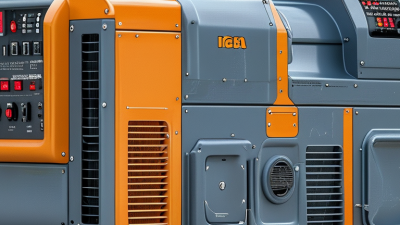
Choosing the 2026 best marine diesel generator is not about selecting the largest engine or the lowest advertised price. Global buyers need dependable power at sea, where salt spray, vibration, fuel quality, and limited repair access expose weak designs quickly. A fishing vessel may need steady output at low load, while a cargo ship demands reliable emergency power and class-approved integration. The details matter.
Roger Holm, President of Wärtsilä Marine Power, has stated, “Decarbonisation is not a single technology or solution.” That view also applies to generator selection. A practical evaluation should examine fuel consumption, load acceptance, acoustic performance, cooling design, emissions compliance, and service coverage. Check the data sheet carefully. Ask for real operating figures, not only laboratory claims. Verify certificates with the relevant classification society and confirm parts availability near the vessel’s trading routes.
This guide compares leading marine diesel generator options for different vessel sizes, duty cycles, and regional requirements. It considers established manufacturers, engine longevity, alternator quality, automatic control systems, and technical support after installation. Shore testing is useful, but it cannot recreate every rough passage or neglected fuel filter. That limitation deserves honesty.
There is no universal winner. A compact generator may outperform a premium model when its load profile is better matched. A cheaper purchase can become expensive through downtime, difficult maintenance, or delayed spare parts. Buyers should treat rankings as a starting point, then validate each recommendation against vessel plans, crew capability, class rules, and total ownership cost. That is the less glamorous answer. It is also the safer one.
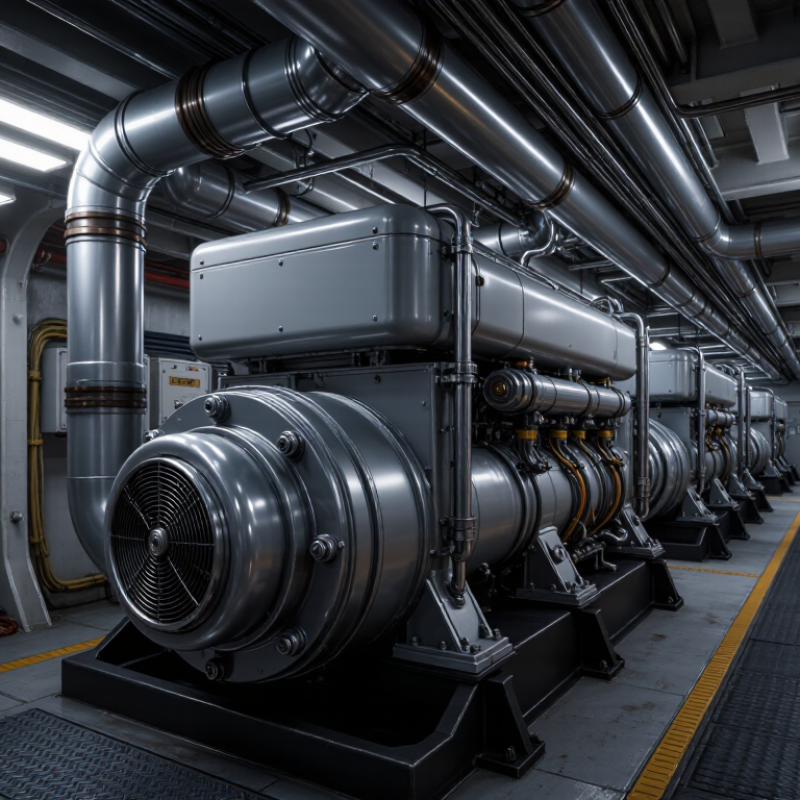
Marine diesel generators are onboard power systems that convert fuel energy into dependable electrical output. A diesel engine drives an alternator, while control equipment manages voltage, frequency, and load sharing. Their compact design suits vessels where space, weight, and reliability matter.
The main purpose is continuous or standby electricity at sea. They power navigation equipment, communication systems, pumps, lighting, refrigeration, and engine-room controls. On passenger vessels, they also support ventilation and essential hotel services. Cargo ships often use them during loading, unloading, and extended voyages. Offshore platforms and workboats depend on similar systems for remote operations.
Selection requires more than checking rated kilowatts. Buyers should examine operating profiles, fuel quality, cooling methods, vibration levels, and spare-part access. A generator running below its ideal load may suffer from carbon buildup and reduced efficiency. Excessive loading can shorten engine life. Real inspections should include exhaust color, oil pressure, coolant temperature, and battery condition. Small details matter.
No specification sheet is perfect. Sea conditions can expose weaknesses that factory tests miss. Salt air demands careful corrosion protection, while cold regions require suitable starting systems and lubricants. Emission requirements also vary by vessel type and operating area. Service records, documented testing, and qualified technicians provide stronger evidence than attractive claims. A practical choice balances power, maintenance, lifecycle cost, and the consequences of an unexpected shutdown.
Marine diesel generators convert diesel fuel into electrical power for vessel systems such as navigation, lighting, pumps, refrigeration, communications, and hotel services. The chart shows indicative engineering power ranges commonly used for different marine applications; the actual rating depends on vessel size, operating profile, redundancy requirements, and classification rules.
Typical reference ranges shown in kW; final generator selection should be based on a vessel load analysis and applicable marine regulations.
The best marine diesel generator for 2026 should match the vessel’s real operating profile, not only its advertised peak output. Check continuous power, transient response, fuel consumption, and low-load performance. A generator may show 500 kW, yet struggle when cranes start or thrusters change demand suddenly. ISO 8528-5 performance classes help buyers compare voltage and frequency stability. These details matter in rough seas.
Fuel efficiency now carries greater weight. The IMO 2023 GHG Strategy sets indicative checkpoints for cutting international shipping emissions by 20–30% by 2030 and 70–80% by 2040, compared with 2008. The IEA estimates shipping produces about 2% of global energy-related carbon dioxide emissions. A practical 2026 specification should therefore include accurate fuel maps, efficient cooling, emissions monitoring, and compatibility with future lower-carbon fuels. Do not trust one laboratory figure. Sea conditions, fouled filters, and poor maintenance can change results.
Tips: Request witnessed load-bank testing and service records. Compare fuel use at 25%, 50%, and 75% load. Ask for cold-start data in the vessel’s actual climate. Noise and vibration also deserve attention near crew cabins. A smaller generator running near its efficient load can outperform an oversized unit. Sometimes. However, redundancy needs careful review. One powerful set may look economical, but two smaller sets can provide safer maintenance flexibility. UNCTAD’s Review of Maritime Transport also highlights continuing pressure on operating costs and supply-chain reliability, making parts availability and technician support important purchasing factors.
| Performance Factor | Recommended 2026 Selection Benchmark | Why It Matters | Buyer Verification Points |
|---|---|---|---|
| Rated Electrical Output | Select for 70–85% normal operating load Allow approximately 15–30% reserve capacity. |
Operating continuously at very low load can increase combustion deposits and reduce fuel efficiency, while insufficient reserve capacity can cause voltage or frequency instability. | Prepare a load list covering propulsion auxiliaries, pumps, navigation equipment, HVAC, refrigeration, battery chargers, and starting loads. Confirm both continuous and short-term peak demand. |
| Frequency and Voltage | 50 Hz or 60 Hz Common low-voltage systems include 380–415 V at 50 Hz and 440–480 V at 60 Hz. |
The wrong electrical standard can damage equipment or make the generator incompatible with the vessel’s switchboard and shore-power system. | Match the generator, alternator, circuit breakers, switchboard, transformers, and onboard equipment. Specify voltage regulation and frequency regulation under load changes. |
| Fuel Consumption | Typically about 200–230 g/kWh at high load Actual values vary with engine size, speed, fuel type, and operating load. |
Fuel consumption directly affects voyage range, tank size, operating cost, and carbon emissions. | Request a certified fuel-consumption curve at 25%, 50%, 75%, and 100% load. Compare figures using the same fuel specification and measurement conditions. |
| Load Acceptance | Verify step-load capability Use the applicable class, flag-state, and system requirements rather than relying on a single universal percentage. |
Large motors, bow thrusters, compressors, and pumps can create sudden electrical demand and temporary voltage or frequency dips. | Obtain test data for voltage dip, frequency dip, recovery time, and sequential motor starting. Confirm compatibility with automatic load-sharing and load-shedding systems. |
| Emissions Compliance | IMO MARPOL Annex VI compliance For applicable vessels and operating areas, verify IMO NOx Tier II or Tier III requirements. |
Emission requirements depend on engine rated speed, installation date, vessel type, flag, and whether the vessel operates inside an Emission Control Area. | Request the Engine International Air Pollution Prevention certificate, NOx Technical File, applicable type-approval documents, and details of any SCR or other after-treatment system. |
| Fuel Flexibility | Confirm approved fuel grades Typical marine distillate fuels include DMA and DMB under ISO 8217; alternative fuels require specific approval. |
Fuel quality, viscosity, lubricity, water content, and contamination can affect injection equipment, filters, reliability, and warranty coverage. | Check the approved ISO 8217 fuel categories, maximum sulfur content, fuel-treatment requirements, storage guidance, and compatibility with biodiesel blends or other low-carbon fuels. |
| Cooling and Ambient Capability | Size for the actual marine environment Review seawater temperature, engine-room temperature, altitude, humidity, and fouling conditions. |
High ambient temperature, restricted airflow, warm seawater, and dirty heat exchangers reduce available output and may increase engine thermal stress. | Confirm derating curves, radiator or keel-cooling performance, heat-exchanger margins, ventilation requirements, and alarm or shutdown settings for high coolant temperature. |
| Reliability and Service Interval | Documented preventive-maintenance schedule Many medium-speed and high-speed engines use oil-service intervals around 250–1,000 operating hours, depending on design and duty. |
Maintenance frequency affects spare-parts inventory, downtime, crew workload, and total cost of ownership. | Review maintenance intervals, overhaul periods, remote diagnostic functions, corrosion protection, spare-parts availability, and service support in the vessel’s operating regions. |
| Noise and Vibration | Use class and accommodation limits Apply the vessel’s noise-and-vibration design criteria and applicable IMO or classification requirements. |
Excessive noise and vibration can reduce crew comfort, damage connected equipment, and accelerate structural or mechanical fatigue. | Specify resilient mounts, flexible couplings, exhaust silencers, acoustic enclosures, torsional-vibration analysis, and measured sound-pressure data where required. |
| Automation and Parallel Operation | Automatic start, synchronization, and load sharing Support emergency-start logic and blackout recovery where required. |
Modern vessels often operate multiple generator sets in parallel to improve redundancy, efficiency, and maintenance flexibility. | Verify compatibility with the power-management system, synchronizing equipment, reverse-power protection, preferential tripping, black-start sequence, and emergency generator controls. |
| Classification and Safety | Approval matched to vessel class and flag Examples include requirements from the selected classification society and flag administration. |
Marine approval confirms that the installation meets required standards for safety, documentation, testing, and redundancy. | Confirm type approval, factory acceptance testing, onboard commissioning tests, fire protection, fuel shutoff, emergency stops, exhaust insulation, and electrical protection settings. |
| Total Cost of Ownership | Evaluate the full life-cycle cost Include purchase, installation, fuel, lubricants, maintenance, emissions equipment, spares, and disposal. |
The lowest purchase price may result in higher costs if fuel consumption, downtime, after-treatment, or imported spare parts are expensive. | Compare a multi-year operating model using expected annual hours, average load profile, fuel price, maintenance labor, overhaul cost, financing, and residual value. |
Note: The benchmarks above are general marine-engineering guidance. Final generator selection should be confirmed against the vessel’s load analysis, class requirements, flag-state rules, operating route, fuel specification, and approved engine documentation.
Marine diesel generators differ by speed, duty, and vessel size. Fixed-speed sets commonly run at 1,500 or 1,800 rpm. They suit stable hotel loads and auxiliary systems. Variable-speed units adjust engine speed with demand. They can reduce fuel use during lighter operations, but control systems become more complex.
Small fishing boats often need 20–100 kW. Workboats and patrol vessels may require 100–500 kW. Cargo ships commonly use 500 kW to 2,000 kW auxiliary sets. Larger vessels may install multiple units above 2 MW. Multiple smaller generators improve redundancy and maintenance flexibility. One large unit may save space, yet a single failure can remove vital capacity. This trade-off is easy to underestimate.
Tips: Build a load profile from pumps, winches, navigation equipment, and hotel services. Add starting current for motors. Keep a practical reserve, usually around 15–25%, but avoid excessive oversizing. Oversized engines may run lightly loaded and suffer poor efficiency. Check fuel consumption at actual operating points, not only the maximum rating. Confirm cooling performance, vibration limits, emissions rules, and marine certification for the target waters. I would not treat published power ranges as fixed answers. Sea temperature, altitude, maintenance quality, and seasonal loads can change the result.
2026 Best Marine Diesel Generator for Global Buyers?
Fuel economy should be judged at the vessel’s real operating load, not only at rated power. A modern marine diesel generator commonly consumes about 0.22–0.28 litres per kilowatt-hour at medium-to-high load. Actual use rises sharply during low-load hotel operations, frequent manoeuvring, or poor maintenance. Measure fuel flow during sea trials. Do not trust a brochure alone.
The International Maritime Organization’s Fourth GHG Study reported that shipping produced about 1,056 million tonnes of CO2 in 2018, representing 2.89% of global anthropogenic emissions. This makes load management and exhaust control practical procurement issues. MARPOL Annex VI limits sulphur content to 0.50% globally and 0.10% in designated emission control areas. Buyers should verify fuel compatibility, engine certification, exhaust-treatment performance, and flag-state approval together. One document is never enough.
Safety deserves equal attention. ISO 8528 and classification requirements support checks for overspeed protection, emergency shutdowns, ventilation, grounding, and fire isolation. The EMEP/EEA air-pollutant inventory guide also shows why nitrogen oxides and particulate matter require measured, duty-cycle-based assessment. Ask for test data at 25%, 50%, 75%, and 100% load. Small details matter. I still see buyers comparing only litres per hour, which can produce a misleading result. A generator that saves fuel but struggles with transient loads may create darker smoke, unstable voltage, and higher maintenance costs.
The best marine diesel generator for 2026 depends on installation conditions, service access, and lifetime cost. A compact unit may fit the engine room, yet poor ventilation can reduce output and shorten component life. Installation should verify seawater temperature, exhaust back pressure, cable sizing, vibration isolation, and emergency shutdown access. Do not trust brochure ratings alone. Confirm continuous and standby ratings under ISO 8528 testing conditions.
Fuel efficiency deserves careful measurement. The IMO Fourth GHG Study 2020 reported that international shipping produced about 2.89% of global anthropogenic greenhouse-gas emissions in 2018. Generator hours, load profile, and fuel quality therefore affect both emissions and operating cost. The IMO 2020 sulfur limit of 0.50% also makes fuel compatibility and filtration important during supplier evaluation. Ask for factory test records, load-bank results, spare-parts lead times, technician coverage, and documented warranty terms. Small details matter.
Maintenance planning should include daily coolant checks, oil analysis, injector inspection, and scheduled alternator testing. DNV’s Maritime Forecast to 2050 emphasizes higher efficiency and stricter emissions performance across shipping. Yet the cheapest purchase can become expensive after several years. Calculate fuel, lubricants, filters, labor, downtime, overhaul, transport, and disposal costs. A spreadsheet can still lie. Use real vessel load data, not optimistic assumptions. I would also require two comparable references from similar vessels, because supplier promises are weakest when conditions differ.