Choosing a caterpillar diesel generator in 2026 requires more than comparing kilowatt ratings. Buyers must match the machine to workload, location, fuel access, service support, and operating risk.
Jim Umpleby, Caterpillar Chairman and CEO, has repeatedly connected the company’s work with its purpose: “to help our customers build a better, more sustainable world.” That principle matters when selecting backup power for hospitals, construction sites, factories, data centers, and remote facilities.
This guide examines the leading Caterpillar diesel generator types for modern buyers. It covers standby, prime, continuous, mobile, and rental-focused configurations. Each type serves a different duty cycle. A standby unit may start during a grid failure and run for several hours. A prime generator may operate daily at a remote mine or construction project. A continuous model faces steady demand, often without a reliable utility connection.
The details are practical. Think about a dusty job site, a cold morning start, a narrow service road, or a generator running beside sensitive electronics. These conditions change the buying decision.
Rated power alone is not enough.
Buyers should also examine load steps, fuel consumption, emissions requirements, noise control, enclosure design, automatic transfer systems, and local technician availability. Caterpillar’s global dealer network can strengthen long-term support, but coverage differs by region. That limitation deserves honest attention.
Some buyers still choose oversized equipment for comfort. It may provide reserve capacity, yet light loading can reduce efficiency and increase maintenance concerns. The best decision is rarely the biggest machine. It is the most suitable one.
2026 Top Diesel Generator Types for Buyers
Standby diesel generators are designed for emergency power. They start automatically after a utility failure. Their core function is short-term backup for hospitals, offices, warehouses, and homes. An automatic transfer switch moves the load safely. These units usually operate for limited hours, so fuel storage and battery condition matter. A neglected battery can defeat an otherwise capable system.
Prime generators support changing loads for long periods. They suit construction sites, remote facilities, farms, and temporary power networks. Their engines can run continuously, but maintenance intervals remain important. Continuous-duty generators serve stable loads around the clock. They are commonly selected for data rooms, industrial plants, and isolated microgrids. Load calculations should include starting current from pumps, compressors, and motors. A simple wattage estimate is often too optimistic.
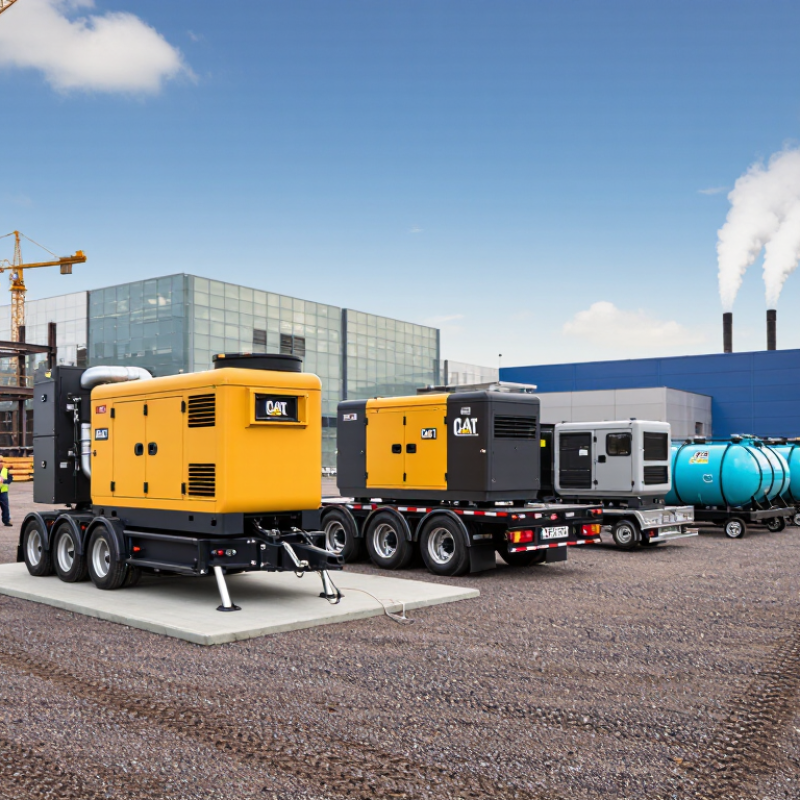
Mobile trailer-mounted units provide flexible power between work areas. Open-frame designs improve service access and cooling. Enclosed models reduce noise and protect components from rain. Containerized systems offer stronger weather protection, larger fuel capacity, and easier site integration. They may still need extra ventilation. Buyers should compare rated power, altitude performance, fuel consumption, control systems, and spare-part access. Oversizing can increase wet stacking and operating costs. Undersizing causes overheating and unstable voltage. The right choice depends on load behavior, environment, runtime, and maintenance discipline—not only the nameplate rating.
Diesel generator sets are commonly selected by duty cycle, mobility, and required power output. The chart below shows indicative industry rating ranges for major generator types; actual ratings vary by configuration, operating conditions, and local standards.
Core functions: Portable units provide temporary power for small loads, standby systems automatically support critical loads during grid outages, prime-power sets operate as the main electricity source where utility power is limited, continuous-power systems support stable long-duration loads, and mobile rental units provide transportable power for construction, events, and emergency response.
Choosing a diesel generator starts with the load profile, not the nameplate rating. Standby units suit emergency power for offices, clinics, and homes. They operate during outages and usually support short-term demand. Prime-rated units handle variable loads for construction sites, farms, and remote workshops. Continuous-rated models run at steady output for mines, industrial plants, and isolated facilities.
Power ratings need careful interpretation. A 500 kW generator may not deliver 500 kW continuously under high temperatures or altitude. Derating can reduce available capacity. I have seen project estimates overlook motor-starting current, causing nuisance trips and voltage dips. Large pumps, compressors, and elevators need extra starting capacity. A practical design should separate running load, starting load, and future expansion.
Configuration also changes suitability. An open-frame set works well inside a ventilated power room, while an enclosed model reduces outdoor noise and protects against rain. Mobile units support temporary projects and emergency response. Parallel systems allow staged capacity, maintenance without total shutdown, and better fuel efficiency at partial load. Automatic transfer equipment can restore power quickly, but control compatibility must be checked before installation. Voltage, frequency, phase, fuel storage, exhaust routing, and service access deserve equal attention. Sometimes a smaller unit with load management performs better than an oversized machine. That choice may require more planning.
Choosing a diesel generator in 2026 requires more than comparing rated output. Engine design determines response, durability, and service access. For construction sites, a turbocharged, water-cooled engine usually handles sudden load changes better. Buyers should check standby and prime power ratings carefully. They are not interchangeable.
A reliable alternator should use brushless construction, automatic voltage regulation, and insulation suitable for the operating environment. Copper windings can support stable current under demanding loads. Confirm the alternator’s transient response, frequency stability, and short-circuit protection. A 400-kilowatt set may struggle if its alternator is poorly matched to motor starting loads.
Fuel-system specifications deserve equal attention. Electronic injection can improve fuel control, while a large-capacity tank supports longer operation between refills. Ask about fuel filtration, water separation, and cold-start performance. Small details matter. During commissioning, I have seen contaminated fuel cause more trouble than a weak engine. The estimate may still be wrong when site loads change hourly.
Measure actual consumption at 25%, 50%, and 75% load before final selection. Light loading can increase deposits and reduce efficiency over time. A day tank, leak monitoring, and accessible drain points simplify maintenance. Service intervals should match the owner’s schedule, not only the seller’s brochure. Leave room for inspection; cramped panels slow ordinary work and invite missed faults.
When comparing diesel generator sets for purchase, start with the site’s real load profile, not the largest advertised rating. The IEA’s Electricity 2024 report estimates data-centre electricity demand could exceed 1,000 TWh globally by 2026. That pressure makes dependable backup power more valuable. Record motors, pumps, elevators, and cooling equipment separately. Their starting currents can briefly exceed running demand by several times.
Check whether the set is rated for standby, prime, or continuous operation. These ratings are not interchangeable. ISO 8528 guidance supports comparing voltage regulation, frequency control, and transient response under changing loads. Ask suppliers for test results at 25%, 50%, 75%, and 100% load. A unit that performs well only at full load may wet-stack during light operation. That detail is often missed.
Fuel quality, tank size, altitude, ambient temperature, and maintenance access also affect purchasing cost. Uptime Institute’s Global Data Center Survey 2024 identifies power problems as a leading cause of serious outages. Therefore, compare automatic transfer performance, dual starting batteries, service intervals, parts availability, and remote alarms. Request a five-year total-cost model, including fuel, filters, testing, and technician visits. Numbers can mislead. I once treated a lower purchase price as a better deal; difficult access later changed the calculation. Pricing should be checked against actual site conditions.
A practical comparison of common diesel generator configurations and purchasing criteria
| Generator Type | Typical Rated Capacity | Best-Fit Application | Operating Mode | Fuel & Runtime Considerations | Noise & Installation | Key Purchase Factors |
|---|---|---|---|---|---|---|
| Open-Frame Diesel Generator Set | Approximately 10–3,000 kVA | Industrial plants, utility rooms, construction sites, and permanent installations | Standby, prime, or continuous duty depending on the engine and alternator configuration | Diesel storage capacity, daily fuel consumption at the expected load, and accessibility for refueling | Requires a dedicated generator room or acoustic treatment; ventilation and exhaust routing are essential | Check available floor space, foundation strength, ventilation, exhaust back pressure, fuel-system design, and service access |
| Sound-Attenuated Enclosed Set | Approximately 10–2,000 kVA | Commercial buildings, hospitals, data facilities, residential developments, and urban sites | Standby / Prime | Enclosure does not reduce fuel use by itself; compare fuel consumption at 25%, 50%, 75%, and 100% load | Acoustic enclosure commonly targets lower sound levels than open sets; cooling airflow must remain unobstructed | Compare sound pressure level, enclosure weather protection, corrosion resistance, radiator airflow, lifting points, and emergency access |
| Mobile Trailer-Mounted Set | Approximately 20–2,000 kVA | Temporary power, disaster response, outdoor events, roadwork, mining, and rental fleets | Prime or continuous operation; standby use is possible when correctly configured | Prioritize fuel-tank size, transport regulations, refueling intervals, and fuel filtration for dusty environments | Designed for outdoor use; requires level ground, safe clearance, grounding, exhaust control, and suitable towing equipment | Verify trailer rating, axle load, braking system, dimensions, noise limits, cable outlets, weather protection, and mobility requirements |
| High-Voltage Diesel Generator Set | Usually above 1,000 kVA, depending on voltage and configuration | Large industrial facilities, utility support, campuses, mines, and large-scale infrastructure | Prime, continuous, or standby duty | Large fuel systems may require bunded tanks, fuel polishing, leak detection, and documented fuel-quality control | Requires specialized electrical rooms, high-voltage clearances, ventilation, earthing, and restricted access | Confirm output voltage, frequency, fault level, protection coordination, synchronization scheme, transformer needs, and local electrical approvals |
| Parallel-Ready Modular Set | Multiple units from approximately 100 kVA to several MVA total | Data centers, hospitals, manufacturing plants, and sites requiring capacity expansion or redundancy | Standby, prime, or continuous duty with load sharing | Multiple smaller engines can improve part-load flexibility; compare total fuel use and minimum-load limits | May reduce single-unit footprint, but requires coordinated ventilation, exhaust, controls, and maintenance clearances | Evaluate synchronization controls, load-sharing accuracy, N+1 redundancy, black-start capability, maintenance bypass, and future expansion |
| Emergency Standby Generator Set | Approximately 10–3,000 kVA | Backup power for critical loads during utility outages | Standby duty; normally operated only during outages and scheduled testing | Confirm local fuel-storage rules, required autonomy, fuel stability, automatic refueling, and periodic test-load requirements | Indoor or outdoor installation; automatic ventilation, exhaust discharge, and fire-safety provisions are required | Compare response time, automatic transfer switch compatibility, step-load performance, cold-start capability, battery charging, and testing requirements |
| Prime-Power Generator Set | Approximately 10–3,000 kVA | Remote sites, microgrids, construction, agriculture, telecommunications, and areas with unreliable utility supply | Variable-load operation for extended periods; load profile must remain within the engine manufacturer's limits | Fuel efficiency, oil-change intervals, fuel logistics, and low-load operating behavior are major lifecycle factors | Usually installed outdoors or in a ventilated plant room; acoustic and emissions controls depend on the location | Review annual operating hours, average load factor, transient response, wet-stacking risk, service intervals, and spare-parts support |
| Continuous-Power Generator Set | Approximately 100–3,000 kVA | Base-load generation, remote microgrids, mining, and applications with a stable 24/7 load | Continuous duty at a constant or carefully managed load | Requires dependable bulk-fuel supply, fuel-quality management, long service intervals, and planned maintenance shutdowns | Permanent installation with robust cooling, exhaust, acoustic, fire-protection, and maintenance systems | Check continuous rating, allowable load factor, generator temperature rise, lubrication system, cooling margin, and long-term parts availability |
2026 Top Caterpillar Diesel Generator Types for Buyers
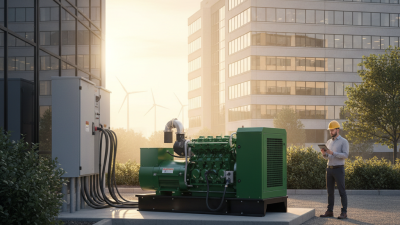
For 2026, buyers should match generator type to site conditions, not only rated output. Open-frame units suit protected plant rooms with controlled airflow. Sound-attenuated models work better near offices, homes, or hospitals. Containerized units simplify outdoor deployment but need careful foundation planning. Installation requires a level concrete pad, safe exhaust routing, weather protection, and enough service clearance. Leave space around filters and panels. Tight layouts become expensive during repairs. Check transfer-switch compatibility, cable size, grounding, and ventilation before delivery. A commissioning technician should record voltage, frequency, fuel settings, and alarm responses during the first load test.
Maintenance should follow operating hours and calendar age. Inspect coolant, belts, hoses, batteries, fuel quality, and exhaust joints at defined intervals. Change lubricants according to the engine’s duty cycle and site environment. Standby units need regular loaded testing, while prime-power units require closer attention to load balance and daily fuel use. Keep service records with photographs and test readings. Small leaks rarely remain small. Long-term costs also include fuel storage, replacement batteries, coolant disposal, noise control, and technician access. A lower purchase price may hide awkward maintenance. That deserves honest review.
Tips: Install a block heater in cold climates. Test the generator under real load. Keep spare filters and belts onsite. Protect fuel from water and contamination. Recheck cables after vibration settles. Ask an electrical professional to verify grounding and protection settings. Never assume the first commissioning report is perfect. Reinspect after several weeks.