China Top Liquid Ring Vacuum Pump Manufacturers?
Choosing among China’s top Liquid Ring Vacuum Pump manufacturers requires more than comparing catalog prices. A pump may look efficient on paper, yet perform poorly with hot vapor, entrained liquid, or unstable cooling water. This guide examines manufacturers through practical engineering factors, including sealing-water consumption, corrosion resistance, ultimate vacuum, noise control, testing procedures, and after-sales support.
Vacuum-technology author John F. O’Hanlon offers a useful warning: “A vacuum gauge does not tell the whole story.” That principle matters here. A reliable Liquid Ring Vacuum Pump should maintain stable performance under real process conditions, not only in a clean factory test. Buyers should request pump curves, material specifications, factory test records, and references from comparable industries. Food processing, chemical production, paper mills, and power plants often require different configurations.
The strongest Chinese manufacturers usually demonstrate repeatable machining quality, documented quality control, and responsive technical service. Some provide impressive data sheets. Fewer explain how performance changes when water temperature rises from 20°C to 30°C. That detail can decide whether a pump protects production or creates unexpected downtime.
This article compares leading suppliers by product capability, customization experience, certification, delivery reliability, and lifecycle value. It also considers weaknesses, because no manufacturer is perfect. A lower purchase price may hide higher water use, difficult maintenance, or limited export support. Readers should verify every claim independently. Real operating conditions remain the final test.
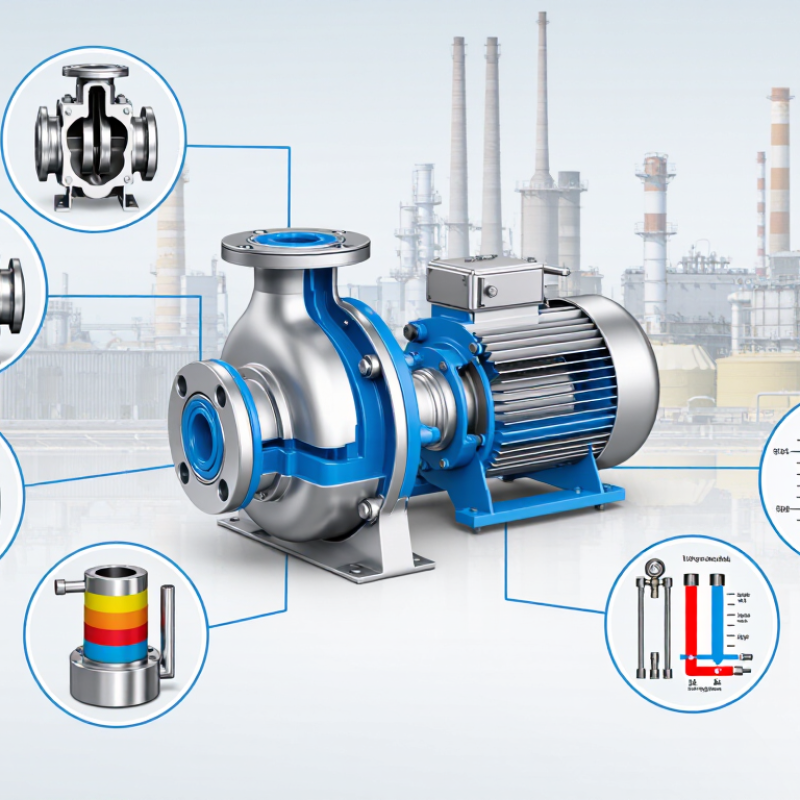
Liquid Ring Vacuum Pump Basics: 30–50 mbar Vacuum and 50–5,000 m³/h Capacity
Liquid ring vacuum pumps use a rotating impeller and a sealing liquid to remove gas. At 30–50 mbar absolute, they can support evaporation, filtration, drying, and condenser service. Available capacity commonly ranges from 50 to 5,000 m³/h. That is a wide operating window.
Real performance depends on temperature, sealing-liquid pressure, and gas composition. Warmer liquid reduces vacuum because vapor pressure rises. At 35°C, a pump may struggle to hold 30 mbar. Cooler water can improve results, but it also increases operating costs. A separator, heat exchanger, and reliable recirculation system are often necessary. Cavitation can sound like gravel inside the casing.
When comparing Chinese manufacturers, request a certified performance curve, test conditions, material specifications, and measured power consumption. Check whether capacity is stated at 50 mbar, or only at a much higher pressure. That detail changes everything. Ask for factory test records and references from similar duty. Stainless steel may suit corrosive gases, while cast iron can be practical for cleaner applications. I would not select a pump from flow rate alone. I have seen oversized units waste energy and undersized units run continuously. Site altitude, liquid quality, inlet piping, and seasonal temperature deserve equal attention.
How Liquid Ring Pumps Work: Sealing Liquid, Impellers, and Two-Stage Compression
Liquid ring vacuum pumps remain important in chemical processing, power generation, food production, and wastewater treatment. Grand View Research valued the global vacuum pump market at about USD 6.3 billion in 2023. Its 2024 analysis also forecasts steady growth through 2030. This demand reflects a practical advantage: liquid ring pumps handle wet gases, vapor, and small liquid carryover better than many dry technologies.
The operating principle is simple, but not effortless. A casing holds sealing liquid, usually water or a process-compatible fluid. An off-center impeller spins inside the casing. Centrifugal force forms a liquid ring against the wall. The changing gaps between impeller blades and this ring create suction, compression, and discharge. In a two-stage design, the first stage lowers pressure, while the second stage compresses the gas again. It feels like two careful squeezes, not one hard push. Liquid temperature matters. Warmer liquid creates higher vapor pressure and can reduce vacuum performance.
Field engineers often check inlet pressure, liquid temperature, flow rate, and separator losses together. ISO 5389 provides a recognized framework for testing turbocompressors, while vacuum-pump evaluations commonly follow manufacturer and laboratory test procedures. A 2024 industrial energy-efficiency report from the U.S. Department of Energy emphasizes measurement before equipment changes; this advice also fits vacuum systems. A small mistake remains possible. Selecting a pump only by ultimate vacuum can produce poor results under humid, variable loads. Better selection compares capacity, operating pressure, liquid compatibility, noise, maintenance access, and total energy use.
How Liquid Ring Vacuum Pumps Work: Sealing Liquid, Impellers, and Two-Stage Compression
Water is commonly used as the sealing liquid in liquid ring vacuum pumps. As its temperature rises, water vapor pressure increases and can limit the pump’s achievable absolute vacuum. The values below show the saturated vapor pressure of water at selected temperatures.
China’s Top Manufacturers: 2BE1, 2BV, and SK Series Product Comparisons
China’s top liquid ring vacuum pump manufacturers commonly offer 2BE1, 2BV, and SK series equipment. Each design suits a different operating profile. The 2BE1 series usually serves large, continuous processes requiring strong suction capacity. Its wider casing and heavy-duty structure support demanding industrial service, but installation needs more floor space and careful alignment.
The 2BV series is more compact. Direct coupling can reduce installation complexity and maintenance points. It fits packaging, evaporation, filtration, and laboratory-scale production lines with moderate vacuum demand.
The SK series emphasizes simple construction and dependable operation. It can be practical for general water-ring applications, although its footprint and energy performance may not match newer compact designs.
Actual results depend on sealing water temperature, corrosion resistance, and inlet conditions. Published flow data alone can mislead.
Tips: Compare capacity at your real vacuum level, not only the rated maximum. Ask manufacturers for performance curves, material specifications, noise data, and continuous-duty references. Check whether separators, valves, and motors are included. A lower purchase price may hide higher water use or difficult servicing. In field inspections, I would also examine shaft seals and bearing temperature. Small details matter. Some comparisons remain imperfect because test water conditions differ between suppliers. Request a witnessed factory test when process stability is critical.
Buyer’s Checklist: API 681, Energy Use, Spare Parts, Warranty, and Export Support
China Top Liquid Ring Vacuum Pump Manufacturers?
Choosing a Chinese liquid ring vacuum pump manufacturer requires more than comparing quotations. Ask for API 681 compliance, the applicable edition, and a clause-by-clause deviation list. Review the performance curve at your actual suction pressure, temperature, and seal-water conditions. Factory acceptance testing should record capacity, ultimate pressure, vibration, noise, and motor load. A polished certificate is not enough.
Energy deserves hard numbers. The U.S. Department of Energy’s Pump Life Cycle Costs guide notes that energy may represent about 40% of a pump’s lifetime cost. Request kWh per operating hour, seal-water consumption, motor efficiency, and expected performance after years of service. The IEA reports that electric motor systems consume roughly half of global electricity. Small efficiency losses can become expensive. I would challenge any supplier offering only rated power.
Spare parts reveal practical reliability. Confirm wet-end materials, mechanical-seal specifications, bearing references, interchangeability, and delivery times. Keep a written list for two years of critical parts. Warranty terms should define performance limits, exclusions, response time, and who pays for replacement freight. Export support matters too: request English manuals, packing photos, inspection records, customs documents, remote commissioning, and technician availability across time zones. Some suppliers promise fast support, yet their spare-parts list is vague. That is a warning. A lower price may still hide longer downtime.
