
China Top Electric Coolant Heater Manufacturers

China has become a major manufacturing base for thermal management components used in electric vehicles, buses, battery systems, and industrial equipment. This guide examines China Top Electric Coolant Heater Manufacturers through practical, technical, and quality-focused criteria. It introduces companies that design and produce Electric Coolant Heater solutions for different voltage levels, heating capacities, and installation conditions.

A reliable manufacturer should demonstrate more than competitive pricing. Engineers should review heating efficiency, temperature control accuracy, pressure resistance, insulation performance, and coolant compatibility. Factory experience also matters. A mature supplier may provide prototype support, wiring diagrams, test reports, and stable production records. Details such as connector sealing, aluminum housing quality, and response time can influence long-term performance. Small components matter.

The evaluation also considers research capability, production equipment, inspection procedures, and after-sales communication. Useful evidence may include ISO certifications, laboratory testing, sample validation, and customer application experience. However, no supplier ranking is permanently perfect. Product quality can change with materials, management, and production volume. Buyers should verify current specifications directly and request samples before making major decisions.

This overview is designed for importers, vehicle manufacturers, system integrators, and engineering teams seeking dependable Chinese partners. It does not treat marketing claims as final proof. Instead, it encourages technical comparison, transparent communication, and careful validation under real operating conditions. A heater that performs well on paper may behave differently in cold workshops, narrow coolant circuits, or frequent start-stop applications. Practical testing remains essential.
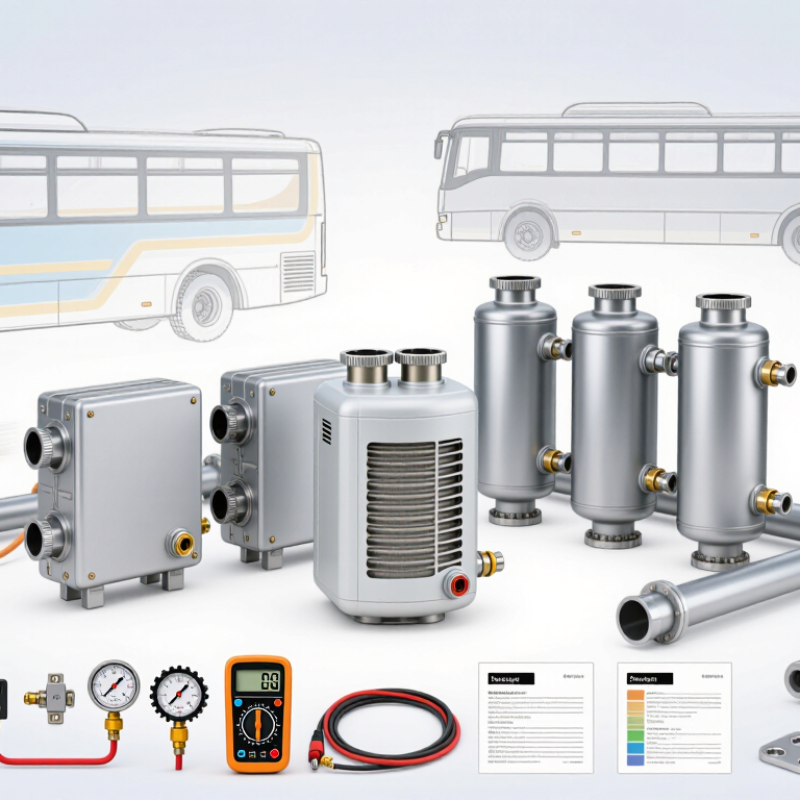
China Top Electric Coolant Heater Manufacturers

Electric Coolant Heaters: Definition, Purpose, and Operating Principles

An electric coolant heater is a compact high-voltage device that warms coolant without burning fuel. It commonly uses ceramic positive-temperature-coefficient elements, which regulate heating as resistance rises. A pump moves the heated coolant through the battery, cabin heater, or power-electronics loop.

The purpose is practical. It helps batteries reach an efficient temperature before driving or fast charging. It can also provide cabin heat when the electric motor produces little waste heat. The International Energy Agency reported nearly 14 million electric cars sold worldwide in 2023, representing about 18% of new car sales. That growth makes thermal control increasingly important, not optional.

During operation, a control unit checks coolant temperature, battery status, current demand, and safety signals. Power then passes through the heating elements. Heat transfers into the coolant, while sensors monitor pressure and temperature. The U.S. Department of Energy notes that cold conditions can reduce electric-vehicle range, partly because cabin heating consumes stored energy. A coolant heater can limit this penalty, but it cannot remove it. Energy still has to come from the battery.

The details matter. Poor calibration may create temperature swings or unnecessary power loss. In practice, engineers must balance heating speed, insulation, pump flow, and electrical safety. That balance remains imperfect.

IEA, Global EV Outlook 2024; U.S. Department of Energy, Fuel Economy in Cold Weather.

Key Technologies Used by China’s Electric Coolant Heater Manufacturers

China’s electric coolant heater manufacturers increasingly rely on PTC ceramic elements for stable, self-regulating heat output. These elements warm coolant without exposed flames or combustion gases. A typical unit combines aluminum channels, high-voltage connectors, temperature sensors, and a sealed control module. The housing must resist vibration, moisture, and repeated thermal expansion during winter operation.

Power electronics provide accurate control over heating capacity. Pulse-width modulation can adjust energy use within milliseconds. CAN communication allows the heater to exchange data with the vehicle controller. Engineers monitor coolant temperature, current, insulation resistance, and pressure changes. High-voltage isolation is critical, especially when the heater operates near battery systems. Production lines often use automated leak testing and electrical safety checks.

Thermal efficiency depends on more than the heating element. Coolant flow rate, pump coordination, hose routing, and radiator design also influence performance. Poor calibration may create hot spots or slow cabin heating. This remains a practical weakness in some development projects. No design is perfect. Engineers must validate heaters through cold-start tests, vibration testing, salt exposure, and long-duration cycling. Clear fault codes and protective shutdown logic improve service reliability. However, field conditions can differ from laboratory results, so manufacturers continue refining sensors, software, and production consistency.

China Top Electric Coolant Heater Manufacturers - Key Technologies Used by China’s Electric Coolant Heater Manufacturers

Technology Dimension Common Technology Used Typical Technical Range or Specification How It Improves Heater Performance Typical Application Relevant Industry Reference
Heating Element Positive Temperature Coefficient (PTC) ceramic elements Self-regulating resistance; common heater output of approximately 3–10 kW for vehicle thermal systems Limits temperature rise naturally, reduces dry-heating risk, and supports compact construction Battery-electric vehicles, hybrid vehicles, and fuel-cell vehicles PTC thermistor technology; automotive electrical safety practices
High-Voltage Input High-voltage DC power architecture Common vehicle systems operate in the 200–800 V DC range, depending on the platform Enables efficient high-power heating while reducing current and cable losses compared with low-voltage designs Passenger cars, commercial EVs, buses, and construction vehicles ISO 6469 series; IEC 60664 insulation coordination principles
Power Control Pulse-width modulation and closed-loop power control Variable power control from low-load operation to the heater’s rated output Improves temperature stability, reduces battery energy consumption, and supports rapid warm-up Cabin heating, battery preheating, and power-electronics cooling circuits Automotive control-system design practices
Thermal Transfer Aluminum heat-transfer plates, channels, or compact liquid-flow assemblies Designed for uniform coolant contact and low thermal resistance Distributes heat evenly and helps prevent local hot spots within the coolant path Battery thermal-management loops and cabin-heating loops Automotive heat-exchanger and liquid-cooling design principles
Coolant Compatibility Water-glycol coolant compatibility and corrosion-resistant wetted materials Commonly engineered for automotive ethylene-glycol/water mixtures; concentration must follow the vehicle system specification Supports reliable heat transfer and reduces corrosion, leakage, and material-degradation risks EV battery packs, electric drive units, and cabin HVAC systems ASTM D3306 and equivalent automotive coolant specifications
Temperature Sensing NTC temperature sensors and multi-point thermal monitoring Monitors coolant temperature, housing temperature, and heating-element temperature Allows precise control and provides over-temperature protection Battery conditioning and passenger-compartment heating Automotive sensor and functional-safety design practices
Communication Interface CAN or CAN FD communication with the vehicle control unit Supports commands for heating power, target temperature, status reporting, and fault messages Enables coordinated thermal management and easier diagnostic integration Vehicle thermal-management controllers and energy-management systems ISO 11898 Controller Area Network
Electrical Protection Isolation monitoring, high-voltage interlock, over-current, short-circuit, and insulation-fault protection Protection thresholds are calibrated to the vehicle voltage, current, and safety architecture Improves operator safety and protects the heater and high-voltage system during abnormal conditions All high-voltage electric vehicles and industrial mobile equipment ISO 6469-3; UNECE R100; IEC 60664
Sealing and Enclosure Sealed aluminum housing with automotive-grade gaskets and corrosion-resistant surface treatment Ingress protection is commonly designed around IP67 or higher, subject to product validation Protects electrical components from water, dust, coolant leakage, and road contaminants Underbody and engine-compartment installation IEC 60529; ISO 20653 for road-vehicle environmental protection
Reliability Validation Thermal cycling, vibration, humidity, salt-spray, pressure, leakage, and endurance testing Test profiles are matched to the vehicle location, service life, coolant pressure, and electrical load Improves resistance to temperature changes, mechanical vibration, and long-term operating stress Automotive and off-highway electric platforms ISO 16750 series; ISO 20653; IEC 60068 test methods

Note: Technical ranges are representative engineering values commonly used in automotive electric coolant-heater applications. Final specifications depend on the vehicle platform, coolant circuit, voltage architecture, and validation requirements.

Evaluation Criteria for Selecting Top Chinese Manufacturers

Selecting top Chinese electric coolant heater manufacturers requires more than comparing prices or polished websites. In practical sourcing work, I examine heating output, voltage range, response time, and temperature-control accuracy. A reliable manufacturer should provide test data for cold starts, vibration, moisture, and repeated thermal cycles. Ask to inspect sample units, wiring layouts, seals, and connector protection. Small details often reveal production discipline.

Factory capability matters as much as engineering design. Review production equipment, calibration records, incoming-material controls, and final inspection procedures. Traceability should connect each heater to a batch, operator, and test result. I also check whether engineers understand vehicle cooling loops, CAN communication, insulation resistance, and over-temperature protection. Technical answers should be clear, not copied from a catalog. Request evidence of relevant quality systems and electrical safety compliance for the intended market. Certificates alone are not enough.

No audit is perfect. A clean showroom may hide weak process control, while a modest facility may deliver consistent products. Independent sample testing can expose uneven heating, slow fault response, or noisy operation. Discuss warranty handling, spare parts, engineering changes, and response times before signing an agreement. I would also compare two production batches, not one. One successful sample proves little. The strongest evaluation combines factory evidence, measured performance, transparent communication, and careful follow-up after delivery.

Leading Manufacturer Profiles and Product Capabilities in China

China’s electric coolant heater manufacturers serve passenger cars, commercial vehicles, and battery thermal systems. Their product profiles usually differ by voltage range, heating power, and integration method. Some factories focus on compact PTC heaters for cabin heating. Others develop high-power units for battery preheating and fast charging support.

Experienced manufacturers commonly offer 400V and 800V platforms, with outputs from several kilowatts upward. Their engineering teams examine coolant flow, insulation resistance, electromagnetic compatibility, and thermal response. Production lines may include automated welding, leak testing, pressure testing, and end-of-line electrical inspection. Traceable serial numbers help customers review test records and identify process problems.

Details matter greatly. A reliable supplier should provide technical drawings, connector specifications, control protocols, and installation guidance. Factory audits, sample validation, and repeat durability tests reveal more than a polished catalogue. Some suppliers hold automotive quality certifications, yet certification alone does not prove every design is suitable. That needs careful verification. I have found that prototype feedback often exposes weak mounting points, delayed temperature control, or inefficient pump matching. Manufacturers willing to revise these details usually demonstrate stronger engineering maturity and practical experience.

Applications, Quality Standards, and Export Trends of Electric Coolant Heaters

China Top Electric Coolant Heater Manufacturers

Electric coolant heaters support thermal management in electric vehicles, buses, trucks, and construction equipment. They warm battery coolant before driving, charging, or cold-weather operation. In cabin heating systems, they can also maintain comfortable temperatures without engine waste heat. China’s leading manufacturers often provide compact units for 400V and 800V platforms, with outputs matched to battery size and vehicle duty cycles.

Quality depends on more than heating speed. Experienced buyers inspect insulation resistance, pressure sealing, thermal cycling, vibration performance, and electromagnetic compatibility. Many factories work under ISO 9001 or IATF 16949 systems, while exported products may require CE, UKCA, or vehicle-related approval evidence. Traceability matters. Each heater should link to material records, test data, and a clear production batch. A clean sample is not enough. Real validation should include coolant flow changes and repeated cold starts.

Export demand continues to grow across Europe, North America, and Southeast Asia as electric transport expands. Manufacturers are improving multilingual documentation, remote testing, and customized connectors for local vehicle platforms. Shorter delivery times are becoming a competitive advantage. However, certification expectations differ by destination, and paperwork can delay otherwise capable suppliers. A factory may pass laboratory tests yet struggle with field failures. Regular audits, pilot orders, and long-duration testing remain sensible safeguards. Mistakes still happen. Good suppliers respond quickly and document corrections.

China Electric Coolant Heater Market: Export Trend and Application Context

China NEV exports provide a measurable demand indicator for electric coolant heaters used in battery thermal management, cabin heating, and fuel-cell systems.

Main Applications Battery preheating, cabin heating, thermal management for commercial EVs, and fuel-cell stack temperature control.
Quality Frameworks Common reference frameworks include IATF 16949, ISO 16750, ISO 26262, and UN ECE R100, depending on the vehicle program.
Export Interpretation Rising NEV exports expand the addressable OEM and aftermarket demand for reliable high-voltage coolant-heating systems.

Source: China Association of Automobile Manufacturers annual NEV export releases. Export figures are shown in million vehicles and represent market demand context, not direct electric coolant heater shipments.

Go to Top