
A cleanroom’s temperature can shift before anyone notices it. Yet a small drift may affect sensitive processes, equipment performance, or product quality. That is why choosing a Cleanroom Chiller System requires more than comparing cooling capacity. Engineers also assess temperature stability, humidity control, filtration compatibility, redundancy, energy use, and service access. A quiet pump room matters, too.
ASHRAE Fellow William Bahnfleth is an HVAC researcher and former ASHRAE president. A practical paraphrase of principles in his work is: “Judge cooling as part of the entire environmental-control system.” This is not a verbatim quotation, but it captures an important design point. Chillers work alongside air handlers, controls, sensors, and room-level requirements. A strong unit can still disappoint if the system around it is poorly matched.
This overview examines ten chiller-system options through practical selection criteria, not a single universal ranking. Facility needs vary. A pharmaceutical suite, semiconductor line, and laboratory may require different operating ranges and redundancy plans. We will consider air-cooled and water-cooled designs, modular configurations, and control features that support steady operation. We will also flag trade-offs, because efficiency claims do not tell the whole story. Specifications need verification against site conditions, commissioning records, and qualified engineering advice. There is no perfect chiller. The useful question is which system fits the room, process, and risk profile.
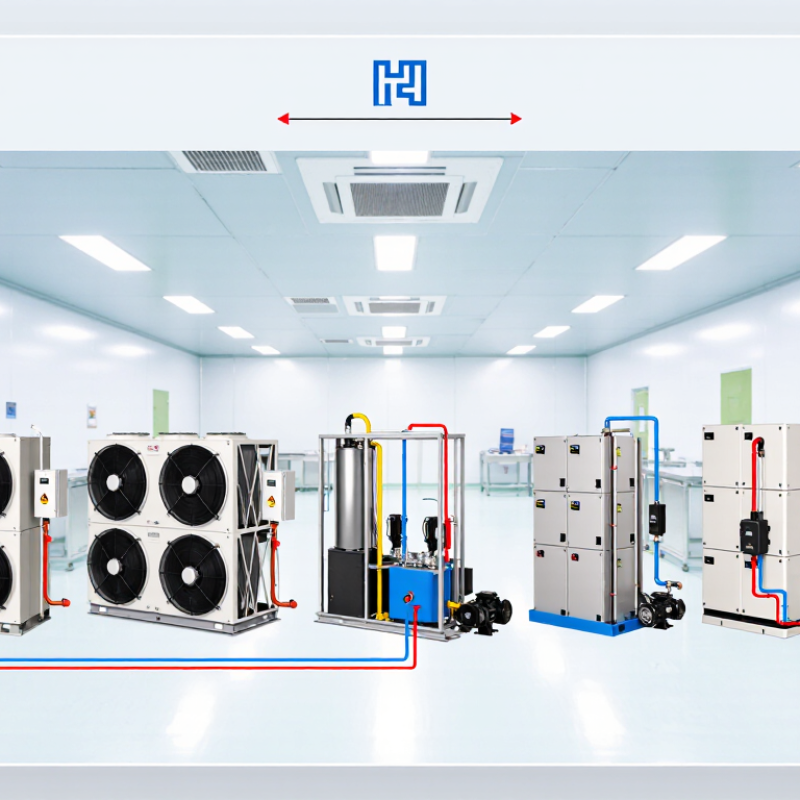
A cleanroom chiller system removes heat from water and sends the cooled water to air-handling coils or process equipment. Inside the chiller, refrigerant absorbs heat in an evaporator, then releases it through a condenser. A compressor drives this cycle. Pumps carry chilled water through insulated pipes, while valves adjust flow to match changing demand.
The chiller supports stable room conditions, but it does not control cleanliness by itself. HEPA filtration, airflow, pressure, and humidity require coordinated systems. That distinction is easy to miss. For example, a coil may cool incoming air, while separate controls manage moisture and room pressure. Setpoints vary by process and design; chilled-water temperatures around 6–12°C are common in some applications, but not universal.
Operators should check supply and return temperatures, water flow, filter condition, and alarms. A blocked strainer or weak pump can reduce cooling even when the chiller appears to run normally. Small details matter. Backup capacity may help protect sensitive operations, though extra equipment also adds cost and maintenance. Real operating data should guide system choices, not assumptions alone.
What Are the Top 10 Cleanroom Chiller Systems?
Key Cooling Requirements in Cleanroom Environments
Cleanroom cooling starts with stable conditions, not simply a low temperature. Equipment heat, lighting, people, and outdoor air all affect the room’s load. A chiller should match peak demand while handling quieter periods without constant cycling. In practice, measured load data is more useful than a rough estimate. Small errors add up.
Temperature is only part of the task. Humidity, airflow, and pressure relationships also matter, so chiller controls must work with the wider HVAC system. Ask whether the unit can hold setpoints during production changes, door openings, and scheduled cleaning. Check alarm visibility, sensor placement, water quality needs, and access for maintenance. Downtime matters.
For critical spaces, consider standby capacity or another plan for equipment failure. The right level depends on the process and the cost of an interruption; redundancy is not automatically necessary everywhere. Look closely at filtration and piping details, too. Leaks or poorly managed condensation can create problems near sensitive areas. Even a well-sized chiller can disappoint if controls are poorly commissioned. That part is easy to underestimate.
Cleanroom chiller choice depends on heat load, temperature stability, humidity strategy, redundancy, and plant space. Ten common options include air-cooled scroll, air-cooled screw, water-cooled screw, centrifugal, and magnetic-bearing centrifugal systems. Other types include absorption, evaporative-cooled, modular, glycol low-temperature, and dual-circuit process chillers. Scroll units can suit smaller rooms; centrifugal designs often serve larger, steady loads. Magnetic-bearing systems reduce mechanical contact, but may require specialist servicing. Absorption chillers can use waste heat, although that heat source adds design complexity.
The International Energy Agency’s 2018 report, The Future of Cooling, projects global energy demand for space cooling will more than triple by 2050 under its stated scenario. That broader trend makes operating efficiency worth measuring, not guessing. For cleanroom applications, assess leaving-water temperature stability, turndown, maintenance access, and backup capacity alongside rated efficiency. A low energy-use figure alone may not reflect performance at partial load. And a tidy design can still overlook an awkward pipe route or a difficult filter change.
Tips: Compare measured load profiles with chiller capacity before sizing. Log supply and return water temperatures during normal operation. Ask how the system responds when one unit is offline; redundancy on paper may not equal reliable recovery.
| No. | Chiller System Type | How It Works | Typical Cleanroom Fit | Key Advantages | Important Considerations |
|---|---|---|---|---|---|
| 1 | Air-Cooled Chiller | Rejects heat directly to outdoor air through condenser coils and fans. | Facilities needing chilled water without a cooling tower, including smaller or retrofit cleanroom projects. | Simpler installation and no cooling-tower water treatment system. | Performance can decline at high outdoor temperatures; outdoor airflow, noise, and equipment space require planning. |
| 2 | Water-Cooled Chiller | Transfers heat to condenser water, which is typically cooled by a cooling tower. | Larger or continuously operated facilities with suitable space and infrastructure for heat rejection. | Often offers strong efficiency in larger installations when the complete plant is properly designed. | Requires cooling-tower equipment, water management, maintenance, and attention to Legionella risk controls. |
| 3 | Low-Temperature Glycol Chiller | Cools a water-glycol mixture to serve loads that need lower fluid temperatures or freeze protection. | Cleanroom process equipment, cold rooms, and applications with low-temperature or outdoor piping requirements. | Glycol can reduce freezing risk and support lower-temperature process loops. | Glycol concentration affects heat transfer and pumping energy; materials and fluid maintenance must be compatible. |
| 4 | Modular Scroll Chiller | Uses multiple scroll-compressor modules that can stage on and off to match cooling demand. | Small to medium facilities, phased expansions, or projects where capacity flexibility is useful. | Staged operation can provide part-load flexibility, and modular units can simplify capacity expansion. | Confirm that module staging, controls, and available backup capacity meet process and room-load requirements. |
| 5 | Screw Chiller | Uses rotary screw compressors to provide medium- to large-capacity cooling. | Facilities with substantial, steady cooling loads, including manufacturing and larger controlled environments. | Well suited to industrial duty and can operate across a range of load conditions. | Efficiency and turndown depend on the specific design and operating point; evaluate service access and maintenance needs. |
| 6 | Centrifugal Chiller | Uses a high-speed impeller to compress refrigerant vapor in a large-capacity chiller. | Large campuses or central plants with high cooling demand and a suitable chilled-water system. | Can provide efficient cooling at large scale when selected and operated near its design conditions. | May be less suitable for small loads; system design should account for minimum load, redundancy, and part-load operation. |
| 7 | Magnetic-Bearing Centrifugal Chiller | Uses magnetic bearings to support the compressor shaft without conventional lubricated bearings. | Central plants where low mechanical friction, part-load performance, or reduced oil-system maintenance is a priority. | Oil-free compressor operation can reduce oil-related maintenance tasks and support efficient operation at suitable loads. | Requires specialist controls and service capability; confirm performance across the facility’s actual load profile. |
| 8 | Free-Cooling or Waterside-Economizer System | Uses cool outdoor conditions and a heat exchanger to meet some cooling demand with reduced compressor operation. | Facilities in climates with suitable cool periods and process loops that can use the available chilled-water conditions. | Can reduce compressor energy use when outdoor conditions and system temperatures allow economizer operation. | Benefits depend on climate, water temperatures, controls, and heat-exchanger approach; mechanical cooling may still be needed. |
| 9 | Heat-Recovery Chiller | Captures condenser heat for useful heating while producing chilled water. | Sites with simultaneous cooling and a dependable hot-water demand, such as process or building heating loads. | Can reduce wasted heat and offset separate heating energy when cooling and heating needs coincide. | Economic performance depends on matching heat demand, temperature requirements, and operating schedules. |
| 10 | N+1 Redundant Chiller Plant | Provides one more chiller or capacity module than is required to meet the design cooling load. | Critical cleanroom processes where planned maintenance or a single equipment failure must not stop cooling. | Enables continued operation during certain equipment outages when the remaining plant has adequate capacity. | Redundancy must include supporting pumps, power, controls, and heat-rejection equipment; it increases initial cost and space needs. |
The ten leading cleanroom chiller configurations differ less by headline capacity than by how steadily they hold supply-water temperature under changing loads. Air-cooled units simplify installation, while water-cooled systems can reject heat more effectively when a reliable cooling tower is available. Variable-speed compressors adjust output as demand shifts. Useful, but not magic. Screw and scroll designs may suit different capacity ranges, while magnetic-bearing compressors can reduce mechanical friction. Actual efficiency still depends on system design and operating conditions.
Compare seasonal performance, not just a single rated efficiency figure. Ask for performance data at the temperatures and part-load conditions your facility expects, then check how pumps, fans, and heat rejection affect total energy use. Tight control matters. A small temperature swing can affect sensitive equipment, yet overly conservative settings may waste power. Modular chillers and redundant arrangements can support continuity during maintenance, though extra equipment adds cost and control complexity. Free-cooling capability may help in suitable climates, but its value changes with local weather and water temperatures. A paper comparison can mislead. Review commissioning records, alarm histories, and measured energy use where available; those details often reveal more than polished specifications.
Choosing a cleanroom chiller starts with the room’s actual cooling load, not its floor area alone. Include people, lighting, equipment, process heat, and outdoor conditions in the estimate. The chiller supports the HVAC system, so assess how its chilled-water output affects temperature and humidity control. Map the load across shifts and seasons. A production line running overnight may create a different demand from daytime operation. Do not guess. Small details matter.
Compare operating range, capacity turndown, water-temperature stability, and control response. A unit that is too large may cycle frequently at low loads; one that is too small may struggle during peak production. Check pump arrangements, heat-rejection options, maintenance access, alarms, and backup capacity. Consider where service work will happen, since repairs should not disrupt controlled areas. A polished specification can still miss the real operating pattern. Review measured loads when available, and leave room to revise assumptions. During commissioning, verify performance under representative conditions, then document setpoints and alarm responses for the facilities team.
Refrigerant choice is one factor when comparing chiller systems. This chart compares the 100-year global warming potential (GWP100) of ten refrigerants used in chillers; it is not a ranking of chiller systems.
GWP100 values are based on figures listed in EU Regulation 2024/573. GWP alone does not determine suitability: cleanroom chiller selection also depends on cooling load, temperature stability, redundancy, efficiency, safety classification, and local regulations.