
China Top 10 18650 Battery Manufacturers?

China is a major hub for cylindrical lithium-ion cell production, but choosing a reliable supplier requires more than comparing website claims. This guide examines ten leading China-based 18650 Battery manufacturers through practical purchasing criteria, including cell consistency, capacity accuracy, cycle performance, safety controls, and production experience.

The selection considers published datasheets, factory capabilities, quality certifications, export history, and available technical support. A dependable manufacturer should provide clear specifications, traceable batches, inspection records, and samples for independent testing. Details matter. A cell labeled 3,000mAh should perform consistently under defined test conditions, not only in promotional material. Buyers should also review thermal protection requirements, welding compatibility, packaging quality, and transport documentation before placing larger orders.

No ranking is permanently perfect. Market conditions change, product lines are updated, and some factory information remains difficult to verify publicly. That limitation deserves attention. Therefore, this overview is a starting point rather than a final purchasing decision. Experienced buyers should compare quotations, request recent test reports, inspect manufacturing processes, and evaluate communication after the sale. A factory may offer competitive pricing yet struggle with consistency or delivery control. Another supplier may cost more but provide stronger traceability and engineering support. The best choice depends on your application, order volume, discharge demands, and required safety margin. Test carefully. Choose evidence over promises.
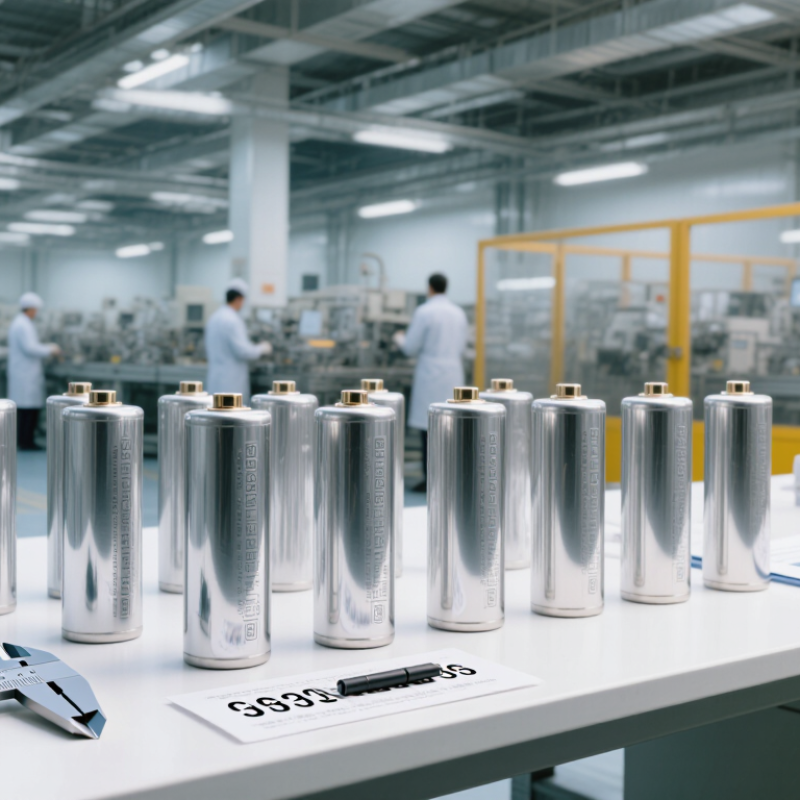
China Top 10 18650 Battery Manufacturers?

18650 Battery Basics: 18 mm × 65 mm Cells, Chemistry, and Capacity

When evaluating China’s top 10 18650 battery manufacturers, start with the cell itself, not the sales ranking. The name 18650 describes an approximate size: 18 mm in diameter and 65 mm in length. A protective circuit can make the finished cell longer. That small difference matters inside a tight battery holder.

Chemistry changes the cell’s behavior. NMC and NCA cells often provide high energy density, making them suitable for tools, lights, and compact equipment. LCO can offer strong energy density but usually needs careful thermal and charging control. LFP chemistry is generally more stable, though its nominal voltage and capacity range differ. Typical 18650 capacity falls between 1,500 and 3,500 mAh. Higher capacity often means lower maximum discharge current. Capacity is not everything.

Check the datasheet, batch code, cycle-test method, and independent safety documentation. A reliable manufacturer should explain nominal voltage, charge limits, discharge current, internal resistance, and operating temperature. Ask for sample testing under your actual load. A cell rated at 20 A may perform differently when it heats inside a sealed pack. I once trusted capacity figures without checking test conditions; that was a poor shortcut. Compare measured results at the same current and temperature. Small details expose large differences.

China’s Top 10 18650 Manufacturers Ranked by Quality, Scale, and Certifications

China’s top 10 18650 manufacturers should be ranked by quality, production scale, and certifications, not advertising reach. A practical ranking starts with cell consistency, tested capacity, cycle life, and safety controls. Independent laboratory reports matter more than impressive brochures.

The strongest manufacturers usually operate automated lines with controlled humidity and traceable batch records. Their factories may hold ISO 9001 certification and support relevant IEC, UL, and UN 38.3 testing. These documents do not guarantee every shipment. They show whether a supplier follows a repeatable process.

Quality inspection should include voltage matching, internal resistance checks, weld strength, and aging tests. A serious supplier can provide sample data, production records, and corrective-action reports. Large output is useful only when process control remains stable. Bigger is not always better.

No ranking is perfect. Public information can lag behind factory reality. Some mid-sized producers may deliver more consistent cells than larger competitors. Buyers should verify current certificates, inspect samples, and compare test results before placing orders. The best manufacturer is the one that combines dependable cells, transparent evidence, scalable production, and responsive technical support.

China Top 10 18650 Battery Manufacturers? – China’s Top 10 18650 Manufacturers Ranked by Quality, Scale, and Certifications
Rank Anonymized Manufacturer Profile Primary Manufacturing Region Established Production Scale Core 18650 Applications Typical Cell Chemistry Quality-System Evidence Commonly Documented Certifications Automotive Quality Capability Customization Capability Public Export Orientation Overall Score
1 Manufacturer Profile 01 Guangdong, China 1997–2002 Very Large Electric tools, e-bikes, energy storage, consumer electronics NMC, LCO, LFP ISO 9001-based quality management; automated formation and grading UN 38.3, IEC 62133, UL 1642, RoHS Available for qualified programs High-volume OEM/ODM and pack integration Strong international distribution 9.4 / 10
2 Manufacturer Profile 02 Jiangsu, China 2003–2008 Very Large Power tools, light electric vehicles, backup power systems NMC, LCO, LFP ISO 9001; traceability and statistical process control reported UN 38.3, IEC 62133, UL 1642, CE, RoHS IATF 16949-oriented production capability Cell sorting, labeling, terminals, and pack options Established overseas sales channels 9.2 / 10
3 Manufacturer Profile 03 Hubei, China 2008–2012 Large Energy storage, solar systems, mobility products LFP, NMC ISO 9001; incoming-material and end-of-line testing UN 38.3, IEC 62133, RoHS, CE Program-dependent automotive compliance Flexible low-to-medium volume customization Regular export activity 8.9 / 10
4 Manufacturer Profile 04 Zhejiang, China 2005–2010 Large Consumer electronics, lighting, power tools NMC, LCO ISO 9001; automated testing and capacity grading UN 38.3, IEC 62133, UL 1642, RoHS Automotive documentation varies by product line Private labeling and customized protection packs Strong OEM export focus 8.7 / 10
5 Manufacturer Profile 05 Fujian, China 2010–2014 Large Portable power stations, e-bikes, battery packs LFP, NMC ISO 9001; cell matching and protection-circuit testing UN 38.3, IEC 62133, CE, RoHS Limited public automotive evidence Strong engineering support for custom packs Growing international presence 8.5 / 10
6 Manufacturer Profile 06 Shandong, China 2009–2013 Large Energy storage, communication backup, industrial equipment LFP, NMC ISO 9001; documented safety and capacity screening procedures UN 38.3, IEC 62133, RoHS, CE Available for selected industrial projects Module and battery-pack integration Moderate-to-strong export orientation 8.3 / 10
7 Manufacturer Profile 07 Guangdong, China 2012–2016 Large Electric bicycles, scooters, tools, consumer devices NMC, LCO, LFP ISO 9001; routine aging, resistance, and safety testing UN 38.3, IEC 62133, RoHS, CE Not consistently disclosed OEM/ODM services and pack assembly Active cross-border e-commerce and wholesale channels 8.1 / 10
8 Manufacturer Profile 08 Henan, China 2013–2017 Medium to Large Industrial lighting, medical devices, backup batteries LFP, NMC ISO 9001; batch testing and supplier quality controls UN 38.3, IEC 62133, RoHS Not publicly confirmed Small and medium-batch customization Selective international sales 7.8 / 10
9 Manufacturer Profile 09 Hunan, China 2014–2018 Medium to Large Energy storage, robotics, portable electronics NMC, LFP ISO 9001-oriented production; laboratory testing available UN 38.3, IEC 62133, CE, RoHS Not publicly confirmed Custom capacity, connectors, labels, and pack design Developing export network 7.6 / 10
10 Manufacturer Profile 10 Chongqing, China 2015–2019 Medium Specialty battery packs, tools, mobility equipment NMC, LCO, LFP Quality controls reported; certification scope should be verified per model UN 38.3, RoHS, CE; additional approvals vary Not publicly confirmed Flexible project-based customization Primarily regional with selected export customers 7.3 / 10
Method note: Manufacturer names are intentionally omitted. The ranking uses publicly observable indicators commonly used in 18650 supplier evaluation, including manufacturing scale, quality-system maturity, safety certification coverage, application range, customization capability, and export readiness. Certification status should be checked against the current certificate, factory scope, and exact cell model before procurement. Production-scale categories are used because audited plant-level capacity figures are not consistently disclosed.

Key Industry Metrics: 2,500–3,500 mAh Capacity and 3.6–3.7 V Nominal Voltage

China’s top 18650 battery manufacturers commonly produce cells rated between 2,500 and 3,500 mAh. Their nominal voltage usually ranges from 3.6 to 3.7 V. These figures suit flashlights, power tools, backup systems, and compact electronics. However, capacity alone does not prove quality. Experienced buyers also examine cycle life, internal resistance, discharge stability, and cell consistency. A 3,500 mAh cell may perform poorly if its voltage drops quickly under load. That detail is easy to miss.

Tips: Request recent test reports, production dates, and batch records. Check whether measured capacity matches the published rating. Ask for safety documentation and transport testing. Compare cells using the same temperature, discharge current, and testing method. Small differences can change the result.

A reliable manufacturer should explain its grading process clearly. It should control electrode coating, electrolyte filling, sealing, and aging tests. Consistent dimensions also matter because loose or oversized cells can create assembly problems. For 18650 selection, look beyond the top ten list. Review factory experience, quality controls, warranty terms, and technical responses. I would also sample several batches before placing a large order. One test is not enough. Even published data may reflect ideal laboratory conditions, not daily equipment use. Rechecking assumptions remains necessary.

How to Compare 18650 Suppliers: Safety, Cycle Life, Testing, and Production Data

When comparing China’s top 10 18650 battery manufacturers, begin with traceable production data, not website claims. Ask for monthly output, cell format, chemistry, and factory location. A reliable supplier shares batch numbers, equipment lists, and recent inspection records. Production scale matters, but stable process control matters more. A large line can still produce inconsistent cells. Ask how incoming materials, winding tension, welding strength, and electrolyte filling are checked. These details reveal operational discipline.

Safety evidence should be specific. Request abuse-test results for overcharge, external short circuit, crush, vibration, and thermal exposure. Confirm the test standard, sample count, laboratory identity, and report date. One passed sample proves little. Test cells from several batches. Check voltage consistency, internal resistance, capacity, and self-discharge after storage. A practical inspection can include ten cells per lot, though demanding applications need stronger sampling. Never rely only on a certificate.

Cycle life needs clear conditions. Compare cycles at the same load, temperature, cutoff voltage, and capacity-retention target. “2,000 cycles” means little without those settings. Request raw curves, not only headline figures. In my experience, laboratory results sometimes fail to match field behavior. That gap deserves questions, not immediate rejection. Review warranty terms, replacement handling, and data retention. Record weaknesses too. Perfect suppliers are unlikely; transparent correction is more valuable than polished promises.

Applications, Export Standards, and Purchasing Criteria for Chinese 18650 Cells

China Top 10 18650 Battery Manufacturers?

Chinese 18650 cells serve power tools, portable lighting, backup systems, mobility equipment, and energy storage packs. Each application needs different capacity, discharge performance, cycle life, and protection design. A high-capacity cell is not automatically suitable for high-drain equipment. Thermal behavior matters too.

Export preparation requires more than a product datasheet. Buyers should request UN 38.3 transport test evidence, IEC 62133-2 safety documentation, and applicable IEC 61960 performance data. RoHS and REACH declarations may also be required by the destination market. Check the manufacturing date, batch number, and safety data sheet. Documentation must match the shipped cell, not an older model. Regulations can change.

Purchasing teams should compare measured capacity at an agreed test current, internal resistance, voltage consistency, and cycle-life results. Ask for sample testing before placing a large order. Inspect welding marks, insulation rings, terminals, packaging, and label accuracy. Use an independent laboratory when the application is safety-critical. Small details matter.

I have seen attractive quotations fail during incoming inspection. The stated capacity was correct, but resistance varied widely between cells. That weakness appeared only under load. Supplier audits, traceability records, and clear acceptance limits reduce this risk. Still, no checklist is perfect. Buyers should review their assumptions after every shipment.
Go to Top