
Choosing the right Shuttle Rotomolding Machine can shape your production quality, energy use, and long-term operating costs. A machine may look impressive on a factory floor, yet still fail under daily production pressure. The real test appears during mold changes, uneven heating, cooling delays, and repeated night shifts.
Rotational molding expert Glenn Beall has often emphasized, “Control is the heart of rotational molding.” That idea deserves attention. A reliable machine should provide stable temperature control, accurate arm movement, practical loading access, and consistent cycle data. It should also match your product size, resin type, mold weight, and expected output. Bigger is not always better. Sometimes, it is simply more expensive.
This guide presents seven practical tips for choosing a Shuttle Rotomolding Machine. We will examine heating systems, cooling performance, automation, arm configuration, safety features, maintenance access, and supplier support. Look closely at the details. Can operators reach the burner safely? Are sensors protected from dust and impact? Does the control panel show useful information, or only complicated numbers? These questions matter.
A small weakness can become a costly production habit. I have seen equipment decisions focus too heavily on purchase price. That approach feels efficient at first. It may not remain so. A thoughtful comparison should include installation, training, spare parts, energy consumption, and future product changes. Even experienced buyers can overlook one factor. That is why a careful, practical review remains necessary before selecting a Shuttle Rotomolding Machine.
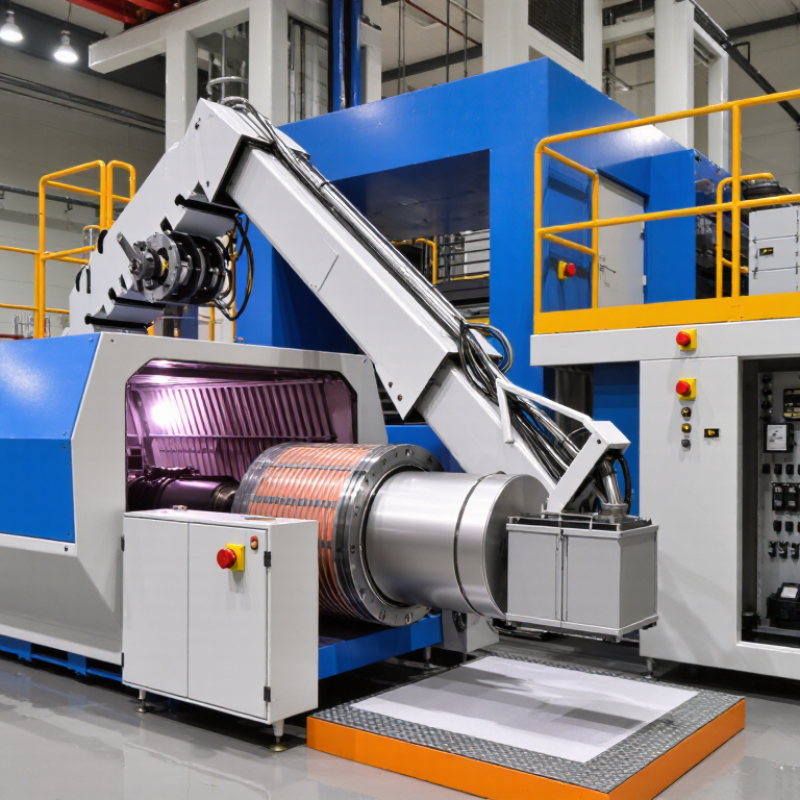
A shuttle rotomolding machine moves molds between heating and cooling stations. Its basic cycle includes loading, heating, rotation, cooling, and unloading. Understanding this sequence prevents expensive buying mistakes.
A larger oven is not automatically better. Match the oven envelope to your mold dimensions, part weight, and expected production volume. Check shuttle travel, arm clearance, and maximum mold load before comparing prices.
The Plastics Industry Association identifies rotational molding as a flexible process for producing hollow plastic parts with relatively low tooling costs.
Industry reports from Grand View Research estimate the global rotational molding market will expand at roughly 6% annually through the decade. That growth makes efficiency important, but cycle time alone can mislead.
A faster cycle may create uneven wall thickness or trapped heat. Ask for trial data showing temperature readings, cooling time, part weight, and scrap rates.
ASTM D2476 provides relevant guidance for rotationally molded polyethylene materials, although machine selection still requires product-specific testing.
A shuttle should move smoothly, stop accurately, and leave enough space for mold handling. Insulated ovens, variable-speed drives, and controlled cooling can reduce waste, yet claimed savings need verification.
I would request references from facilities making similar parts. One weakness remains: laboratory trials rarely reproduce every production delay. Watch a full shift when possible.
The best machine is not the most powerful one; it is the one that repeats stable cycles with measurable evidence.
Before choosing a shuttle rotomolding machine, define what your factory must produce. Record the product’s length, width, wall thickness, weight, and monthly volume. A small tank and a large playground panel require very different machine capacities. Measure the mold envelope carefully. Leave space for rotation, loading, and maintenance access. It sounds basic. Many purchasing errors begin here.
Review your production rhythm, not only your peak target. Note the required heating time, cooling time, mold changes, and operator movements. If several molds need frequent replacement, shuttle spacing and access become important. For high output, calculate cycles per shift instead of trusting a sales estimate. Include scrap, trial runs, and seasonal demand. A spreadsheet can still lie. Real floor observations matter more.
Material selection also controls machine requirements. Common polyethylene powders may need stable heating and precise cooling control. Recycled content can vary in moisture, color, and melt behavior. That variation may create weak corners or uneven surfaces. Test the actual material with the planned mold before final approval. Ask for temperature records, energy data, and repeatability results. Do not judge performance from one successful cycle. Our industry sometimes overvalues speed, while steady temperature control protects product quality. If future products may use different polymers, confirm that the machine can support their processing ranges. A little flexibility now can prevent an expensive replacement later.
Choosing a shuttle rotomolding machine starts with matching capacity to actual production needs. Estimate mold weight, part volume, cycle time, and daily output before reviewing specifications. A large arm may handle heavier molds, but it can increase energy use and floor-space demands. Check payload ratings at the required rotation speed, not only the maximum advertised figure. Leave room for future molds. Growth is easy to underestimate. Compare loading height, oven dimensions, and cooling-station access for safer handling. A machine that looks powerful on paper may fit poorly into your workflow.
Shuttle design directly affects labor, throughput, and maintenance access. Two independent carts can support flexible loading while another mold remains in the oven or cooling area. Review rail width, cart stability, arm clearance, and indexing accuracy during movement. Smooth travel matters when molds contain hot polymer and uneven weight. Ask how operators reach vents, clamps, and temperature probes without awkward stretching. This detail is often missed. Test the layout with your largest mold, not a small demonstration tool.
Heating systems deserve a practical comparison. Hot-air ovens usually provide even coverage, while gas-fired systems may demand tighter process control. Assess burner response, airflow circulation, insulation, temperature sensors, and heat recovery options. Record temperature uniformity across the mold, because one sensor can hide cold corners. Maintenance access matters as much as heating speed. I would also compare cooling controls, safety interlocks, and data logging before approving specifications. Some decisions remain uncertain until trials reveal warpage, cycle variation, or difficult demolding.
When choosing a shuttle rotomolding machine, assess automation before comparing prices. Tip one: check whether recipe controls can store heating, cooling, and rotation settings. Tip two: require automatic mold indexing and position feedback. These features reduce repeated manual adjustments. Tip three: inspect data logging, alarm history, and remote diagnostics. Useful records reveal drift before parts become visibly distorted.
Safety deserves equal attention. Tip four: verify guarding, door interlocks, emergency stops, and safe access around the shuttle path. ISO 12100 recommends risk assessment throughout a machine’s design and operation. Tip five: ask whether safety circuits meet a documented performance level under ISO 13849-1. Test the interlock physically. Paper compliance is not enough. A 2023 U.S. Bureau of Labor Statistics report recorded 5,283 fatal work injuries, reminding manufacturers that routine movement still deserves serious controls.
Energy efficiency needs measured evidence. Tip six: request electricity data per production cycle, not broad marketing claims. The U.S. Department of Energy reports that motor systems can consume about 70% of industrial electricity, so efficient drives and balanced motion matter. Tip seven: compare insulation, burner control, cooling fans, and heat recovery options. The IEA’s Energy Efficiency 2023 report identifies industry as a major efficiency opportunity worldwide. However, a lower energy figure may hide slower heating or heavier maintenance. Run a trial with your actual mold, material, cycle time, and cooling demand. Measure kWh, scrap, and operator interventions. That test may challenge your first choice.
Use these practical evaluation priorities when comparing shuttle rotomolding machines. The scores reflect the relative importance of each criterion in a typical production decision and should be verified against your own parts, materials, and operating conditions.
How to use this chart: Give the highest attention to automation, safety, energy efficiency, temperature control, and maintenance access. Compare suppliers using consistent measurements such as cycle time, energy consumption per kilogram of product, guarding performance, temperature uniformity, and machine uptime.
Tip 1: Check supplier support before comparing machine prices. Ask how quickly technicians respond during a heating fault or hydraulic alarm. Request service hours, spare-parts availability, and escalation procedures in writing. A helpful supplier should explain problems clearly, not hide behind technical language.
Tip 2: Study the maintenance plan. Inspect access to heaters, molds, bearings, control panels, and hydraulic lines. Ask whether operators can complete daily checks safely. Tip 3: Request training for setup, mold changes, temperature control, and emergency procedures. In plant audits, I have seen small training gaps create large production delays. Tip 4: Confirm the supplier can provide replacement parts for several years. Cheap parts are not always cheaper. Poor seals, sensors, or relays can stop a complete production shift.
Tip 5: Calculate total ownership costs, including electricity, labor, mold handling, maintenance, downtime, and installation. One quotation may exclude commissioning or software updates. Tip 6: Ask for references from facilities with similar product sizes and production volumes. Speak with their maintenance staff, not only their purchasing team. Tip 7: Review warranty limits carefully. Clarify travel charges, response times, and coverage for control systems. I once underestimated downtime because the spreadsheet ignored technician travel. That mistake was expensive. Also, machine efficiency figures need real production evidence, not optimistic assumptions. Request test data, operating conditions, and a sample maintenance record before signing.
| No. | Evaluation Area | What to Assess | Practical Data or Benchmark | Evidence to Request | Ownership Cost Impact |
|---|---|---|---|---|---|
| 1 | Supplier Technical Support | Evaluate the supplier's ability to support installation, commissioning, process optimization, troubleshooting, and operator training. | Request documented response targets: remote support within one business day, clear escalation procedures, and on-site service availability for critical issues. | Service coverage area, support hours, escalation flowchart, technician qualifications, installation scope, and training agenda. | Fast technical support can reduce extended downtime, rejected parts, emergency travel costs, and production delays. |
| 2 | Preventive Maintenance Program | Check whether the machine includes a clear maintenance schedule for burners, motors, gearboxes, bearings, sensors, hydraulic components, and control systems. | The maintenance plan should specify daily, weekly, monthly, and annual tasks, together with inspection methods and replacement criteria. | Maintenance manual, lubrication chart, inspection checklist, recommended service intervals, and estimated labor hours per service. | Planned maintenance generally costs less than unplanned repairs and helps preserve cycle consistency and machine availability. |
| 3 | Spare Parts Availability | Assess the availability and lead time of wear parts and critical components such as thermocouples, seals, bearings, belts, valves, sensors, and control components. | Ask for standard and critical spare-part lead times, local inventory options, part-number traceability, and an obsolescence policy. | Critical-spares list, recommended start-up inventory, quoted prices, delivery commitments, and compatibility information. | Holding a small stock of high-risk, low-cost parts can prevent costly production stoppages caused by long international lead times. |
| 4 | Warranty and Service Terms | Review warranty duration, covered components, exclusions, labor coverage, travel charges, installation conditions, and the process for reporting defects. | A written warranty should state the coverage period, acceptance requirements, maximum response time, corrective-action process, and customer responsibilities. | Complete warranty document, commissioning protocol, acceptance test criteria, service contract options, and exclusions for consumables or misuse. | Clear terms reduce disputes and help forecast the financial risk of early component failures or commissioning problems. |
| 5 | Energy and Utility Consumption | Compare the machine's heating method, burner or electrical load, cooling requirements, compressed-air demand, and control efficiency at the planned production rate. | Request measured consumption data at a defined load and cycle profile; compare energy per machine-hour or energy per finished part rather than rated power alone. | Utility schedule, energy measurement method, heating and cooling cycle data, motor ratings, compressed-air requirements, and site utility assumptions. | Energy is a recurring operating cost. A higher purchase price may be justified when verified utility consumption and cycle time are lower. |
| 6 | Machine Reliability and Maintainability | Examine access to service points, guarding, component layout, control diagnostics, alarm history, changeover design, and the ease of replacing common wear parts. | Use a site acceptance test covering repeated cycles, temperature control, rotation, mold changeover, safety functions, alarms, and part quality. | Factory acceptance test format, site acceptance test checklist, alarm list, diagnostic screenshots, reference performance data, and downtime assumptions. | Shorter changeovers and easier repairs can increase productive capacity while lowering labor hours and mean time to repair. |
| 7 | Five-Year Total Cost of Ownership | Calculate the full cost of buying, installing, operating, maintaining, upgrading, and eventually replacing or reselling the machine. | Use this structure: purchase price + installation + tooling changes + utilities + labor + preventive maintenance + spare parts + downtime risk − residual value. | Itemized quotation, installation costs, training fees, utility assumptions, maintenance estimate, spare-parts price list, software or upgrade fees, and expected residual value. | Compare at least three scenarios: expected operation, high-utilization operation, and delayed-maintenance operation. The lowest purchase price is not always the lowest five-year cost. |