
When people ask what a Perry Hyperbaric Chamber is used for, they usually mean a controlled oxygen treatment system. The chamber increases surrounding pressure while the patient breathes medical-grade oxygen. During a session, a person may sit or lie inside while staff monitor comfort, breathing, and pressure changes. This environment can increase oxygen delivery to certain tissues. That may support healing in carefully selected medical situations.
Clinicians may use hyperbaric oxygen therapy for conditions such as radiation-related tissue injury, selected difficult wounds, decompression sickness, and certain severe infections. Approved indications and treatment protocols vary by country, facility, and patient history. Medical purpose matters. A chamber is not automatically suitable for every wound, fatigue complaint, or chronic illness. Evidence is not equally strong for every advertised benefit. Some claims sound impressive but require closer review.
Before treatment, qualified professionals should confirm the diagnosis, medical history, medications, and possible risks. Ear pressure problems, lung conditions, and some medications may require special assessment. Staff should also explain fire safety, oxygen precautions, session length, and expected sensations. A clean checklist matters. The experience may feel like aircraft pressure changes, with temporary ear popping or muffled sounds. Even a well-designed chamber cannot replace surgery, antibiotics, wound care, or emergency treatment when those are needed. Manufacturer information can explain equipment features, but independent clinical guidance should shape treatment decisions. The safest answer is practical: use a Perry Hyperbaric Chamber only under appropriate medical supervision and for a clearly supported indication. That distinction matters.
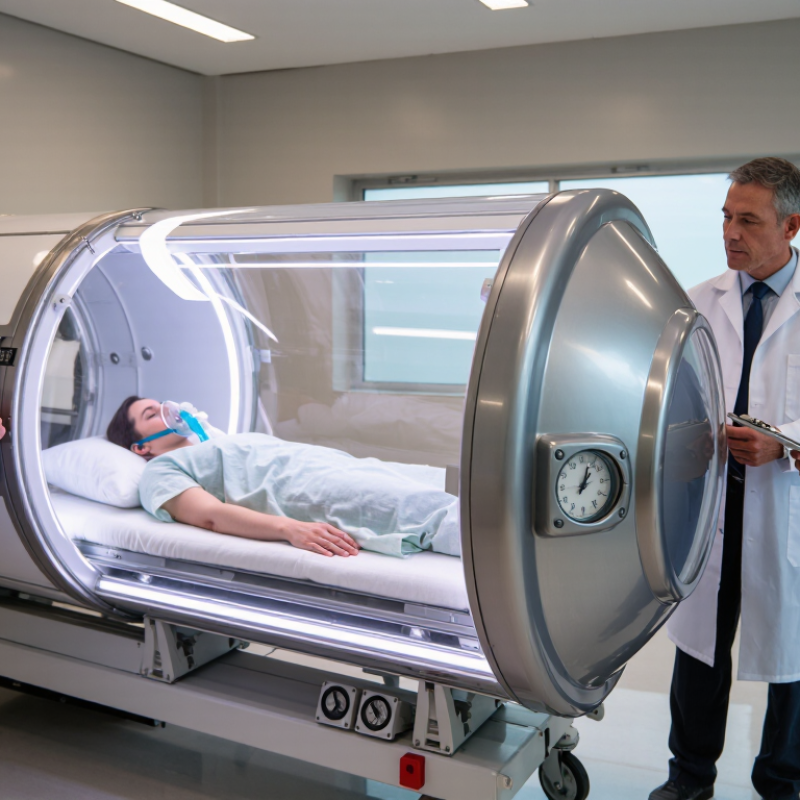
A Perry hyperbaric chamber is a medical pressure vessel designed for hyperbaric oxygen therapy. It raises atmospheric pressure while the patient breathes concentrated oxygen. At sea level, air pressure is about 1 ATA. Clinical treatment commonly uses pressures above 1.4 ATA, according to the Undersea and Hyperbaric Medical Society (UHMS). This pressure helps oxygen dissolve into plasma and reach tissues with limited blood flow. The patient usually rests inside a clear chamber while staff monitor breathing, comfort, and pressure changes.
The chamber may support treatment for decompression sickness, carbon monoxide poisoning, selected non-healing wounds, radiation tissue injury, and compromised grafts. UHMS clinical guidance recognizes 14 accepted medical indications. It does not make every wound heal faster. That assumption needs caution. The U.S. Food and Drug Administration also warns that oxygen-rich chambers create serious fire risks without strict controls. Treatment therefore requires trained clinicians, medical screening, and approved equipment. Sessions often last 60 to 120 minutes, but timing depends on the diagnosis and pressure level. Ear pressure can feel like an airplane descent. Some patients notice temporary fatigue or blurred vision. Evidence remains uneven for wellness claims outside established indications, and careful review is still necessary.
A hyperbaric chamber works by increasing air pressure around the patient. Inside, the patient breathes medical-grade oxygen through a mask or hood. The pressure commonly reaches 1.5 to 3 times normal atmospheric pressure, according to the U.S. Food and Drug Administration. This allows more oxygen to dissolve into blood plasma and reach tissues with poor circulation.
A typical session lasts 60 to 120 minutes. The patient may feel ear pressure, similar to an airplane landing. Clinicians teach slow swallowing or gentle equalization techniques. The Undersea and Hyperbaric Medical Society lists 15 accepted medical indications, including decompression sickness, carbon monoxide poisoning, selected diabetic wounds, and radiation tissue injury. However, the chamber is not a cure-all. Evidence varies by condition, and wellness claims often move faster than clinical research. That deserves careful reflection.
Tips: Choose a facility with trained hyperbaric staff and physician oversight. Ask about pressure settings, oxygen concentration, emergency procedures, and treatment goals. The FDA also warns that oxygen-rich environments can increase fire risk. Remove prohibited electronics, oils, and flammable materials. Report chest pain, breathing difficulty, vision changes, or severe ear pain immediately. One detail is easy to overlook: treatment suitability depends on medical history, not only the chamber’s pressure.
A hyperbaric chamber increases the surrounding pressure and allows the patient to breathe concentrated oxygen. This can raise the amount of oxygen dissolved in the blood and support care for conditions such as decompression sickness, carbon monoxide poisoning, selected non-healing wounds, radiation tissue injury, and certain acute traumatic injuries.
The chart shows representative absolute pressure levels in atmospheres absolute (ATA). Sea-level pressure is approximately 1 ATA, while clinical hyperbaric oxygen treatments commonly use pressures from about 1.5 to 3.0 ATA. Actual pressure, oxygen concentration, and treatment duration depend on the medical condition and the supervising clinical team.
A hyperbaric chamber delivers oxygen at pressure higher than normal air pressure. This helps oxygen reach damaged tissues and supports certain medical treatments. It is commonly used for decompression sickness after diving, carbon monoxide poisoning, and selected severe infections such as gas gangrene. These situations require urgent hospital care. Hyperbaric therapy is an additional treatment, not a replacement for emergency medicine.
Doctors may also recommend it for diabetic foot wounds that do not heal, radiation-related tissue damage, and some crush injuries. It can support compromised skin grafts or surgical flaps when poor blood flow threatens healing. In carefully selected cases, treatment may help sudden vision loss caused by a blocked retinal artery. Each condition has different evidence, timing, and treatment requirements. The chamber cannot repair every wound.
Treatment usually involves repeated sessions, with staff monitoring ear pressure, blood sugar, oxygen exposure, and other risks. Ear discomfort is common. Temporary vision changes can occur. People with some lung conditions, implanted devices, or certain medicines may need extra assessment. A qualified clinician should confirm the diagnosis and treatment plan. Marketing claims often sound broader than clinical evidence. I would be cautious with any promise involving general wellness, aging, or unrelated chronic symptoms. The boundaries are not always tidy.
A hyperbaric treatment begins with a health check and a review of your medical history. A trained clinician explains the session, checks your ears, and confirms the treatment plan. You then enter a clear chamber or a larger room with other patients. Inside, pressure rises slowly, similar to an airplane descent. Your ears may feel blocked. Swallowing, yawning, or gently equalizing pressure can help. Tell the staff if discomfort continues.
When the target pressure is reached, you breathe medical-grade oxygen for scheduled periods. You may rest, listen, or watch through the chamber window, depending on the facility. The session often lasts one to two hours, but timing varies by condition and medical guidance. Some people notice warmth, mild tiredness, or temporary changes in vision. Serious concerns are uncommon, but staff monitor you throughout the treatment. It can feel surprisingly uneventful. That does not mean nothing is happening.
Tips: Avoid lotions, oils, jewelry, and electronic items unless the clinic permits them. Wear approved cotton clothing. Mention colds, ear problems, pregnancy, medications, or anxiety before treatment. Do not force your ears to clear. Evidence supports hyperbaric therapy for specific medical conditions, not every wellness claim. Ask what outcome is being measured and how many sessions are expected. A careful plan matters more than dramatic promises.
A hyperbaric chamber is used to increase pressure around the body while delivering oxygen. This environment may support wound care, certain decompression injuries, and other medically assessed conditions. Treatment depends on the diagnosis, pressure level, session length, and oxygen concentration. It is not a general wellness cure.
Safety begins with medical screening. A qualified clinician should review lung history, ear problems, recent surgery, medications, and pregnancy status. Untreated pneumothorax requires particular attention. Patients must equalize ear pressure slowly. Pain, dizziness, breathing difficulty, or unusual fatigue should be reported immediately. Never force through discomfort.
Fire prevention is critical. Oxygen-rich environments ignite materials quickly. Staff should control clothing, cosmetics, oils, batteries, and electronic devices before treatment. The operator needs constant communication and a clear emergency procedure. Pressure changes must be gradual, not rushed.
Limitations matter. Results are not guaranteed, and some advertised uses lack strong clinical evidence. A chamber cannot replace antibiotics, surgery, wound management, or emergency care. Patients should follow the prescribed schedule rather than adding sessions independently. The “more oxygen” idea sounds convincing, but excessive or poorly supervised treatment can cause harm. I would also question any center promising universal benefits without discussing risks, alternatives, and measurable treatment goals.
| Data Dimension | Evidence-Based Information | Practical Safety or Limitation |
|---|---|---|
| Basic function | A hyperbaric chamber delivers medical-grade oxygen while the patient breathes at a pressure greater than normal atmospheric pressure. Increased pressure can help dissolve more oxygen in the blood plasma. | It is a medical treatment that should be provided under an appropriate clinical protocol and supervised by trained personnel. |
| Common established use: decompression sickness | Hyperbaric oxygen therapy is used to treat decompression sickness, which may occur after scuba diving or other rapid pressure changes. | Urgent medical assessment is required. Chamber treatment does not replace emergency stabilization or specialist evaluation. |
| Common established use: air or gas embolism | It may be used for arterial gas embolism, when gas bubbles obstruct blood flow and cause potentially serious neurological or cardiovascular effects. | Symptoms such as sudden weakness, confusion, chest pain, or breathing difficulty require emergency care. |
| Wound-related use | It can be used as an adjunct for selected problem wounds, including certain diabetic lower-extremity wounds that have not responded adequately to standard treatment. | It does not replace wound cleaning, infection control, pressure relief, blood-sugar management, vascular assessment, or appropriate surgery. |
| Radiation tissue injury | It may support healing in selected delayed radiation injuries affecting soft tissue or bone after radiation therapy. | Benefits depend on the injury, timing, treatment plan, and the patient’s overall condition; results are not guaranteed. |
| Compromised grafts or flaps | Hyperbaric oxygen may be considered as an adjunct when a graft or flap is at risk because of impaired circulation, after surgical causes have been addressed. | It should not delay urgent surgical evaluation, restoration of blood flow, or removal of nonviable tissue. |
| Other recognized clinical situations | Depending on local clinical standards, it may be considered for conditions such as selected severe infections, crush injuries, thermal burns, or acute traumatic ischemia. | Evidence and eligibility vary by condition. Treatment should be based on a documented diagnosis and specialist judgment. |
| Nonstandard or unproven claims | Routine use for general wellness, athletic enhancement, anti-aging, cosmetic improvement, autism, or broad “detoxification” is not established by high-quality evidence as a standard medical indication. | Marketing claims should not substitute for medical advice. Patients should ask what evidence supports a proposed use. |
| Typical treatment environment | The patient sits or lies inside a chamber while breathing oxygen during scheduled pressure and decompression phases. A session may last approximately one to two hours, although duration varies by indication and protocol. | Patients must follow staff instructions, remain inside for the prescribed duration, and report discomfort immediately. |
| Ear and sinus pressure | Pressure changes can cause ear or sinus discomfort, difficulty equalizing pressure, or—in uncommon cases—barotrauma. | Patients should disclose ear, sinus, or recent surgery problems and learn equalization techniques. Treatment may need to be paused if pain occurs. |
| Oxygen-related effects | High oxygen exposure can rarely cause oxygen toxicity, including temporary visual changes, lung irritation, or central nervous system symptoms such as seizures. | Treatment pressure, oxygen exposure time, patient monitoring, and scheduled air breaks are selected to reduce risk. |
| Fire prevention | Oxygen-enriched environments increase fire risk, and ignition sources can cause rapid combustion. | Smoking, flames, sparks, unauthorized electronics, petroleum-based products, and prohibited personal items must be kept out of the treatment area. |
| Medication and product screening | Some medications, dressings, skin products, and medical devices may be unsuitable in a high-oxygen environment or under pressure. | Patients must provide a complete medication and device list and use only products approved by the treating facility. |
| Absolute contraindication | Untreated pneumothorax is generally considered an absolute contraindication because pressure changes can worsen the condition. | A clinician must assess respiratory and chest conditions before treatment. Previous lung disease does not automatically rule out therapy but requires evaluation. |
| Conditions requiring special assessment | Possible concerns include certain lung diseases with air trapping, uncontrolled fever, seizure disorders, some chemotherapy drugs, pregnancy, and inability to equalize ear pressure. | These conditions are not managed with a universal rule. The treating physician should weigh risks, benefits, timing, and available alternatives. |
| Blood glucose considerations | Patients with diabetes may experience changes in blood glucose during or around treatment, particularly when using insulin or glucose-lowering medication. | Blood glucose may need to be checked before and after treatment, with food and medication plans coordinated by the clinical team. |
| Expected limitations | Hyperbaric oxygen is usually an adjunct rather than a stand-alone cure. Outcomes depend on the underlying disease, tissue condition, treatment timing, and standard care. | Patients should receive a clear treatment goal, expected number of sessions, monitoring plan, alternatives, and criteria for stopping therapy. |
| Equipment and facility requirements | Safe treatment requires a properly maintained chamber, oxygen-delivery system, emergency procedures, trained operators, and clinical oversight. | Home or nonclinical use may lack appropriate screening, fire controls, monitoring, and emergency support. A chamber should not be used without qualified medical supervision. |