
What Is a Marble Cutting Disc Used For?

A Marble Cutting Disc is used to cut, shape, and finish marble with controlled pressure. Its diamond segments grind through dense stone while reducing edge damage. Fabricators use these discs for kitchen worktops, bathroom slabs, tiles, monuments, and detailed restoration projects.

The correct disc depends on marble hardness, thickness, machine speed, and cutting method. A continuous-rim disc can produce a cleaner edge. A turbo-rim design may cut faster, but it can increase chipping on delicate stone. Water cooling limits heat and suppresses airborne dust. Dry cutting is sometimes practical for small adjustments, yet it demands stronger dust control and shorter passes. Small mistakes remain visible.

The U.S. Geological Survey’s Mineral Commodity Summaries identifies dimension stone as an established construction and architectural material. Grand View Research also reports continued growth in stone-processing equipment, supported by renovation and building activity. These reports describe the wider market, not every Marble Cutting Disc application, so their figures should not be treated as tool-performance guarantees.

Jim Hieb, former CEO of the Marble Institute of America, has expressed a useful fabrication principle: “The right tool protects the stone before it protects the schedule.” That idea deserves attention. A disc that cuts quickly may still be unsuitable if it burns the surface or leaves a chipped corner. Operators should check the disc’s diameter, arbor size, rated RPM, segment design, and manufacturer instructions. Experience matters, but inspection matters more. A clean cut begins before the blade touches marble.
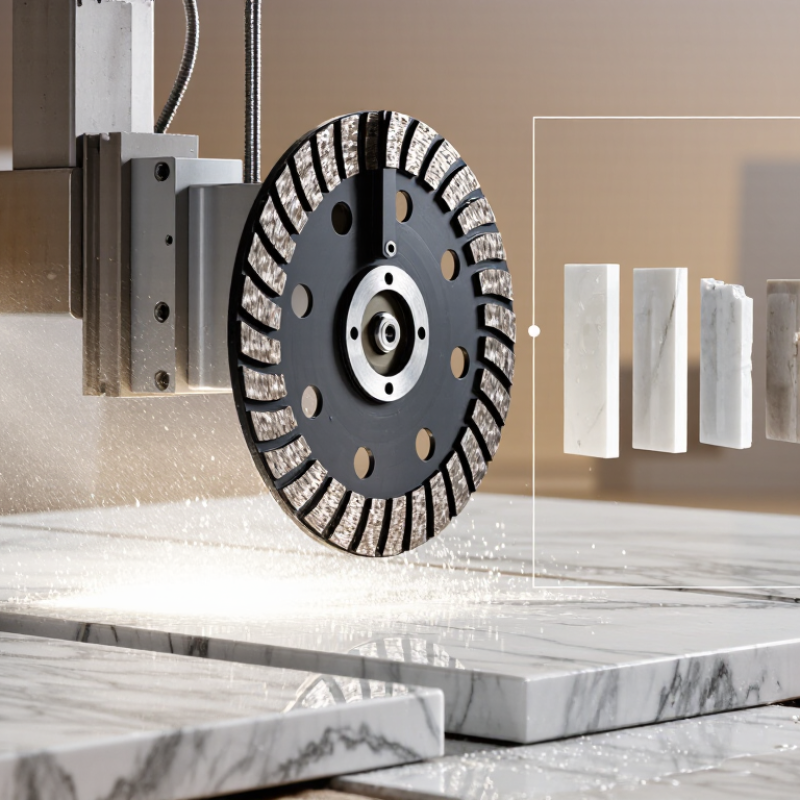
What Is a Marble Cutting Disc Used For?

What Is a Marble Cutting Disc?

What Is a Marble Cutting Disc Used For?

What Is a Marble Cutting Disc?

A marble cutting disc is a circular tool designed to cut marble slabs, tiles, and edging accurately. It usually has a steel core with a diamond-rich cutting rim. The diamonds grind through the stone instead of tearing it. This produces cleaner edges and better control.

Different discs suit different tasks. Continuous rims often create smoother cuts on polished marble. Segmented rims can remove material faster, but they may leave more edge chipping. Wet-cutting discs use water to reduce heat and dust. Dry-cutting discs are convenient for small adjustments, though overheating remains a real risk.

The U.S. Geological Survey’s Mineral Commodity Summaries 2024 identifies dimension stone as a separate mineral category. Its production data reflects continuing demand for cut stone in construction and interior projects. Market research reports also show steady growth in global stone-processing equipment through this decade. These figures support a practical point: cutting accuracy affects material waste and project cost.

Tips: Match the disc diameter and arbor to the saw. Check the disc for cracks before use. Keep the marble firmly supported. Feed slowly, especially near corners. Water helps, but not every disc permits wet cutting. Read the disc instructions carefully.

I have seen operators press too hard when the cut slows. That usually worsens chipping. A sharper disc is not always better. Blade quality, cooling, alignment, and marble density all matter. Small details matter.

What Is a Marble Cutting Disc Used For?

Marble cutting discs are used to make controlled straight cuts in marble slabs, tiles, countertops, stair treads, and decorative stone. Larger discs generally provide greater cutting depth, while smaller discs are easier to control for tile work and detailed cuts. Actual cutting depth varies with disc design, machine type, material thickness, and the required safety clearance.

How a Marble Cutting Disc Cuts Stone

What Is a Marble Cutting Disc Used For?

A marble cutting disc removes stone through controlled abrasion, not by slicing like a steel knife. Its diamond particles grind the marble surface as the disc rotates at high speed. This action creates a narrow kerf and gradually separates the slab. A continuous-rim diamond disc usually produces smoother edges with less chipping. Segmented rims can cut faster, but they may leave a rougher finish. Choose according to the required edge quality.

In my workshop experience, water cooling makes a noticeable difference. It reduces heat, controls airborne dust, and helps preserve the disc’s cutting performance. Keep the water flow steady.

How a Marble Cutting Disc Cuts Stone

The operator marks the cutting line and supports the marble on a stable, level surface. The disc should match the machine’s arbor and maximum rotation speed. Start the tool before contacting the stone. Then guide it with steady, moderate pressure. Do not force it. Let the exposed diamonds grind the material gradually.

A shallow first pass can reduce edge chipping, especially near corners. Cutting from the finished face may still create small flakes on the exit side. That part requires patience. I have found that poor support often causes more damage than a dull disc.

Inspect the underside and secure the offcut before the final pass. Wear suitable eye, hearing, and respiratory protection, even during wet cutting. Perfect cuts are not guaranteed. Technique matters as much as the disc.

Marble Types and Materials It Can Process

What Is a Marble Cutting Disc Used For?

A marble cutting disc is designed for controlled cutting, shaping, and edge preparation. Its main target is natural marble, including calcitic, dolomitic, and breccia marble. Calcitic marble cuts relatively easily, while dolomitic marble can feel noticeably harder. Breccia marble needs steady feeding because its fragments may chip along weak boundaries.

The disc can also process related materials. These include limestone, travertine, onyx, terrazzo, and some engineered stone products. Onyx is especially fragile. Use a finer, continuous rim when surface quality matters. Travertine contains pores and softer pockets, so uneven cutting pressure may cause edge breakout. Engineered quartz is different. Its resin content and hardness vary, and a disc made for natural marble may wear quickly.

The U.S. Geological Survey’s 2024 Mineral Commodity Summaries lists marble, granite, limestone, and sandstone among major dimension-stone materials. The report recorded U.S. dimension-stone production at roughly 1.6 million metric tons in 2023. That scale reflects why material matching matters in professional fabrication. A cutting disc is not universal. Diamond concentration, bond hardness, rim design, and cooling method affect performance. Wet cutting usually controls dust and heat better. Dry cutting is convenient, but overheating can discolor pale stone or damage the segment. The boundary is not always clean. Test cuts on an offcut remain sensible, especially with unfamiliar stone.

Choosing the Right Marble Cutting Disc

What Is a Marble Cutting Disc Used For?

Choosing the Right Marble Cutting Disc

A marble cutting disc is designed to cut slabs, tiles, thresholds, and decorative stone panels. Marble is softer than granite, but it can chip along the cut line. The disc must match the stone, machine, and cutting method.

For clean edges, choose a continuous-rim diamond disc made for marble. Its uninterrupted rim supports smoother cutting and reduces visible chipping. A turbo-rim disc can cut faster, but it may leave a rougher edge. That trade-off matters when preparing a polished countertop or a visible wall panel.

Check the disc diameter, arbor size, and maximum RPM before installation. The disc rating must meet or exceed the saw’s operating speed. Never force the blade through the stone. Light, steady pressure usually produces a straighter cut and protects the diamond rim.

Wet cutting is often the better choice for marble. Water cools the disc and controls airborne dust. It also helps prevent heat marks on pale stone. However, water can hide the cutting line, so mark both ends clearly before starting.

Test the disc on an offcut first. A small trial can reveal unexpected chipping, especially with veined marble. I once assumed a thinner disc would always create a better finish; it cut quickly, but the edge needed more polishing. The choice is not perfect every time. Stone density, vein direction, and operator control still change the result.

Safe and Effective Use of a Marble Cutting Disc

What Is a Marble Cutting Disc Used For?

Safe and Effective Use of a Marble Cutting Disc

A marble cutting disc is designed to produce controlled cuts in marble slabs, tiles, and decorative stone. Its edge is often diamond-coated for clean, steady abrasion. The disc can shape countertop openings, trim tile edges, and cut pieces for flooring or wall panels. Marble is relatively soft, yet it chips easily. A suitable disc matters.

Safety begins before the tool starts. Check the disc for cracks, uneven wear, or missing segments. Confirm that its diameter, bore, and maximum speed match the cutting machine. Wear safety glasses, hearing protection, cut-resistant gloves, and a properly fitted dust mask. Secure the marble on a stable, level surface. It must not move.

Use light, consistent pressure. Forcing the disc can overheat the stone, damage the edge, or cause sudden kickback. Mark the cut clearly, then guide the tool without twisting it. If the equipment supports wet cutting, apply a controlled water supply to reduce dust and heat. Never add water to a tool that is not designed for it. Keep electrical connections away from standing water.

A clean finish often comes from patience, not speed. Make a shallow scoring pass before cutting deeper. This reduces surface chipping, especially near corners. I have found that rushing the final few centimeters creates the most visible damage. That assumption deserves regular checking, because every marble variety behaves differently. Stop immediately if vibration increases or the disc sounds unusual. Allow the disc to cool naturally. Never touch it immediately after cutting.

Go to Top