
How to Choose a TCP Perforating Gun for Oil Wells

Choosing a Tcp Perforating Gun is not a catalog exercise. It is a well-design decision, shaped by casing size, pressure, temperature, completion geometry, and the required flow area. A gun that fits the well on paper may still underperform if its charge system or shot pattern does not suit the target interval. Small details matter.

API Recommended Practice 19B provides standardized procedures for evaluating perforator performance, including tests in defined target materials. Its results help engineers compare systems, but they do not replace well-specific design work. SPE technical papers on perforating and completion design likewise show why penetration, hole size, phasing, and debris risks must be assessed together. The U.S. Energy Information Administration’s well and production data can add operating context, though it cannot determine the right gun by itself.

This guide examines those choices in practical terms: conveyed length, gun diameter, charge type, shot density, pressure limits, and deployment constraints. A useful selection process starts with verified specifications and representative test data. It also asks what the available evidence cannot prove. One caution: I cannot verify a named expert’s exact quotation from the information provided, so I will not invent one or attribute a fabricated statement. For a reliable expert quote, use a published interview, technical paper, or manufacturer document with a traceable source.
How to Choose a TCP Perforating Gun for Oil Wells

Define the Well Objectives and Perforating Requirements

Define the job before choosing a TCP perforating gun. Is the target a short pay interval, several selective zones, or a formation that needs stimulation? Each objective changes the required shot density, phasing, penetration, and hole size. Record casing dimensions, cement condition, reservoir pressure, temperature, fluid type, and planned underbalance. Check the completion tally against the well’s tightest internal restriction; a gun that cannot pass the restriction is no use. Small details matter.

Use API Recommended Practice 19B test data to compare perforating systems. The practice reports measurements such as penetration depth and entrance-hole dimensions under stated test conditions. Treat these as comparative laboratory results, not guaranteed downhole performance. Formation strength, stress, fluid, and cement quality can change the outcome. For each candidate gun, match the test configuration to the target interval and document any mismatch. A deeper tunnel is not automatically better. In a damaged or low-permeability zone, shot distribution and clean tunnel entry may matter more. SPE technical papers on perforation design likewise emphasize evaluating formation and completion conditions alongside charge performance. One assumption may be wrong: field cement quality is rarely as uniform as a design sheet suggests. Check the evidence before finalizing the gun length and firing sequence.

How to Choose a TCP Perforating Gun for Oil Wells: Define Well Objectives and Perforating Requirements

Example design points: Shot density is one requirement to define alongside interval isolation, desired inflow, casing size, gun clearance, phasing, and charge performance. The values shown are illustrative options—not universal recommendations. Confirm the final design against well conditions and qualified perforation-test data.

Assess Well Conditions and Completion Constraints

Assess the full well envelope before selecting a TCP gun: casing drift, tubing restrictions, deviation, temperature, pressure, and fluid type. Measure the narrowest passage, not just nominal casing size. A gun that fits on paper may still snag at a nipple or tight dogleg. Small details matter.

Match gun diameter and shot density to the completion’s mechanical limits and the required flow area. Check the perforating assembly against the casing grade, wall thickness, and expected differential pressure. API Recommended Practice 19B provides standardized perforator test procedures and reports metrics such as penetration and entrance-hole dimensions. Treat those results as comparative test data, not a promise of identical downhole performance. Actual rock strength, stress, and well fluids can change outcomes.

Review the completion tally, bridge plugs, packers, and planned setting depths together. Confirm that the gun’s length, connections, and firing system clear every restriction. Pressure and temperature ratings should cover the anticipated operating envelope, with an appropriate margin. One planning blind spot is relying on old completion drawings; verify dimensions against current records or drift measurements where possible. It takes time. It can prevent an avoidable stuck assembly. Keep the final selection tied to documented well data and the applicable API 19B test report.

Compare TCP Gun Types, Sizes, and Charge Options

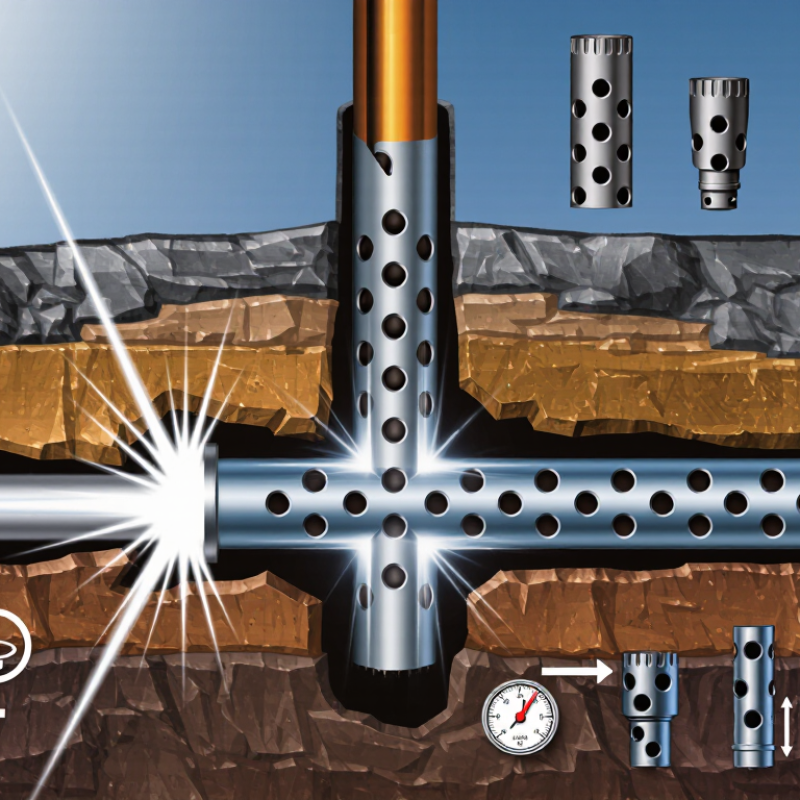
A TCP perforating gun should match the well’s completion, casing, and target interval—not just the planned shot count. Compare retrievable and expendable systems: retrievable guns can be recovered after firing, while expendable designs leave less equipment to retrieve but may create debris. Check the gun’s outside diameter against tubing restrictions and measured casing drift. A few millimeters can matter. Also review pressure, temperature, and conveyance limits for the specific well.

Gun size affects clearance, available charge size, and the space for the desired shot pattern. Larger guns may accommodate larger charges, but they are not automatically better; tight clearances can complicate deployment. Compare charge options by purpose. Deep-penetrating charges aim for greater penetration, while big-hole charges create wider openings. Actual results depend on casing, cement, formation, and gun configuration. Shot density and phasing also influence how evenly the interval is perforated. Treat published performance figures as test results, not guaranteed field outcomes.

Tips: Confirm drift, tubing restrictions, and retrieval plans before selecting a gun. Ask for charge data relevant to your casing and formation. Small details matter. I’ve seen sizing assumptions deserve a second check, especially in older wells with incomplete records.

Evaluate Conveyance, Performance, and Safety Factors

Selecting a TCP perforating gun starts with the conveyance path, not the gun alone. Confirm tubing dimensions, well deviation, restrictions, and expected drag against the well program. A tight restriction may affect tool clearance or complicate retrieval. Details matter. Include well depth, fluid conditions, and the planned completion sequence when reviewing the assembly.

Compare gun length, shot density, phasing, and charge options with the formation objective. These choices affect entry-hole distribution and the communication expected across the interval. Request performance data validated under conditions similar to the actual well. A catalog value is not a field guarantee. Small differences count. Check whether the selected configuration can be conveyed and recovered reliably.

Safety reviews should cover pressure and temperature ratings, connection compatibility, and documented barrier requirements. Confirm responsibilities, exclusion controls, and contingency plans with qualified personnel before the job. Keep the approved well program and equipment records aligned as conditions change. There is rarely a perfect choice. The best selection is one whose limitations are understood, recorded, and discussed openly.

How to Choose a TCP Perforating Gun for Oil Wells - Evaluate Conveyance, Performance, and Safety Factors

Evaluation Area Selection Dimension Relevant Data or Options What to Check Before Selection
Conveyance Well access and conveyance method Tubing-conveyed perforating (TCP) carries the gun assembly on the tubing string and can be used in deviated or extended-reach wells where other conveyance methods may be constrained. Confirm tubing access, completion configuration, deviation, dogleg severity, well-control plan, and the ability to run, position, and retrieve the assembly.
Conveyance Gun outside diameter and clearance Gun outside diameter is system-specific. Available clearance depends on the minimum measured restriction, completion components, and any scale, deformation, or debris. Compare the full assembly’s maximum outside diameter with the verified drift and completion dimensions; account for connections, centralizers, and tolerances.
Conveyance Tubing string capacity String capacity depends on tubing size, grade, wall thickness, length, fluid loading, and operating loads. Check tensile, burst, collapse, torque, pressure, and lifting limits against the planned run-in, setting, firing, and retrieval conditions.
Conveyance Assembly length and weight Overall length and weight vary with gun sections, firing head, spacers, release equipment, and other completion components. Verify wellhead and rig handling capacity, available lubricator or pressure-control equipment, target depth, and space for safe assembly and deployment.
Performance Shot density Common design options include approximately 2–6 shots per foot (spf); the appropriate value depends on the completion and reservoir objectives. Balance desired entry-point density against casing and cement condition, charge interaction, gun design, debris considerations, and the required flow performance.
Performance Shot phasing Common configurations include 60°, 90°, 120°, and 180° phasing. Actual options depend on the gun system and shot density. Assess circumferential coverage, gun orientation or rotation, casing geometry, and whether the selected pattern suits the completion and formation objectives.
Performance Charge performance Evaluate penetration and entrance-hole performance using documented testing under representative casing, cement, and target conditions. API Recommended Practice 19B provides a framework for perforator testing. Compare test conditions with the well’s casing, cement, formation strength, and fluid environment; do not treat laboratory results as guaranteed in-situ performance.
Performance Pressure and temperature rating Ratings are specific to each gun, charge, firing head, seal, and ancillary component; no single rating applies to all TCP assemblies. Confirm every component’s qualified limits exceed the planned downhole pressure and temperature envelope, including relevant operating and transient conditions.
Performance Well pressure condition at firing Perforating may be planned underbalanced, balanced, or overbalanced relative to formation pressure. The appropriate condition is well-specific. Base the pressure program on reservoir data, fluid properties, formation damage objectives, influx risk, and approved well-control procedures.
Performance Gun debris and post-shot flow path Debris generation and the resulting flow path depend on gun construction, charge design, casing, cement, and operating conditions. Review debris-control options and completion compatibility, especially where screens, valves, or other sensitive equipment may be exposed.
Safety Well barriers and pressure control TCP operations require a documented barrier plan and pressure-control equipment appropriate to the operation and well status. Define verified barriers, pressure tests, operating limits, contingency actions, and responsibilities before rig-up and deployment.
Safety Explosives handling and firing controls Perforating charges and firing components require controlled transport, storage, assembly, arming, and exclusion-zone management. Follow applicable regulations, approved procedures, manufacturer instructions, and qualified-personnel requirements; control ignition sources and communications during critical steps.
Safety Compatibility and certification Firing systems, seals, pressure-containing parts, and explosives must be qualified for the planned environment and compatible as an assembly. Review technical documentation, service history where available, configuration records, and compatibility with the well’s fluids and completion materials.
Decision Final engineering review Gun selection is a system-level decision that combines conveyance, perforation objectives, completion geometry, operating conditions, and risk controls. Have the final configuration and operating program reviewed by qualified completion, well-control, and perforating personnel using current well data.
Reference values and options are indicative, not a design specification. Confirm all dimensions, ratings, performance data, and operating procedures against the specific well program and qualified equipment documentation.

Select and Verify the Perforating Gun Configuration

Choosing a tubing-conveyed perforating (TCP) gun starts with the well record, not a catalog. Confirm casing inside diameter, tubing dimensions, deviation, pressure, temperature, and planned setting depth. Compare the gun’s outside diameter and overall length with the tightest restriction along the conveyance path. A tool that fits at surface may not pass a downhole nipple or tubing connection. Small details matter. Match charge type, shot density, and phasing to the completion objective and formation data. These choices affect entry-hole distribution and available flow area, but more shots are not automatically better.

Verify the complete assembly against the approved well schematic and current equipment records. Check connections, firing-head compatibility, pressure ratings, component documentation, and the exact gun-length tally. Qualified personnel should independently review the configuration for expected downhole conditions. Before mobilization, reconcile the planned depth with the measured tubing tally and account for known depth uncertainty. Record revisions; a small change in tubing or accessories can shift the toolstring. A checklist helps, but it cannot replace engineering judgment. Some inputs, especially formation response, remain estimates. Treat the design as a documented decision, then verify it again at the job site.

Go to Top