
A Level 3 DC fast charging station can turn a short stop into a useful top-up—or leave drivers waiting beside a stalled unit. Choosing one takes more than comparing peak kilowatts. The charger must match the vehicles using it, the site’s electrical capacity, and the way drivers actually arrive. A busy highway rest area has different needs from a workplace with predictable parking.
EV charging journalist and analyst Tom Moloughney has extensive experience covering charging equipment and real-world use. A practical paraphrase of his guidance is: “Choose charging equipment for the vehicles and charging patterns you actually serve, not just its headline power rating.” This is a paraphrase, not a verbatim quotation. It points to an easy mistake: buying for an impressive specification while overlooking vehicle limits, charging curves, or grid constraints. Details matter.
These seven tips will help you assess power delivery, connector compatibility, uptime, network features, installation demands, and room for future growth. Check how a unit performs under sustained use, not only in a product sheet. Ask about remote diagnostics, service response, and parts availability; a dark screen on a rainy evening is a practical problem, not a minor detail. Compare the total cost of ownership, too, including electrical upgrades and software fees. No checklist can predict every site’s needs. A careful site assessment is still essential.
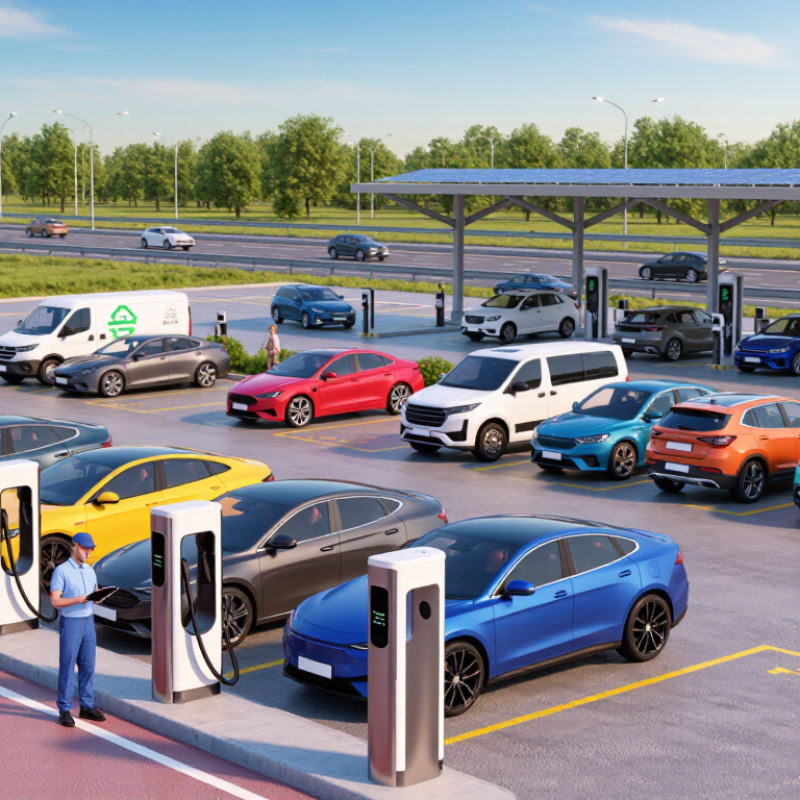
Level 3 DC fast charging sends direct current to an EV’s battery, bypassing the vehicle’s onboard AC charger. It can add range much faster than home or public AC charging. Still, the charger’s advertised power is not a guaranteed speed. The vehicle’s maximum charging rate, battery temperature, and state of charge all matter. Charging usually slows as the battery approaches full. It is quick, not magic.
Tip: Check compatibility before comparing power ratings. Confirm the station’s connector works with your vehicle, then compare its output with your car’s maximum DC charging rate. A 150-kW charger cannot deliver 150 kW to a car limited to 100 kW. Also check whether nearby stalls share power; the posted rating may not reflect what you receive.
Tip: Look beyond the headline number. Cable reach, stall layout, payment options, and recent availability reports can affect a stop. A thick, stiff cable may be awkward to position in cold weather. One detail is easy to miss: station specifications describe capability, not guaranteed performance. I would leave some flexibility in travel plans, especially at busy sites or in very cold conditions.
Level 3 DC fast chargers are commonly offered in different maximum power ratings. The chart compares example 50 kW, 150 kW, and 350 kW ratings. These are charger output limits—not guaranteed vehicle charging speeds.
Keep in mind: Actual charging power depends on the vehicle’s maximum DC charging rate, battery state of charge and temperature, and whether the charger’s power is shared.
A Level 3 station is useful only when its connector and power suit your vehicle. Check the owner’s manual for the approved DC connector, maximum charging rate, and battery limits. A car rated for 100 kW cannot draw 350 kW just because the station offers it. Charging speed also changes with battery temperature and state of charge. The U.S. Department of Energy’s Alternative Fuels Data Center says DC fast chargers commonly provide 50 kW or more. Charging to 80% may take 20 minutes to an hour. That range is broad. Treat the posted power as a ceiling, not a promise.
Tip: Match the station cable to your vehicle’s DC inlet before setting out. Check that the site has working stalls, not merely nearby stations. If your vehicle tops out at 50 kW, a higher-rated charger may not save much time. Cold weather matters. Precondition the battery if your vehicle supports it, and leave room in your schedule for slower charging.
The IEA’s Global EV Outlook 2024 reports that public fast-charger numbers grew by 55% in 2023. More stations help, but connector compatibility still varies. Compare the charger’s output with your vehicle’s peak DC intake, then consider its charging curve. I still check the manual; published ratings can seem more precise than real trips.
| Tip | What to Assess | Practical Check | Why It Matters |
|---|---|---|---|
| 1. Confirm the vehicle’s DC connector | Identify the connector standard supported by the vehicle, such as CCS, CHAdeMO, or the North American Charging System (NACS/J3400). | Check the vehicle manual or manufacturer specifications, and verify that the station’s cable connector matches. Use an adapter only when it is approved for the vehicle, station, and intended charging use. | A connector that does not physically and electrically match the vehicle cannot provide a direct charging connection. |
| 2. Match the station’s voltage range | Compare the vehicle’s DC battery voltage range with the station’s supported output voltage range. | Consult the technical specifications for both. For example, some vehicles use 400-volt-class battery systems, while others use 800-volt-class systems; actual operating voltage varies by vehicle and battery state. | Voltage compatibility can affect whether charging is possible and how much power the vehicle can accept. Do not assume every station supports every vehicle voltage. |
| 3. Choose a suitable power rating | Compare the station’s maximum output in kilowatts (kW) with the vehicle’s maximum DC charging rate. | Common public DC fast charging ratings include 50 kW, 150 kW, and 350 kW. The vehicle will not charge faster than its own limit, and a shared power cabinet may divide output among charging stalls. | The delivered rate is limited by the vehicle, station, and site configuration. A higher-rated station does not guarantee a higher charging speed. |
| 4. Check charging performance across the battery range | Review the vehicle’s charging curve, including how its power changes as the battery fills. | Look for manufacturer or independent test data showing charging behavior at different states of charge and temperatures. Treat peak power as a short-term maximum, not a sustained rate. | Charging power commonly tapers as the battery approaches a high state of charge. Average power is more useful than peak power for estimating a charging stop. |
| 5. Plan around battery temperature and state of charge | Consider whether the vehicle can precondition its battery and whether the battery will be warm enough for fast charging. | Check the vehicle’s guidance for battery preconditioning and charging conditions. Cold or very hot batteries, as well as a high starting state of charge, can reduce charging power. | Real-world charging speed depends on battery conditions, not just the station’s advertised rating. |
| 6. Estimate charging time using usable energy | Estimate the energy needed for the trip and the likely average charging power over the planned stop. | Use the vehicle’s usable battery capacity and expected state-of-charge change. A rough estimate is energy added in kWh divided by average charging power in kW; allow extra time for tapering, temperature, and connection steps. | Rated station power alone cannot predict charging time. Actual duration varies with the vehicle, battery conditions, starting charge, and station load. |
| 7. Verify site and installation requirements | Assess available electrical service, simultaneous charging demand, cable reach, environmental conditions, and applicable local requirements. | Have a qualified electrical professional review the site load and installation plan. Confirm that the cable can reach the vehicle inlet and that the equipment is suitable for the installation environment. | A compatible charger still needs adequate site capacity and a safe, practical installation. Site constraints can affect available power, cost, and usability. |
A Level 3 charger’s advertised kilowatts are only part of the story. Match its output to your vehicle’s peak DC charging rate; a 350 kW unit cannot make a car accept power faster than its battery allows. Check whether the site shares power between stalls, too. When two cars arrive, each may receive less than the headline rating. Real charging speed also changes with battery temperature and state of charge.
Connector compatibility is essential. Confirm your vehicle’s inlet and supported charging standard before choosing a station; a familiar-looking plug does not guarantee a match. The International Energy Agency’s Global EV Outlook 2024 reports that public fast-charging points grew by 55% worldwide in 2023. More choices are appearing, but coverage and connector availability still vary by location. Check the station’s live status before driving there. A small detour can matter.
Network features deserve equal attention. Look for clear pricing, live availability, payment options, and support details. Check whether the network reports working stalls, not just installed chargers; a dark screen or blocked connector can turn a quick stop into a delay. The U.S. Department of Energy’s Alternative Fuels Data Center distinguishes charging equipment by power and connector type, useful basics when comparing sites. Still, app information can lag. Treat it as guidance, not a promise.
A Level 3 DC fast charger is only as practical as the site supporting it. Before choosing equipment, ask the utility about available capacity, transformer limits, and upgrade timelines. A charger rated at 150 kW can place a substantial load on a property, especially when several units operate together.
NREL’s 2023 report, The 2030 National Charging Network, estimates that the United States may need about 182,000 public DC fast-charging ports by 2030.
That national projection is not a promise of local demand. Check nearby traffic, competing chargers, and likely dwell times before committing.
Walk the site in person. Measure trenching distances, check drainage after rain, and confirm that cables can reach vehicles without crossing busy walkways. Small details matter. Protect equipment from vehicle impacts with suitable barriers, while keeping screens, connectors, and emergency shutoffs accessible.
Have qualified electrical professionals assess grounding, overcurrent protection, and the service panel against applicable codes. A plan that looks tidy on paper can still fail when a delivery truck blocks the access aisle. I would also leave room for maintenance and future electrical upgrades; skipping that step may save space now, but it can make expansion costly later.
Tip: Compare the full cost, not just the purchase price. A Level 3 DC fast charging station may also require electrical upgrades, installation work, network fees, and scheduled maintenance. Ask for a written estimate that separates equipment, labor, and recurring charges. A low quote can hide important costs.
Tip: Read the warranty carefully. Check how long major components are covered, which parts are excluded, and who pays for on-site labor or shipping. Ask how warranty claims work when a station is unavailable. Keep the answers in writing. Small details matter.
Tip: Test the technical support plan before signing. Ask about support hours, response targets, remote diagnostics, and access to replacement parts. A useful answer should explain what happens when a connector fails during a busy afternoon. I would also ask for a sample service report. It may reveal more than polished sales language. Support promises are easy to make. Verify them. Compare service terms alongside price and warranty coverage, since the cheapest option may cost more when repairs take longer. A spreadsheet helps, but it can miss the frustration of unclear handoffs. That is worth considering.