What Are the Best Smart Door Lock Suppliers in China?
China has become a major manufacturing base for connected access hardware. Its suppliers serve apartments, hotels, offices, and smart-home brands worldwide. MarketsandMarkets estimates that the global smart lock market could grow from about USD 2.9 billion in 2024 to USD 5.8 billion by 2029. That growth creates opportunity. It also creates noise.
A strong Smart Door Lock supplier should offer more than attractive product photos. Buyers need evidence of firmware testing, encryption practices, battery performance, and stable mobile applications. ISO 9001 certification can indicate controlled production, but it does not prove product security. Independent testing, clear warranty terms, and traceable component sourcing matter more during real procurement. Grand View Research also identifies residential adoption, wireless connectivity, and smart-home integration as important market drivers. These trends explain why Tuya-compatible, fingerprint, keypad, and hotel-focused locks remain popular among Chinese manufacturers.
Bruce Schneier, a respected security technologist, wrote, “Security is a process, not a product.” His warning applies directly to connected locks. A reliable supplier must support updates after shipment, not disappear after the first order. That is where many comparisons become incomplete. Factory scale alone cannot predict field performance. This guide reviews leading Chinese suppliers through product quality, customization, certifications, software capability, after-sales support, and export experience. It also considers practical details, such as whether a lock survives humid corridors, whether batteries last through winter, and whether emergency access works when the phone is offline. The best supplier may not be the cheapest. It may be the one that documents its weaknesses honestly.
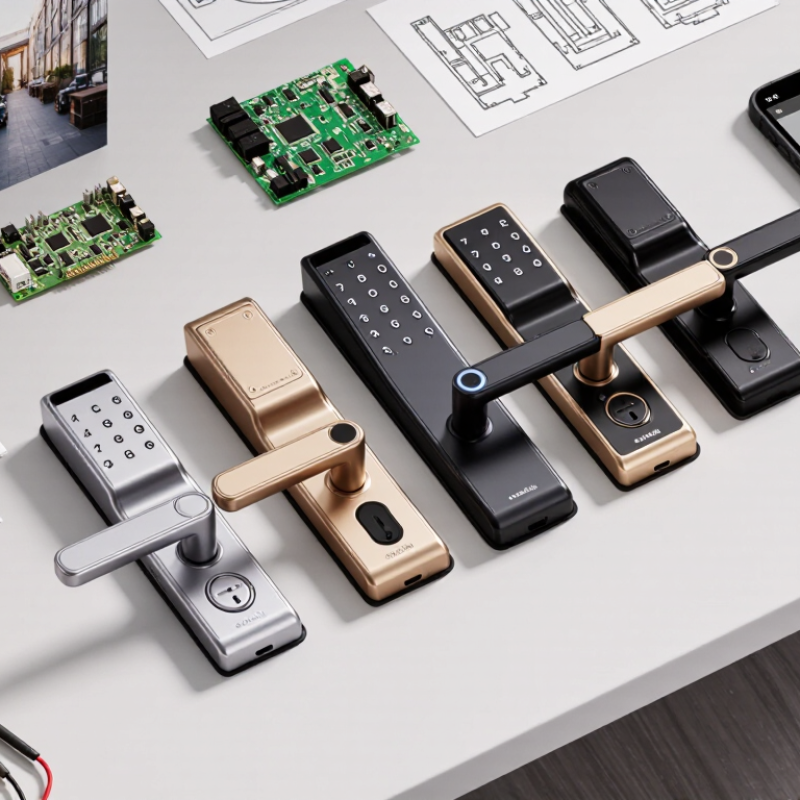
Smart Door Lock Suppliers in China: An Industry Overview
China’s smart door lock industry combines electronics, precision machining, software, and export services. Suppliers range from large manufacturers to specialized OEM and ODM factories. Guangdong often supports electronics integration, while Zhejiang has strong hardware production. Shenzhen is known for rapid product development and testing resources.
A reliable supplier should explain its full production process clearly. Ask about fingerprint sensor accuracy, motor lifespan, emergency power access, and app security. Factory audits can reveal useful details, such as assembly cleanliness, component labeling, and final inspection records. Sample orders matter. A polished prototype may hide inconsistent mass production.
Look for suppliers with documented quality systems and relevant safety certifications for target markets. Confirm encryption practices, firmware update procedures, and data handling policies before approving connected locks. Strong suppliers provide test reports, spare parts, installation guides, and responsive after-sales support. Communication quality is evidence too. Slow answers can become expensive later.
Price alone misleads.
Some suppliers promise excessive customization without enough engineering support. That deserves caution. A buyer may also overlook local door types, weather exposure, or installer training. Even an experienced sourcing team can miss these details. Regular batch inspections and written specifications reduce that risk, although they never remove it completely. Supplier capability should be judged through records, samples, factory evidence, and honest discussion of limitations.
Key Factors for Evaluating Chinese Smart Lock Suppliers
Choosing among smart door lock suppliers in China requires more than comparing prices. A reliable supplier should show consistent manufacturing experience, clear product specifications, and verifiable quality controls. Ask for factory audit records, production photos, and sample units from current production lines. Test fingerprint recognition, keypad response, emergency power access, and mechanical key operation. Small details matter during installation.
Security deserves careful attention. Review encryption practices, firmware update procedures, user-permission settings, and data storage policies. Confirm whether the lock supports your target door thickness and installation standards. Suppliers should provide relevant test reports and certifications for your destination market. Also examine their communication speed, minimum order quantity, lead times, warranty terms, and replacement-part availability. A polished catalog proves little without dependable after-sales support.
Tips: Request two or three samples before placing a larger order. Keep one sample for independent testing. Ask difficult questions in writing. Compare answers, not promises. A low quotation may hide weaker materials, limited testing, or expensive future support. No supplier is flawless, and buyers can miss problems during rushed evaluations. A short pilot order can expose packaging damage, installation confusion, software delays, or inconsistent finishing before these issues reach customers.
Leading Types of Smart Door Lock Manufacturers in China
What Are the Best Smart Door Lock Suppliers in China?
Leading Types of Smart Door Lock Manufacturers in China
China’s smart door lock industry includes OEM factories, ODM developers, integrated security manufacturers, and specialist hardware suppliers. OEM factories usually produce to a buyer’s drawings, while ODM teams offer ready-made designs with adjustable software, casing, and packaging. Integrated manufacturers often combine locks, access control, mobile applications, and cloud services. This structure helps overseas buyers match suppliers with project size and technical needs.
According to MarketsandMarkets, the global smart locks market is projected to grow from about USD 2.2 billion in 2023 to USD 4.4 billion by 2028. China’s large electronics supply chain supports fast product development, but speed should not replace verification. A serious supplier should provide documented testing, firmware update procedures, battery records, and traceable quality inspections. Ask for samples from different production batches.
Export-focused manufacturers may understand regional door sizes, communication standards, and certification documentation better than purely domestic factories. However, their marketing language can sound stronger than their engineering evidence. Product categories also vary widely, including fingerprint locks, keypad models, hotel locks, apartment systems, and connected mortise locks.
Grand View Research reports that biometric smart locks are gaining attention because convenience and access control increasingly influence residential purchasing. Still, fingerprint performance can decline with wet hands, dust, or poor sensor placement. That detail matters. Supplier selection should balance factory capacity, software support, mechanical durability, and transparent test results, rather than choosing the lowest quotation. Data reports use different market definitions, so their figures should guide decisions, not replace factory-level due diligence.
How to Select the Right Chinese Smart Lock Supplier
Choosing the right Chinese smart lock supplier requires more than comparing prices. A reliable supplier should show stable production capacity, clear technical documentation, and practical export experience. Ask about lock materials, motor lifespan, battery performance, firmware updates, and access-log protection. Request recent test reports from independent laboratories. Confirm that products meet the standards required in your target market.
A factory visit can reveal useful details. Check the assembly line, quality-control stations, packaging area, and spare-parts storage. Speak with engineers, not only sales staff. Their answers often show real technical knowledge. Review sample locks for loose handles, uneven panels, weak fingerprint sensors, or delayed app responses. Do not trust polished videos alone. A practical sample test matters more.
Tips: Ask for a written warranty, replacement-part policy, and response time for technical issues. Test several samples under cold, humid, and frequent-use conditions. Confirm communication methods and software update responsibilities before signing. One weakness in my early evaluations was focusing too heavily on appearance. A beautiful lock can still have unstable software or poor after-sales support. Keep every specification, test result, and delivery promise in writing.
How to Select the Right Chinese Smart Door Lock Supplier
Suggested procurement weighting for comparing suppliers without relying on brand names
Security and privacy, compliance documentation, and product reliability should receive the highest priority when evaluating Chinese smart door lock suppliers. Customization, commercial terms, and after-sales support can then be used to distinguish suppliers with similar technical capabilities. The percentages represent a practical 100-point purchasing framework and can be adjusted for residential, hospitality, or property-management projects.
