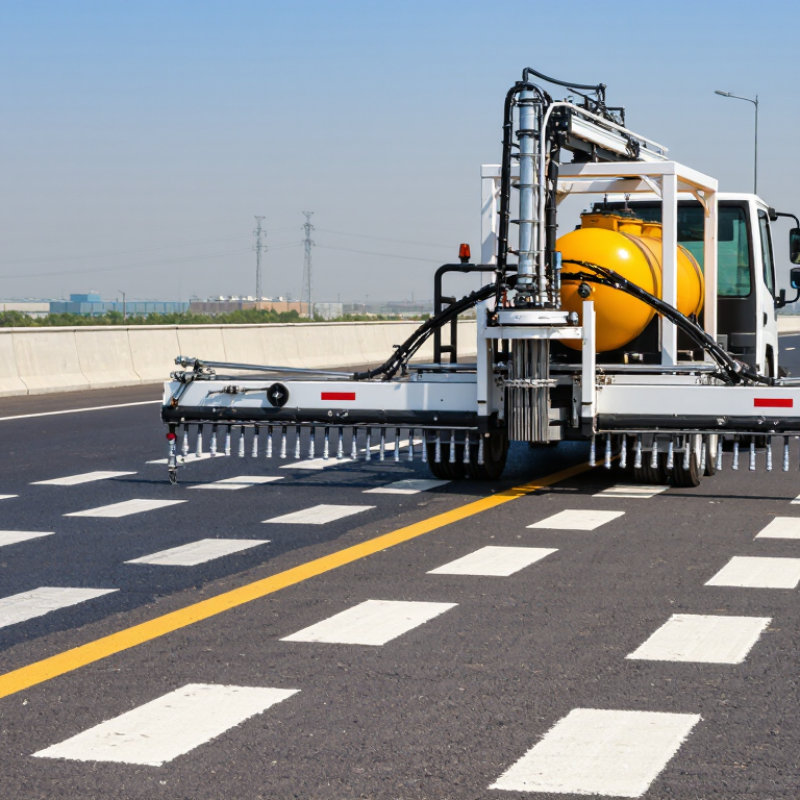
What Is the Best Road Marking Machine from China?

Choosing the best Road Marking Machine from China requires more than comparing prices or engine power. Road safety depends on line visibility, durability, application accuracy, and operator control. The World Health Organization’s Global Status Report on Road Safety 2023 reports approximately 1.19 million annual road traffic deaths worldwide. Clear markings remain a practical safety tool, especially on busy urban roads, highways, and poorly lit surfaces.

Industry data also shows why selection requires care. MarketsandMarkets’ road marking materials research highlights continued demand for durable thermoplastic and water-based marking systems. However, material compatibility can differ between machines. A model designed for cold paint may not handle heated thermoplastic effectively. Buyers should examine spray pressure, bead-dispensing accuracy, line-width adjustment, heating stability, and daily output. The FHWA Manual on Uniform Traffic Control Devices, 11th Edition, provides useful guidance on pavement marking visibility and application consistency. These principles can help buyers assess Chinese equipment against real project requirements.

No machine wins every site. A compact airless sprayer may suit municipal repairs, while a self-propelled thermoplastic unit may perform better on long highway lines. Manufacturer documentation, factory testing, spare-parts availability, and technician support also matter. CE or other market-required conformity evidence should be verified independently. Data can mislead. Product brochures often present ideal output under controlled conditions, not dusty roads, uneven pavement, or changing temperatures. The strongest choice combines verified field performance, transparent specifications, and reliable after-sales service. This guide compares those factors to identify which Chinese Road Marking Machine offers the most practical value for different applications.

What Is the Best Road Marking Machine from China?

Types of Chinese Road Marking Machines and Their Best Uses

Chinese road marking machines serve different working conditions. Airless spray machines suit highways, parking lots, and long urban lines. They deliver fast coverage and clean edges. Walk-behind models are easier to control around manholes and narrow lanes. Ride-on machines reduce operator fatigue on large projects.

Thermoplastic machines heat solid material before application. They work well for durable highway markings, arrows, and zebra crossings. Their heated tanks require careful temperature control. Cold plastic, or two-component machines, suit thick, textured markings and heavy traffic zones. They usually cost more and demand accurate material mixing. A 2024 MarketsandMarkets report estimates the road marking materials market could grow from about USD 6.4 billion in 2024 to USD 8.2 billion by 2029. That growth supports wider equipment choices, but it does not guarantee equal machine quality.

Selection should match line width, paint viscosity, daily output, and road surface. Contractors should check pressure stability, nozzle replacement time, cleaning access, and local spare-parts support. Gasoline-powered units remain practical on unfinished sites. Electric models create less noise in enclosed parking areas. The cheapest machine can still be the wrong machine. WHO’s Global Status Report on Road Safety 2023 records approximately 1.19 million annual road deaths worldwide. Clear markings matter, but application quality matters more than catalog promises. I would not accept every published output figure without a field test. Test one measured section first.

What Is the Best Road Marking Machine from China? Types of Chinese Road Marking Machines and Their Best Uses

Machine Type Typical Marking Material Typical Application Width Typical Output Range Best Uses Main Advantages Important Limitations Recommended Project Scale
Thermoplastic Screed Machine Hot-melt thermoplastic paint, usually applied with a screed shoe 100–450 mm for common lines; adjustable models can apply wider markings Approximately 80–250 m² per hour, depending on line width, thickness, and operating speed Longitudinal lane lines, edge lines, arrows, text, zebra crossings, and durable urban road markings High durability Good film thickness Suitable for reflective glass beads Requires paint heating, temperature control, and careful handling of hot material; unsuitable for cold or damp surfaces Medium to large road, highway, airport, and municipal projects
Thermoplastic Spray Machine Hot-melt thermoplastic paint applied by spray Approximately 100–300 mm for standard traffic lines Approximately 150–400 m² per hour under suitable site conditions Fast application of long lane lines and edge lines where a smooth, thin, and consistent film is required High working speed Uniform appearance Efficient on long lines Needs stable heating and spray pressure; wind can affect overspray; generally less suitable for thick textured markings Large highway, expressway, and airport runway projects
Cold Paint Airless Sprayer Water-based or solvent-based traffic paint 50–500 mm, depending on spray-gun configuration Approximately 200–800 m² per hour, depending on paint, equipment, and layout complexity Road renewals, parking lots, factory yards, bicycle lanes, temporary markings, and general traffic-line maintenance No paint preheating Fast setup Easy width adjustment Usually has a shorter service life than thermoplastic; drying time depends on temperature, humidity, and paint formulation Small to large projects requiring flexible and economical application
Cold Paint Hand-Push Machine Water-based or solvent-based cold paint 50–200 mm for common line-marking work Approximately 100–350 m² per hour Small roads, parking spaces, school zones, courtyards, warehouses, and local maintenance work Low purchase cost Simple operation Easy transport Lower productivity and operator fatigue on large projects; line straightness depends more on operator control Small projects, repair work, and occasional use
Two-Component Cold Plastic Machine Two-component MMA or cold-plastic material 100–500 mm for lines; wider application is possible with specialized equipment Approximately 80–300 m² per hour, depending on curing system and application method High-wear intersections, roundabouts, pedestrian crossings, bus lanes, symbols, and highly visible urban markings Excellent wear resistance Fast curing options Suitable for textured surfaces Higher material and equipment cost; mixing ratio and application conditions must be controlled carefully Heavy-traffic roads and high-performance marking projects
Two-Component Spray Machine Reactive two-component cold plastic applied by spray Approximately 100–300 mm for standard traffic lines Approximately 150–500 m² per hour, depending on material viscosity and curing method Durable lane lines, edge lines, rumble-style patterns, and roads needing rapid return to traffic Quick curing High durability Good productivity Requires accurate component metering, specialized cleaning procedures, and trained operators Medium to large professional road-marking contracts
Preformed Marking Applicator Preformed thermoplastic or other preformed marking sheets Usually used for symbols, letters, arrows, and decorative patterns rather than continuous lines Project-dependent; productivity is determined by pattern size and heating method Directional arrows, stop legends, school-zone symbols, logos, colored paths, and detailed decorative markings Accurate patterns Clean appearance Low setup complexity Material cost can be high; surface preparation is essential; not normally the first choice for long continuous lines Urban roads, traffic-calming areas, parking facilities, and specialty markings
Ride-On Road Marking Machine Thermoplastic, cold paint, or two-component material, depending on the configuration Commonly 100–600 mm, with multiple-gun options for wider layouts Approximately 300–1,000 m² per hour, depending on the material and road design Large-area work, repeated lane lines, airport pavements, highways, and projects requiring reduced operator fatigue High productivity Better operator comfort Consistent travel speed Higher transport, purchase, and maintenance costs; less practical in narrow or congested areas Large-scale professional contracts with substantial continuous marking quantities
Selection note: The best road marking machine depends on the marking material, road surface, required durability, line width, project size, climate, traffic-control conditions, and available operator skills. Actual output varies with paint viscosity, surface preparation, ambient temperature, humidity, line thickness, and the number of markings required.

Key Features That Define a High-Quality Road Marking Machine

Choosing the best road marking machine from China starts with practical performance, not appearance. A high-quality machine should produce consistent line width on asphalt, concrete, and repaired surfaces. Operators need clear controls, stable pressure, and an adjustable spray or extrusion system. Test the machine on a real road section. Factory videos are useful, but they cannot show every field condition.

A reliable engine or motor is essential for long workdays. Look for durable pumps, corrosion-resistant material paths, and easy access to filters and belts. A clean 100-metre line should not show sudden gaps or heavy edges. Useful features include glass bead dispensers, pressure gauges, material temperature controls, and accurate distance measurement. Large wheels also help the machine move smoothly over small cracks. Small details matter.

Maintenance design often separates a professional machine from an average one. Parts should be clearly labeled, replaceable, and supported by readable manuals. Ask for test records, technical specifications, and operator training details before purchasing. No machine is perfect. Even a strong model may struggle with cold paint, uneven pavement, or careless cleaning. I have found that simple flushing routines prevent many blockages, although operators sometimes skip them during busy shifts. That weakness deserves attention. A dependable supplier should answer technical questions honestly and provide measurable service information, rather than making vague promises.

How to Compare Chinese Manufacturers and Machine Models

Choosing the best road marking machine from China requires comparing manufacturers, not just catalog prices. Grand View Research’s 2024 road marking materials report projects market growth of about 5% annually through 2030. That growth increases demand for stable equipment and reliable after-sales support. A serious comparison should examine production history, factory testing, export experience, and spare-parts availability. Photos are not enough.

Compare machines through measurable field details. Check spraying output, line-width adjustment, heating temperature stability, and glass-bead distribution. For example, a machine claiming 10 liters per minute should maintain consistent pressure during a 100-meter trial. Measure line thickness at several points. Inspect the edge under daylight. Ask for fuel consumption, cleaning time, pump-life data, and replacement-part prices. These details often reveal more than a polished specification sheet.

Model selection also depends on the worksite. A compact walk-behind unit suits parking areas and narrow streets. A truck-mounted system is better for long highways and higher daily output. The World Bank’s 2023 Logistics Performance Index highlights how delivery reliability affects business operations; this principle applies to machine parts too. Request documented delivery times and remote troubleshooting procedures. A two-year warranty sounds useful, but its exclusions may matter more. I would also require a live demonstration before ordering. My own comparison checklist would be imperfect, because operator skill, paint viscosity, and weather can change results. That is exactly why independent testing remains necessary.

Choosing the Right Machine for Your Road Marking Project

What Is the Best Road Marking Machine from China?

Choosing the right machine starts with the road, not the catalog. Measure lane width, surface texture, daily coverage, and available transport space. A compact spray machine suits urban repairs and narrow streets. For highways, choose a self-propelled unit with larger tanks, stable pressure control, and automatic bead dispensing. Field crews often discover one issue late: excessive capacity can increase cleaning time and material waste.

Material compatibility matters. Confirm whether the machine handles water-based paint, thermoplastic, or cold plastic before purchase. Thermoplastic systems need controlled heating, insulated hoses, and reliable temperature monitoring. Spray systems require accurate nozzle alignment and consistent pressure. FHWA guidance links durable pavement markings with proper application thickness, retroreflectivity, and maintenance planning. A machine that produces sharp edges at walking speed may still fail under highway conditions.

Safety should guide the specification. The WHO Global Status Report on Road Safety 2023 records about 1.19 million annual road deaths worldwide, making visible markings a practical safety investment. Ask for documented test results, spare-parts availability, operator training, and calibration procedures. ISO 9001 certification can support quality control, but it does not prove field performance. Request a live demonstration on a similar surface. Photographs are not enough. I would also test cleanup time, because this detail is easy to underestimate. Sometimes, the less powerful machine is the better choice.

Operating, Maintaining, and Evaluating Machine Performance

What Is the Best Road Marking Machine from China?

Choosing the best road marking machine depends on operating conditions, not just purchase price. A reliable machine should start smoothly, maintain steady pressure, and produce consistent line width. Before work begins, inspect the spray tip, hoses, filters, wheels, and material tank. Clean components prevent uneven edges and sudden blockages. Test the machine on a small surface first. Watch the line closely.

During operation, keep walking speed steady and avoid sharp turns. The correct pressure depends on paint thickness, temperature, and surface texture. Record these settings for future projects.

After each shift, flush the pump and gun with the recommended cleaning fluid. Never leave coating material inside overnight. Check belts, seals, fasteners, and engine oil regularly. Small leaks often become expensive failures.

Tips: Use a simple maintenance log. Note pressure, weather, material type, and cleaning time. Compare line width after every test pass. A basic wet-film gauge can reveal problems that eyesight misses. I once trusted a clean-looking nozzle and ignored a slight spray variation. That was a mistake. Performance evaluation should include fuel use, cleaning time, downtime, visibility, and operator comfort. A machine may mark quickly but still waste material. Review the results honestly. Real field records matter more than impressive specifications.

Go to Top