
2026 Top Yanmar Motor Types for Global Buyers?
Choosing the right yanmar motor in 2026 requires more than comparing horsepower and purchase prices. Global buyers must examine duty cycles, fuel quality, service access, emissions requirements, installation space, and long-term parts support. A compact diesel engine may suit an agricultural pump, while a marine propulsion engine needs stronger cooling performance and corrosion protection. Industrial users often value stable torque, low vibration, and simple maintenance more than headline power.
Takehito Yamaoka, President of Yanmar Holdings, has described the company’s direction as creating “new value through technology for a sustainable future.” That principle matters when evaluating current Yanmar motor types. Buyers should compare traditional mechanical diesel models, electronically controlled engines, marine units, generator engines, and compact industrial options against real operating conditions. A product that performs well in Japan may need different calibration, filtration, or service planning in Africa, Southeast Asia, Europe, or North America.
Details matter.
This guide reviews the leading Yanmar motor categories expected to attract global buyers in 2026. It considers practical strengths, typical applications, fuel efficiency, maintenance demands, and dealer support. The comparison is not perfect; market availability can change, and regional specifications may differ. Some buyers may also overestimate the value of electronic controls without confirming local diagnostic support. That is a useful warning.
The strongest choice is rarely the most powerful one. It is the engine that matches the workload, environment, budget, and technician capability.
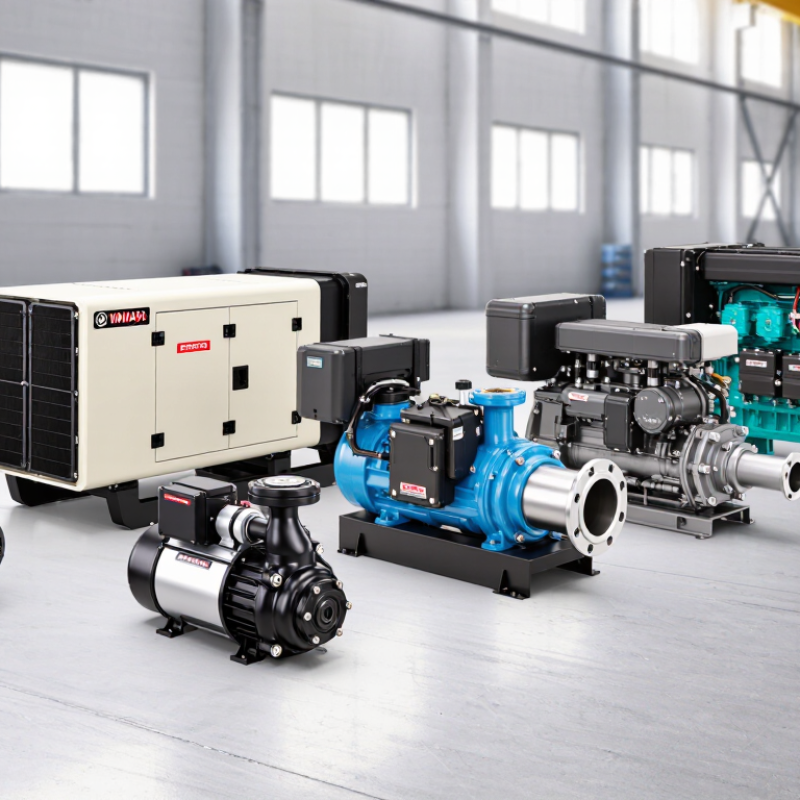
Yanmar Motor Types: An Overview for Global Buyers in 2026
Small diesel motors remain popular with global buyers because they tolerate demanding work and limited infrastructure. The main types include compact single-cylinder units, multi-cylinder industrial engines, marine propulsion engines, and generator-drive engines. Each design serves a different operating pattern.
Compact single-cylinder motors suit small pumps, cultivators, and basic construction equipment. They are simple to repair. Multi-cylinder engines provide smoother power for loaders, compressors, and agricultural machinery. Marine versions require corrosion protection, reliable cooling, and steady torque at low speed. Generator engines usually prioritize stable frequency and continuous-duty performance. The application matters more than the headline horsepower.
A practical buyer should check rated power, maximum torque, fuel use, cooling design, and service access. Measure the engine bay before ordering. A few centimeters can create expensive installation problems. Ask for maintenance intervals and genuine test records. Local technicians also matter, especially where parts arrive slowly. Emissions rules, fuel quality, and noise limits vary between markets, so one specification may not fit every country.
Catalog figures can look impressive. They do not always reflect dusty fields, salty air, or irregular servicing. I would avoid selecting the smallest engine that meets the stated load. It may work on paper but struggle during startup or hot weather. Oversizing is not perfect either; light loading can waste fuel and increase maintenance concerns. A careful comparison should include the complete operating environment, not only purchase price.
2026 Top Yanmar Motor Types for Global Buyers? - Yanmar Motor Types: An Overview for Global Buyers in 2026
| Motor type | Typical configuration | Typical displacement range | Typical power range | Common cooling system | Typical applications | Key buyer considerations |
|---|---|---|---|---|---|---|
| Single-cylinder diesel | 1 cylinder, naturally aspirated, compact mechanical design | 0.2–0.7 L | 3–15 kW | Air-cooled or liquid-cooled | Small pumps, compact tractors, tillers, light construction equipment | Low purchase and maintenance cost; higher vibration and noise than multi-cylinder designs. |
| Inline 2-cylinder diesel | 2 cylinders in line, usually four-stroke | 0.5–1.2 L | 8–30 kW | Liquid-cooled | Small marine propulsion, compact excavators, generators, agricultural machinery | A practical balance of compactness, torque, serviceability, and operating smoothness. |
| Inline 3-cylinder diesel | 3 cylinders in line; naturally aspirated or turbocharged | 0.9–2.0 L | 15–55 kW | Liquid-cooled | Compact tractors, forklifts, skid-steer loaders, small workboats, generator sets | A widely used mid-range format with good fuel economy and a relatively small installation footprint. |
| Inline 4-cylinder diesel | 4 cylinders in line; turbocharging and electronic injection may be available | 1.5–4.5 L | 30–120 kW | Liquid-cooled | Agricultural tractors, excavators, loaders, industrial pumps, larger generator sets | Strong all-purpose option; confirm torque curve, emissions certification, and available service diagnostics. |
| Inline 6-cylinder diesel | 6 cylinders in line, generally turbocharged and liquid-cooled | 4.0–10.0 L | 90–300 kW | Liquid-cooled | Heavy construction machinery, large generators, commercial vessels, agricultural equipment | High torque and smooth operation; requires more installation space, cooling capacity, and maintenance access. |
| Marine propulsion diesel | Marine-rated diesel with gearbox, heat exchanger, and seawater circuit | 0.5–6.0 L | 10–250 kW | Freshwater closed loop with seawater heat exchange | Sailboats, fishing boats, patrol craft, workboats, and auxiliary marine systems | Check continuous-duty rating, propeller-shaft compatibility, corrosion protection, noise control, and local marine support. |
| Industrial generator diesel | Constant-speed engine matched to an alternator | 0.7–15.0 L | 5–500 kW | Liquid-cooled; air-cooled on smaller units | Backup power, prime power, irrigation, telecommunications, and remote facilities | Evaluate standby versus prime rating, frequency stability, load profile, fuel autonomy, and emissions requirements. |
| Emission-controlled electronic diesel | Electronically managed fuel injection with after-treatment where required | 1.5–15.0 L | 25–500 kW | Liquid-cooled | Road and off-road machinery operating in regulated emissions markets | Lower regulated emissions and better monitoring; verify fuel quality, diagnostic tools, after-treatment space, and operating-temperature requirements. |
Related Posts
-
10 Essential Tips for Maintaining Your Yanmar Motor: Maximize Performance!
-
What is a Small Diesel Generator and How Does It Work?
-
Top 5 Reasons to Choose a Cat Diesel Generator for Your Power Needs
-
What is an Industrial Diesel Generator and How Does It Work?
-
How to Choose the Right Perkins Generator for Your Needs?
-
Top 5 Best Small Diesel Generators for Reliable Power Solutions?