
Global buyers entering the 2026 market need more than a broad product list. They need to understand how each Dado Blade Set behaves on different table saws, materials, and workshop conditions. Stackable sets offer adjustable widths and clean shoulder cuts. Wobble sets usually provide faster adjustment, but their cut geometry may be less consistent. Safety, arbor compatibility, tooth design, and storage quality also deserve close attention.
Woodworking author Andy Rae once wrote, “A dado is only as good as the setup behind it.” That practical observation remains important for international purchasing teams. A premium blade cannot correct an unsuitable arbor, loose spacing washers, or a poorly aligned fence. Small details matter. Buyers should compare carbide quality, shim systems, maximum cutting depth, packaging protection, and supplier documentation. In real workshops, dust buildup and humidity can affect performance too. That part is easy to overlook.
This guide examines the leading Dado Blade Set types expected to attract global buyers in 2026. It connects product design with actual purchasing decisions, including cabinetmaking, shelving, flooring, and joinery applications. The categories are useful, but not perfect. Some products blur the boundaries between types. Specifications can also vary between regions and manufacturers. Careful verification remains necessary before placing an order. Experienced buyers should request technical drawings, compatibility details, and transparent warranty terms. A cheaper set may still become expensive after poor cuts, damaged material, or repeated adjustments.
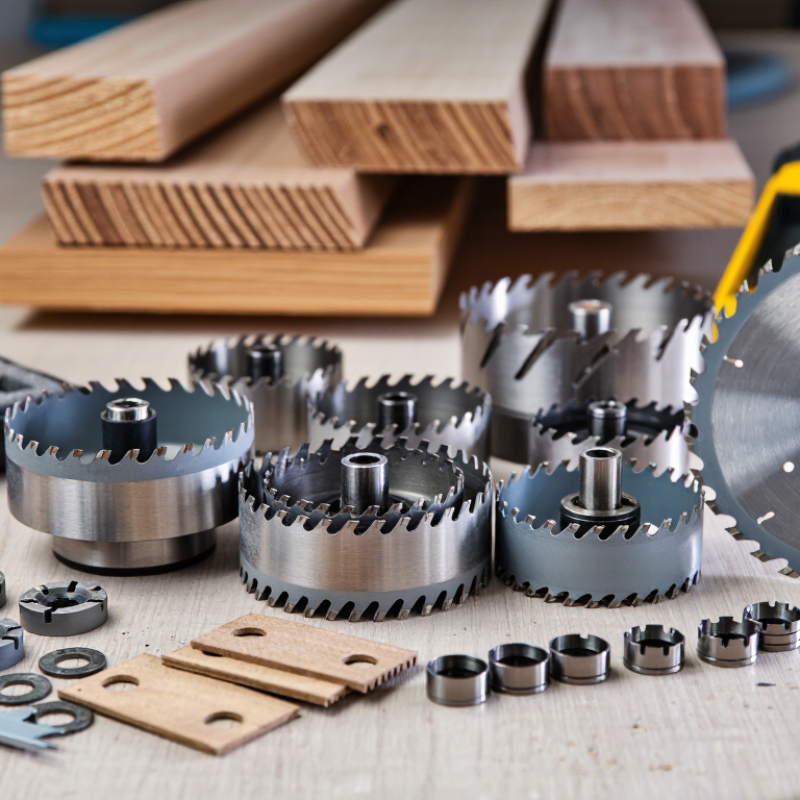
Dado blade sets are specialized cutting systems for making wide grooves, rabbets, and housing joints in wood. Unlike a standard saw blade, a set removes more material in one pass. The cut can support shelves, cabinet backs, and sliding joints. Accuracy depends on the blade design and the saw’s arbor capacity.
A typical stacked Dado Set includes two outer blades, several chipper blades, and thin shims. The outer blades create clean edges. Chippers remove the center material. Shims fine-tune the groove width, often in small increments. Some sets use fewer chippers for narrow cuts. Wobble-style sets use one angled blade, but their groove bottom may be less flat. Stacked sets usually provide better control for furniture work.
Buyers comparing 2026 dado blade set types should inspect tooth geometry, carbide quality, kerf range, and included spacers. Compatibility matters. Check the arbor diameter, maximum safe stack width, and saw manufacturer’s instructions before purchase. A set that fits physically may still exceed the machine’s approved limits. That detail is easy to overlook.
In practice, a smooth groove should show clean walls and minimal burn marks. Test cuts on scrap wood reveal more than packaging claims. Moisture, grain direction, and feed speed can change results. Even experienced users sometimes expect a perfect bottom from every setup. That assumption needs reconsideration. Clear component labeling and consistent quality control also help global buyers compare suppliers with greater confidence.
In 2026, global buyers are comparing several dado blade set types, not just tooth counts. A stacked dado set uses outer blades, chippers, and shims to cut precise grooves. It suits cabinet joints, shelves, and repeated workshop production. A compact set may provide cleaner setup for occasional users. However, more components mean more alignment checks. That small delay matters.
Wobble dado blades use an angled plate to vary groove width. They are quick to adjust, but the cut floor can show a slight curve. Adjustable sets offer flexibility through replaceable chippers and calibrated spacers. They work well when project drawings change frequently. For plywood, carbide-tipped teeth and anti-vibration plates help reduce burning and edge splintering. Solid wood demands attention to grain direction, feed pressure, and cutter sharpness. I have found that a wider setting is not always better.
Before purchasing, buyers should match the set to the saw’s arbor diameter, maximum dado capacity, and approved operating limits. Check the actual kerf range, chipper thickness, shim quality, and tooth configuration. A set that fits physically may still exceed the machine’s permitted specification. Test cuts on offcuts reveal more than catalog images. Measure the groove with calipers, inspect the shoulder edges, and listen for uneven cutting. Dust extraction also affects visibility and heat. Some specifications look impressive, yet the practical finish disappoints. Reliable suppliers should provide material data, dimensional drawings, maintenance guidance, and traceable quality information.
For 2026, global buyers should compare dado blade sets by tooth design, cutting width, and verified dimensions. A dado set is not defined by tooth count alone. Flat-top teeth create clean, square grooves in plywood and solid wood. Raker teeth remove waste between scoring cuts. Some sets add chip-limiting shoulders, which can improve control during deeper cuts. Not every design performs equally well.
Cutting width is usually adjustable through chippers and spacer shims. Common ranges run from about 6.35 mm to 20.64 mm, depending on the set. Narrow widths suit drawer bottoms and small joinery. Wider settings fit shelving and cabinet panels. The marked width may not equal the final groove. Material density, saw alignment, and shim pressure can change the result. Measure the actual cut.
Size specifications need careful checking. Outer diameters often range from 152 mm to 254 mm, while arbor holes vary by machine standard. Verify the saw’s maximum blade diameter, arbor length, and permitted dado capacity before ordering. Do not trust a familiar-looking number. In practical testing, a digital caliper helps confirm plate thickness and assembled width. A test cut in scrap material is still necessary. I have found that even precise sets can produce slightly uneven shoulders when the stack is assembled carelessly. That small error matters in visible joinery.
Typical tooth-count ranges by dado blade design. Actual specifications vary by set construction, arbor size, and the material being cut.
Usually combine two outer blades with adjustable chippers and shims. Common cutting widths range from 1/4 inch to 13/16 inch, increasing in 1/16-inch increments.
A single blade is angled on its hub to create an adjustable groove. They commonly use approximately 12–24 teeth and are generally less consistent than stacked sets.
Six-inch sets are suited to shallower cuts, while eight-inch sets provide greater cutting depth. Typical dado set kerfs are 1/4–13/16 inch, with arbor bores commonly sized for the compatible saw.
2026 Top Dado Blade Set Types for Global Buyers
Material Compatibility and Performance Considerations
Global buyers should compare dado blade types through material compatibility, not tooth count alone. Stacked sets offer adjustable cutting widths and stable shoulders for plywood, hardwood, and solid wood. Wobble blades are simpler, but their angled movement can leave uneven grooves. Adjustable sets provide flexibility, although setup takes more patience.
Carbide-tipped teeth usually handle dense timber and engineered panels effectively. However, adhesive content in MDF can accelerate edge wear. Plywood may contain hard outer veneers that expose weak sharpening quickly. Check the intended material range, maximum speed, arbor diameter, and required spacers before purchase. A small mismatch can create vibration, poor shoulders, or excessive heat.
Performance also depends on the saw, feed rate, and blade alignment. In practical workshop testing, a clean groove requires firm stock support and gradual feeding. Dust extraction matters more with MDF. It reduces heat and keeps the cut line visible. Buyers should request dimensional tolerances, tooth geometry details, inspection records, and replacement-part availability. Supplier documentation is useful, but hands-on verification remains necessary. I have seen a technically suitable set perform poorly after an incorrect spacer arrangement. That experience changed my inspection routine. I now measure the assembled width before cutting valuable stock. Perfect results are not guaranteed. Small errors still matter.
Comparative guide to common dado-set configurations, material compatibility, cutting performance, and purchasing considerations.
| Dado Set Type | Typical Configuration | Compatible Materials | Typical Cutting Width | Cut Quality | Performance Advantages | Main Limitations | Best-Fit Applications |
|---|---|---|---|---|---|---|---|
| Stacked Dado Set | Two outside blades combined with chipper blades and spacers | Solid wood, plywood, MDF, particleboard, and many veneered panels | Usually adjustable from approximately 6 mm to 25 mm | High; flat-bottom cuts are achievable when properly aligned | Precise width adjustment, efficient stock removal, and consistent repeatability | Requires compatible arbor length, correct assembly, and a saw approved for dado use | Shelving, cabinet joinery, dados, rabbets, tenons, and box joints |
| Wobble Dado Blade | A single blade mounted at an adjustable angle to create a wider groove | Softwood, hardwood, plywood, and some composite boards | Commonly adjustable from approximately 6 mm to 20 mm | Moderate; the bottom may be slightly concave or uneven | Simple setup, lower purchase cost, and broad width adjustment | More vibration, less accurate flat bottoms, and potentially rougher sidewalls | General-purpose grooves, utility shelving, and non-critical joinery |
| Adjustable Grooving Set | Matched cutters or multiple thin blades combined with precision spacers | Plywood, MDF, melamine-faced panels, laminates, and solid wood | Often adjustable in fine increments across approximately 3 mm to 20 mm | High when cutters are balanced and spacers are accurately selected | Fine width control and suitability for repeated production dimensions | More components to manage; setup accuracy directly affects the final fit | Drawer bottoms, panel grooves, spline joints, and precision cabinet work |
| Thin-Kerf Dado Set | Reduced-body blades or compact stacked components designed for narrower cuts | Plywood, solid wood, MDF, and lightweight panel materials | Typically approximately 3 mm to 13 mm, depending on the configuration | Good to high for narrow grooves and small joinery | Lower material waste, reduced motor load, and compatibility with some shorter arbors | Limited maximum width and less suitable for deep, wide dadoes | Thin plywood grooves, backs, dividers, splines, and small furniture components |
| Scoring or Anti-Chip Dado Set | Primary cutters combined with scoring teeth or specialized edge geometry | Veneered plywood, melamine, laminates, MDF, and coated panels | Generally approximately 6 mm to 20 mm | Very high on brittle or coated surfaces when feed and height are correct | Reduces edge breakout, chipping, and visible damage on decorative panels | Higher setup complexity and usually a higher maintenance requirement | High-appearance cabinetry, laminated panels, and furniture-grade sheet goods |
| Carbide-Tipped Dado Set | Steel body with brazed carbide teeth or carbide cutting edges | Hardwood, plywood, MDF, particleboard, and abrasive engineered panels | Commonly approximately 6 mm to 25 mm, depending on the set | High and generally more durable than comparable high-speed-steel tooling | Longer edge life, better wear resistance, and improved performance in engineered boards | Carbide edges are brittle and can be damaged by impact, improper storage, or metal contact | Frequent professional use, hardwood joinery, and abrasive panel processing |
| High-Speed-Steel Dado Set | Steel cutting edges or blades intended for lighter-duty woodworking | Softwood, non-abrasive hardwood, and occasional plywood use | Usually approximately 6 mm to 20 mm | Moderate; edge sharpness decreases faster in abrasive materials | Lower initial cost and relatively easy sharpening in some configurations | Shorter service life and lower resistance to heat and abrasive sheet goods | Intermittent workshop use, softwood projects, and budget-sensitive purchasing |
Choosing the right dado blade set starts with the machine, not the catalogue photo. Fit comes first. Check arbor diameter, maximum blade diameter, kerf range, and the saw’s approved accessories. A stacked set offers flexible groove widths, while an adjustable set may reduce setup time. However, convenience can hide alignment problems.
Global buyers should inspect tooth geometry, carbide quality, plate flatness, and spacer accuracy. These details affect chip removal, shoulder smoothness, and vibration. Request technical drawings, inspection records, and sample-cut evidence from the supplier. Test the set on the intended wood or panel material before placing a large order. A clean cut on plywood may not predict performance in hardwood.
Tips: Confirm regional electrical and machinery requirements, even when the blade itself is mechanical. Compare total cost, including freight, replacement parts, packaging, and import duties. Ask how the supplier controls runout and balances each set. Fit comes first. A low price can look attractive, but uneven spacers may create burning or poor groove walls. That risk deserves attention. Buyers should also verify clear instructions, storage protection, and traceable batch information. I would not approve a set from specifications alone; practical testing can reveal weaknesses that polished documents miss. Test before scaling.