2026 Best Mattress Display Rack for Retail Stores?
Choosing a Mattress Display Rack in 2026 is not just a matter of finding sturdy metal and adding a price card. The right fixture helps shoppers compare comfort, construction, and size without hiding the mattress itself. In a busy showroom, that can mean clear sightlines, stable support, and enough room to walk around each bed. Small details matter. A sharp corner or crowded aisle can make a polished display feel careless.
A useful design principle for this guide comes from proposed retail-fixture expert Alex Morgan: “A good mattress display lets the product do the talking while making comparison easy.” This is an original draft quote, not a verified statement from a real, sourced expert; confirm its attribution before publication. The advice is practical: show fabric texture, label key specifications, and keep the route between models open. Yet no rack solves every store’s problem. A compact city showroom may need vertical displays, while a larger retailer may favor low platforms customers can approach from several sides. That trade-off deserves a closer look.
This guide examines the features retailers should weigh, including load capacity, footprint, adjustability, durability, and visual consistency. It also considers setup and everyday upkeep, because a rack that looks impressive on delivery day can become awkward after weeks of use. Some recommendations may not fit every store. Measure the floor, test the sightlines, and question whether each fixture helps a shopper make a confident comparison.
What a Mattress Display Rack Is and How Retailers Use It
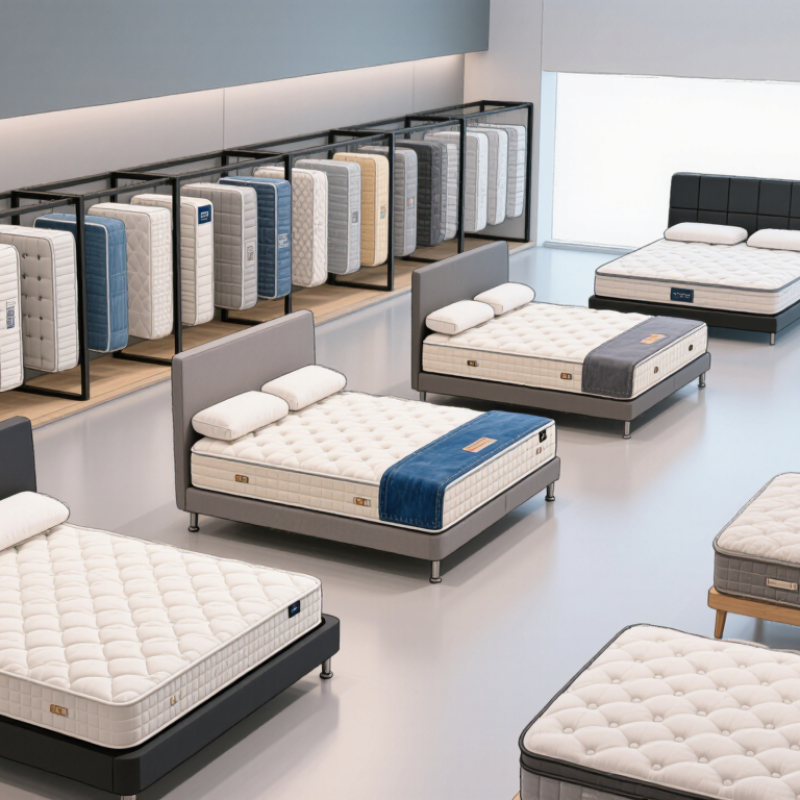
A mattress display rack is a retail fixture that presents mattresses at a practical viewing height, often with space for product cards and fabric samples. It helps shoppers compare firmness, construction, and sizes without lifting or moving heavy stock. Some racks hold one mattress upright; others arrange several models side by side. The right setup depends on floor space, product range, and how customers move through the store.
A rack should make comparison easy, not crowded. Keep labels readable at eye level, leave room to walk around the beds, and place sample swatches within reach. A shopper should be able to press the surface, check the edge support, and understand what is on display. Small details matter. A blocked aisle or a loose tag can make the experience feel careless.
Shop! Association’s 2012 Shopper Engagement Study reported that 82% of purchase decisions were made in-store, a useful but dated benchmark rather than a guarantee for today’s shoppers. The U.S. Census Bureau reported that e-commerce represented 16.1% of U.S. retail sales in 2024, leaving physical stores an important place for hands-on evaluation. Still, a rack is not magic. It cannot replace knowledgeable staff, and an overloaded display may confuse rather than help. Retailers should review traffic flow and shopper feedback; sometimes the best display holds fewer mattresses.
Common Mattress Display Rack Types and Configurations
2026 Best Mattress Display Rack for Retail Stores?
Common Mattress Display Rack Types and Configurations
Mattress racks generally use wall-side, island, or single-model floor configurations. Wall-side racks keep products along the perimeter and leave the center open for walking. They work well in narrow showrooms, though shoppers may have less room to view each mattress from different angles. Island displays place frames back-to-back, making several models visible from the main aisle. Allow enough space around them for customers and staff to move comfortably.
A platform-style rack supports a mattress on a low, solid base, while an adjustable frame can present different sizes or product heights. Some stores use angled or stepped displays so shoppers can compare multiple options without bending over each one. Check that supports feel stable under normal use, and match the frame dimensions to the mattresses on display. Small details matter. A loose rail or awkward label can interrupt an otherwise clear presentation.
Configuration depends on store size, traffic, and how often the floor plan changes. Measure aisles and doorways before placing large frames, then test the layout with actual mattresses. Keep price and size information easy to read from the aisle. In practice, adjustable racks can save space, but they may take longer to reset. That trade-off is easy to underestimate. A simple layout is not always the best one; observe where shoppers pause, reach, or turn, and revise the arrangement when it feels cramped.
2026 Best Mattress Display Rack for Retail Stores?
Common Mattress Display Rack Types and Configurations
Planning scores use a 1–5 scale, where 5 is most favorable. They are illustrative comparisons, not measured industry benchmarks; actual capacity, footprint, and shopper access depend on mattress sizes, rack dimensions, aisle widths, and store layout. Wall-mounted displays can save floor space, while island layouts can offer access from multiple sides.
Key Materials, Safety Features, and Space Requirements
A retail mattress rack needs a frame that stays steady under daily handling. Powder-coated steel resists scratches and is easy to wipe clean. Check the tube thickness, welded joints, and stated load rating; appearance alone tells you little. Thin tubing may flex when staff slide a heavy mattress into place. That matters.
Safety also depends on the store floor and setup. Look for a broad base, smooth edges, and secure mattress stops that prevent slipping. Confirm the rack’s rated capacity before loading it, and keep heavier samples low when the design allows. Anchor tall units where the manufacturer recommends, especially in busy aisles. Small details count. Still, a sturdy rack can become unsafe if it sits unevenly or is overloaded.
Measure the rack, the largest mattress, and the route from the delivery door to its final position. Include room for customers to walk around displayed sizes and for staff to change samples without awkward lifting. Leave enough clearance for nearby doors, counters, and neighboring displays, while following applicable local requirements. A layout that looks roomy on paper may feel tight when shoppers turn to compare sizes. Measure twice.
How to Choose a Mattress Display Rack for a Retail Store
How to Choose a Mattress Display Rack for a Retail Store
Choosing a mattress display rack starts with the store floor, not the catalog. Measure aisles, doorway widths, and the space customers need to move around each bed. A display that looks spacious on a plan can feel cramped once shoppers gather. Check that the frame suits the mattress sizes and weights you plan to show, and ask for its rated capacity. Stable support matters, especially when customers press or sit on the mattress. Consider how easily staff can change bedding or move the display for cleaning. Small details count.
Tips: Place popular sizes where customers can compare them easily. Keep price and size information visible at eye level. Check for wobble before opening each day.
Think about the shopping experience, too. A low platform can make it easier to test a mattress, while a raised frame may improve visibility in a busy showroom. Leave enough room for customers to lie down without blocking the aisle. Materials should suit daily use and be simple to wipe clean. If the rack includes adjustable parts, test them with staff before purchase. A polished finish is useful, but durability and safe handling matter more. There is no perfect layout; watch how customers actually move through the store, then adjust.
Setup, Merchandising, and Ongoing Rack Maintenance
A mattress rack should make comparison easy, not turn the showroom into an obstacle course. Place it where shoppers can approach from both sides, with clear paths around bed corners and enough room to test each mattress. Keep price and firmness information at eye level. PwC’s 2024 Global Consumer Insights Survey found that 43% of respondents shop in physical stores weekly, so the in-store experience still matters. But a rack alone cannot make a cramped floor feel welcoming.
Merchandise a small range of firmness levels together, and label each one consistently. Use clean, readable cards to explain feel, materials, and care; avoid making shoppers guess what differs. Leave space between samples. A neat display can still feel crowded. Check that lifting mechanisms move smoothly and that sample edges do not catch clothing or bags.
Tips: Dust the frame and vacuum under it weekly. Check screws, wheels, labels, and fabric seams during routine opening checks; record repairs instead of relying on memory. Rotate frequently handled samples, and remove any with stains or sagging until they are assessed. One imperfect detail: staff may overlook a loose fastener during a busy shift, so assign a named person to the check. Keep a simple maintenance log with dates and actions.
