Essential Tips for Choosing the Right Marine Generators for Your Needs

Choosing the right marine generators is crucial for any maritime endeavor. According to marine energy expert Dr. Emily Carter, "The right generator can make or break your voyage." This statement underscores the importance of selecting appropriate equipment for your specific needs.

When it comes to marine generators, understanding power requirements is vital. Your vessel's size and purpose dictate the generator type you need. Smaller boats may only require compact models, while larger ones demand more robust solutions. Overlooking this can lead to unforeseen issues on the water.

Durability and efficiency are equally important. Marine environments are tough on equipment. Corrosion and saltwater can damage generators quickly. A reliable generator should withstand these conditions without frequent repairs. Reflect on how often you'll use the generator. This will influence both the initial investment and future maintenance. It's essential to set priorities. Do you value high power output over noise reduction? Making these choices will guide you to the perfect marine generator for your needs.

Essential Tips for Choosing the Right Marine Generators for Your Needs

Understanding the Basics of Marine Generators and Their Functions
Essential Tips for Choosing the Right Marine Generators for Your Needs

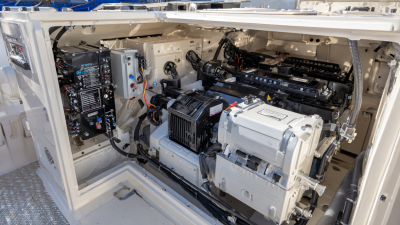
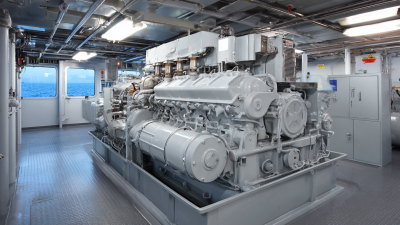
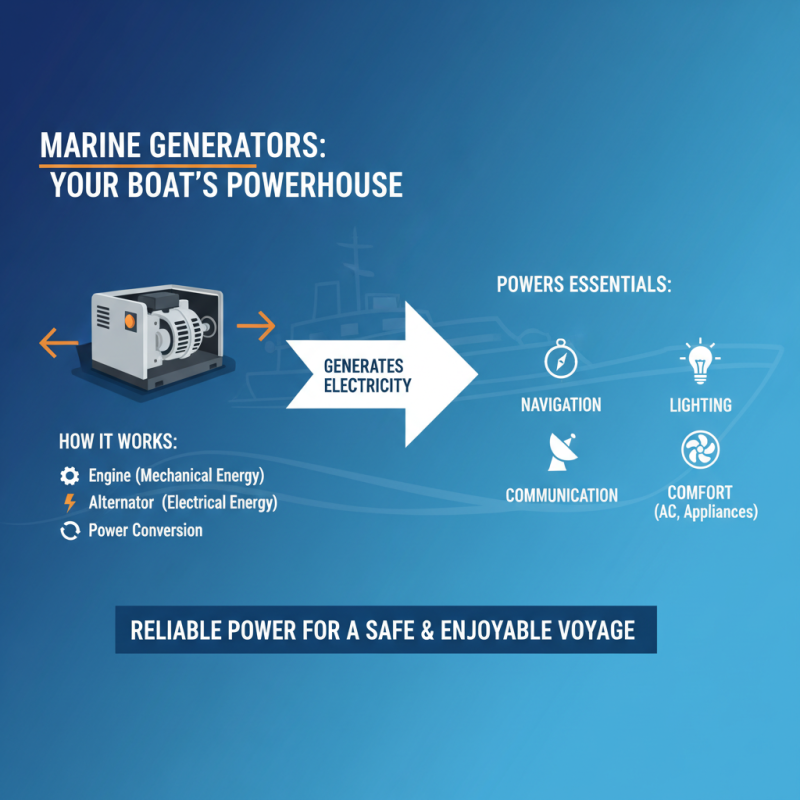
Marine generators play a crucial role in powering various equipment on boats and ships. They convert mechanical energy into electrical energy. This is vital for lighting, navigation, and communication systems. Understanding how these generators work is key to making informed choices.

When considering a marine generator, think about the power demands of your vessel. The generator must supply enough wattage for all your devices. Assess your energy needs thoroughly. Oversized generators can waste fuel. Smaller generators may not handle peak loads well. The size and efficiency impact performance significantly.

Also, consider the type of fuel used. Diesel generators are popular due to their longevity. However, they can be noisy and require more maintenance. Gasoline generators might be quieter but have less durability. Each choice has its pros and cons, needing reflection based on your specific needs. Test the generator before installation to ensure it meets your expectations. This hands-on experience can reveal potential issues early on.
Identifying Your Power Requirements for Marine Applications

Essential Tips for Choosing the Right Marine Generators for Your Needs

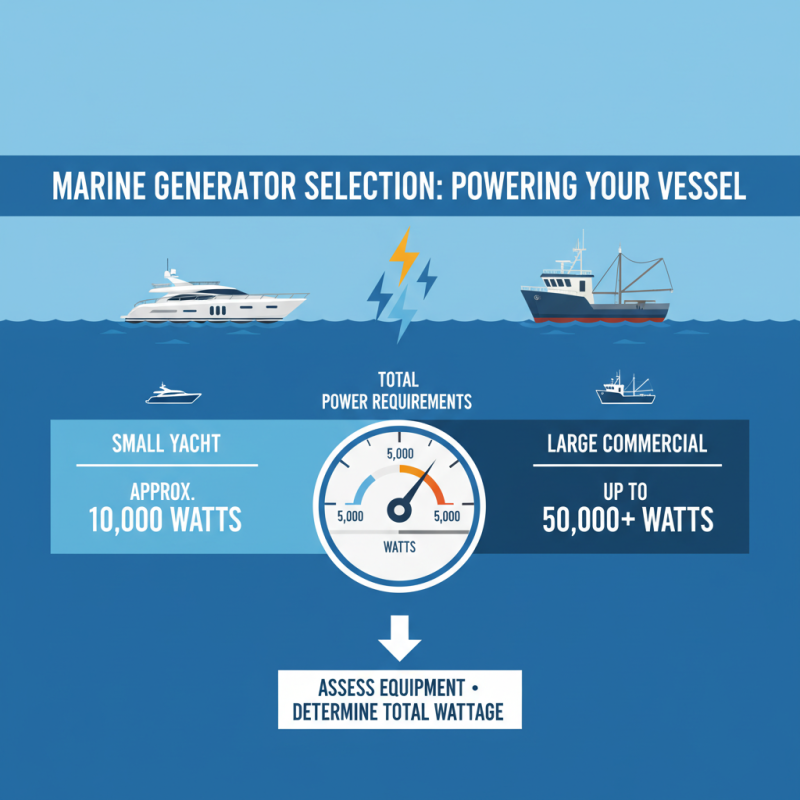
When selecting the right marine generator, understanding your power requirements is crucial. Assess the total wattage needed for all onboard equipment. According to industry reports, many vessels require anywhere from 5,000 to 50,000 watts, depending on size and purpose. For instance, a small yacht may need around 10,000 watts, while larger commercial boats could demand significantly more.

**Tip:** Consider not only peak power but also continuous power needs. This ensures that you have sufficient energy while avoiding generator overload. It’s important to identify essential appliances and equipment, such as navigation systems, refrigeration units, and lighting.

Another aspect to consider is load management. Balancing the loads can prevent overloading the generator. In fact, studies show that many operators underestimate their starting power requirements for motor-driven devices. This can lead to power disruptions and potential equipment damage. Accurate calculations are vital.

**Tip:** Always account for surge demands. When electrical motors start, they can draw up to three times their running power. Therefore, maintain a margin in your power assessment. This way, you'll foster reliability and safety for all marine applications. Understanding these intricacies is essential for a successful setup.

Key Features to Consider When Selecting a Marine Generator

Choosing the right marine generator requires careful consideration of several key features. One vital aspect is power output. Marine generators typically range from 5 kW to over 100 kW. The choice depends on your vessel's size and onboard power needs. According to the National Marine Manufacturers Association, nearly 40% of boat owners prioritize power output when selecting a generator.

Fuel type is another important feature. Diesel generators generally offer higher efficiency and longer run times compared to gasoline. However, diesel options may involve higher upfront costs. A report from Marine Industry Association highlights that around 30% of marine operators prefer diesel for its reliability in adverse conditions. Understanding the trade-offs is essential.

Noise levels also play a critical role. Many generators operate above 70 dB, which can be disturbing on a boat. Some newer models focus on quieter operations but may sacrifice power output. Users should reflect on how noise impacts their boating experience. Balancing these features against your specific requirements can be challenging, yet it is crucial for optimal performance.

Essential Tips for Choosing the Right Marine Generators

This chart displays the key features to consider when selecting a marine generator based on various criteria. The values represent different features that influence the decision-making process.

Evaluating Fuel Type Options for Marine Generators: Pros and Cons

Choosing the right fuel type for marine generators is crucial. Various options exist, each with advantages and disadvantages. Diesel fuel is popular due to its energy density and efficiency. A report by the International Marine Organization shows that diesel engines can achieve up to 45% thermal efficiency. However, diesel can be expensive and environmentally challenging.

Gasoline generators are lighter and less costly. They are easy to maintain. Yet, their fuel efficiency lags behind diesel. According to data from the Marine Power Systems Journal, gasoline engines max out around 30% efficiency. Safety is a concern too, as gasoline vapors are flammable.

Alternative fuels are gaining traction. LPG and biofuels are cleaner options. LPG reduces emissions significantly, but storage can be tricky on boats. Biofuels provide sustainability, yet their availability varies widely. Considering specific needs is vital. Fuel storage, costs, and safety factors all play a role in decision-making. Each fuel type demands careful evaluation. The choice impacts overall vessel performance and longevity. Choose wisely.

Maintenance Tips for Ensuring Longevity and Efficiency of Marine Generators

Marine generators are vital for power supply on boats and yachts. Regular maintenance is essential to ensure they run efficiently and last longer. Start with routine inspections. Check the oil levels, coolant, and filters regularly. Neglecting these simple steps can lead to bigger issues.

Cleaning the generator's exterior is important too. Dirt and salt buildup can affect performance. Make it a habit to wash the generator after each trip. Keep electrical connections tight and free of corrosion. Small issues often go unnoticed until it's too late.

Listening to your generator is key. If you hear unusual noises, investigate immediately. Regular servicing by a qualified technician can help catch problems early. Use quality fuels and lubricants to maintain performance. Good practices can extend the life of your generator significantly.

Go to Top