How to Choose the Best Diesel Powered Generator for Your Needs
Choosing the right diesel powered generator for your specific needs is a critical decision for both businesses and individuals relying on consistent power supply. According to the International Energy Agency, the global diesel generator market is expected to reach $23 billion by 2026, reflecting the growing importance of these reliable energy sources. As urbanization continues to rise and backup power becomes increasingly essential, understanding the various factors that contribute to a diesel powered generator's efficiency, capability, and suitability is paramount.
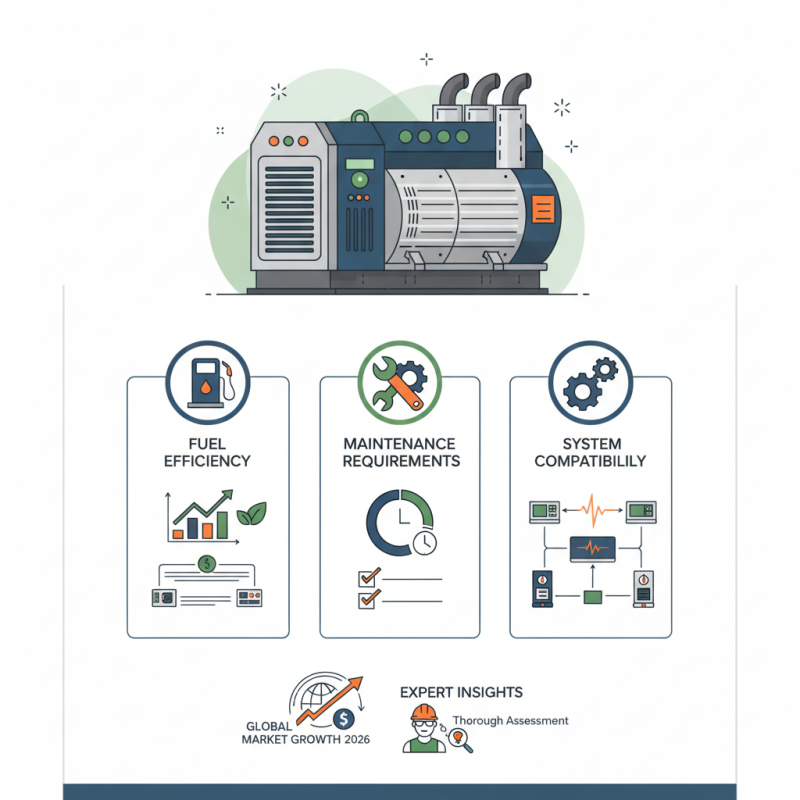
Industry expert John Smith, an electrical engineer with over 20 years of experience in power generation, emphasizes the importance of this decision: “Selecting the ideal diesel powered generator involves more than just wattage; it requires a thorough assessment of your energy demands and operational context.” Smith's insights highlight that key considerations include fuel efficiency, maintenance requirements, and the generator's compatibility with your existing systems. By meticulously evaluating these aspects, users can ensure they choose a diesel powered generator that not only meets their immediate power needs but also serves as a long-term, sustainable solution.
Understanding Your Power Requirements for Diesel Generators
When selecting the best diesel powered generator, it's crucial to understand your power requirements. This involves calculating the total wattage needed for all the devices and equipment you plan to run simultaneously. According to the U.S. Department of Energy, a standard household may require anywhere from 3,000 to 7,000 watts for essential appliances during outages. Larger systems, such as those used in commercial settings, may require even more. Taking stock of your kilowatt-hour consumption can help you determine the ideal generator size, ensuring you won't be caught short during critical times.
Tips: Start by listing all essential appliances and their wattage. Don't forget to include starting wattage for devices with motors, which can be significantly higher than their running wattage. Factor in growth; if you anticipate adding more equipment in the future, consider choosing a generator with a higher capacity to avoid potential issues later on.
Another key consideration is the generator's runtime on a single tank of fuel. Diesel generators typically provide longer operation times on less fuel compared to gasoline counterparts. For instance, according to a report by the National Renewable Energy Laboratory, diesel generators can run continuously for 8 to 24 hours, depending on their load and fuel tank size. Evaluating your runtime needs will ensure you select a generator that meets your expectations for reliability and efficiency during use.
Types of Diesel Generators and Their Applications
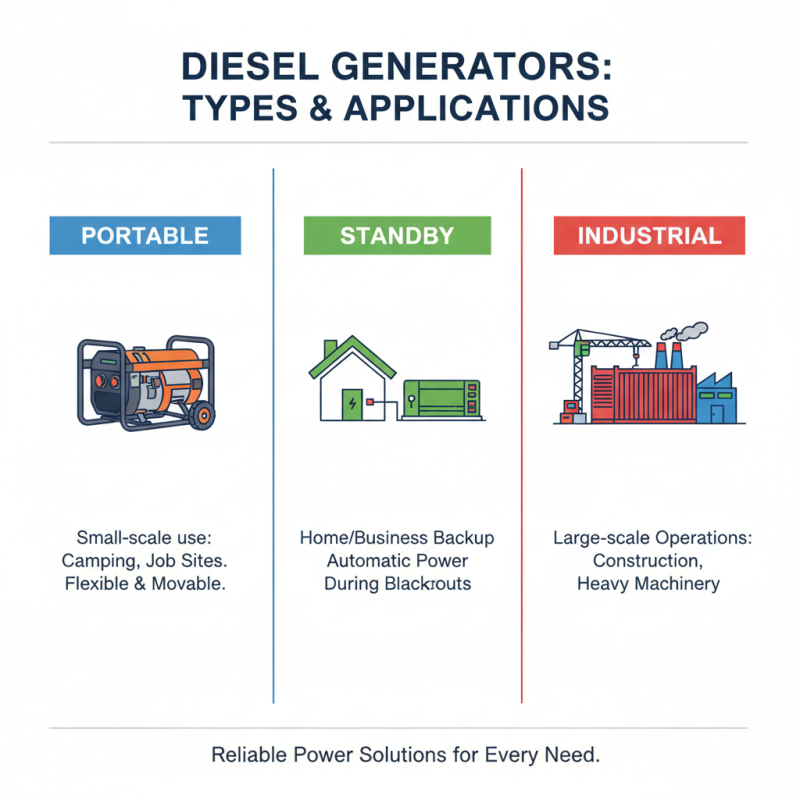
When considering diesel generators, understanding the various types and their applications is essential. The most common categories include portable, standby, and industrial diesel generators. Portable generators are ideal for small-scale use such as camping or job sites, providing the flexibility to move them as needed. Standby diesel generators are designed for home or business backup power, automatically kicking in during a blackout to ensure continuous operation. Lastly, industrial generators cater to large scale operations, typically used in construction sites or for powering heavy machinery.
Tips to consider when choosing the right type of diesel generator include assessing your power requirements and the generator’s capacity. Calculate the total wattage of the devices you plan to run to ensure compatibility. Additionally, think about fuel efficiency and maintenance needs, as these factors will affect long-term operational costs. Always prioritize noise levels, especially if you plan to use the generator in residential areas or during events where sound sensitivity is crucial.
Another vital consideration is the generator's location and portability. If you need a generator for regularly moving job sites, a lightweight, portable model may be more appropriate. Conversely, for stationary applications, a larger standby or industrial generator could fulfill your needs more efficiently. Always evaluate your specific use case to ensure you select the best diesel generator that aligns with both your current and future power needs.
Key Features to Consider When Selecting a Generator
When selecting a diesel-powered generator, several key features should be considered to ensure it meets your specific needs. First and foremost, evaluate the generator’s power output. This is usually measured in kilowatts (kW) and should match the total wattage required by the devices you intend to power. Additionally, consider the starting and running wattage demands, as some appliances require more power to start up than to run continuously.
Another important aspect to factor in is the generator’s build quality and durability. Diesel generators are typically known for their robustness, but it’s essential to look for models with high-quality components that can withstand various environmental conditions. Noise levels are also worth examining; a quieter generator can be more suitable for residential areas or during events. Furthermore, assess the fuel efficiency and operating time of the generator, as a unit with lower fuel consumption and longer run times can significantly reduce operating costs. Lastly, consider portability if the generator needs to be moved frequently; features like wheels and handles can enhance mobility.
Power Output Comparison of Diesel Generators
Evaluating Fuel Efficiency and Running Time
When selecting a diesel-powered generator, evaluating fuel efficiency and running time is crucial to ensure it meets your specific needs. Fuel efficiency indicates how much electricity the generator can produce per gallon of diesel consumed. A generator that offers a higher efficiency will not only reduce operational costs but also minimize the frequency of fuel refills, making it ideal for extended use, especially in remote locations or during emergencies.
Running time is another essential factor influenced by fuel tank capacity and generator load. A generator with a larger fuel tank can typically operate for longer periods without downtime, which is beneficial for projects requiring continuous power supply. It is important to consider potential workloads; generators running at full capacity will consume fuel more rapidly than those running at a lower load. Understanding your anticipated power needs will help you choose a model that balances efficiency and running time effectively, ensuring you select the best generator for your requirements.
Budgeting for Purchase and Maintenance Costs of Diesel Generators
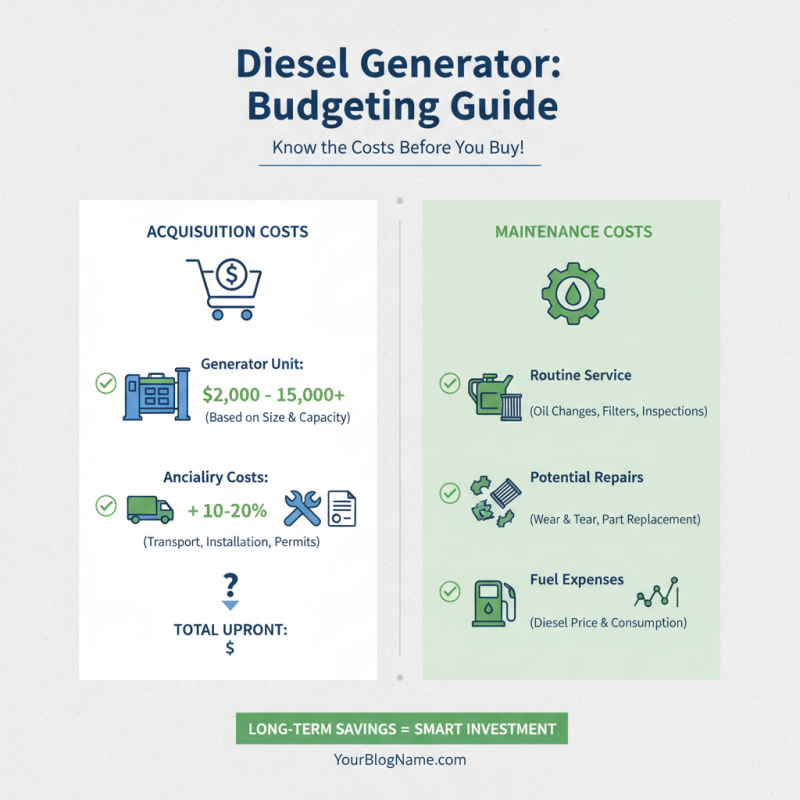
When considering the purchase of a diesel powered generator, understanding the budgeting for both acquisition and maintenance costs is critical. The initial price of these generators can vary greatly based on their size and capacity, but industry reports indicate that high-quality models typically range from $2,000 to $15,000. Beyond the purchase price, prospective buyers should also account for ancillary costs such as transportation, installation, and any necessary permits, which can add an additional 10-20% to the initial expense.
On the maintenance side, it is estimated that routine maintenance for diesel generators can cost between $200 and $1,000 annually, depending on usage and size. Regular oil changes, fuel filter replacements, and other preventive measures are essential for optimal performance and longevity. Industry guidelines recommend servicing at least once a year, or more frequently if the generator is used heavily. Additionally, unexpected repairs can add to the overall maintenance budget, making it wise to set aside a contingency fund of approximately 15-25% of the total maintenance costs. Proper budgeting not only ensures the reliability of the generator but also maximizes its operational efficiency over time.